There’s a quiet revolution happening in American backyards. The tools you’ve relied on for years, the ones hanging in your garage or stored in the shed out back, are suddenly under a very uncomfortable spotlight. Regulators, environmental agencies, and local governments are taking a long, hard look at what we’re firing up every weekend, and the conclusions are not exactly comfortable reading.
Some of these tools are loud. Some are chemically problematic. Others are being linked to everything from cancer to collapsing bee populations. Whatever the reason, the regulatory momentum is real, it’s accelerating, and it is already reshaping what you can legally buy, use, and own. Let’s dive in.
1. Gas-Powered Leaf Blowers: Already Banned in Multiple Cities
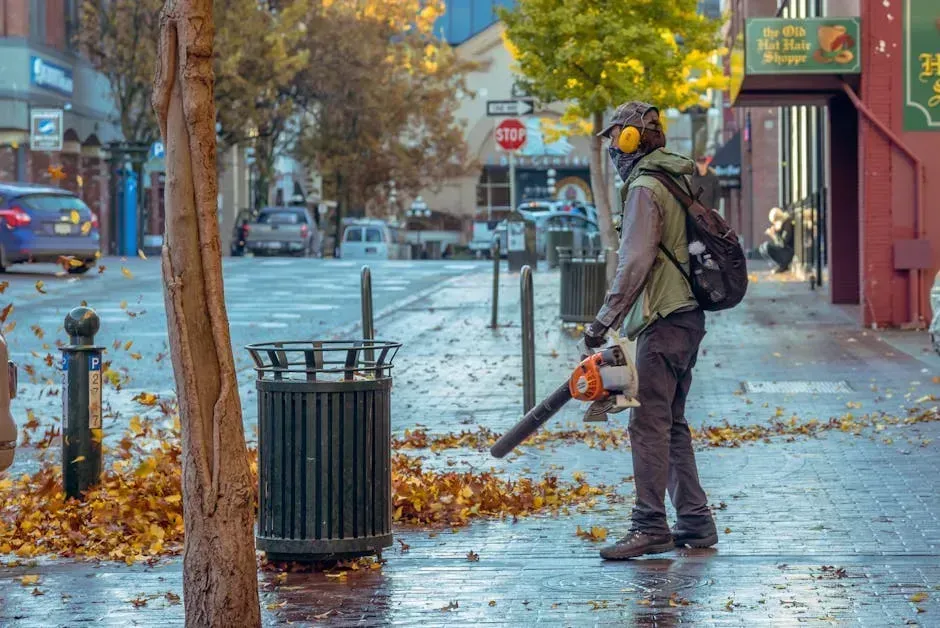
Honestly, this one probably doesn’t surprise you. Gas leaf blowers have been the neighborhood nuisance for decades, but now they’re becoming a genuine legal liability. Using a gas leaf blower for just one hour produces the same amount of smog-forming pollution as driving a Toyota Camry for 1,100 miles. That’s a staggering number for something you use to clear a driveway on a Saturday morning.
Washington, D.C., has already banned their use entirely, slapping violators with fines up to $500, while Montgomery County, Maryland, and parts of California have phased out their sale. The momentum is spreading fast. Baltimore, Maryland was on track to ban gas-powered leaf blowers after the City Council voted 10 to 5 in favor of the measure in October 2024.
A partial ban in the Village of Northbrook, Illinois, approved in December 2023, went into effect January 1, 2025, with a nine-month ban covering December to March and May to September, allowing use only during specific spring and fall cleanup windows. The patchwork is growing. Cities that have not acted yet are watching closely, and the writing is practically carved into the wall.
2. Gas-Powered Lawn Mowers: California Led the Charge
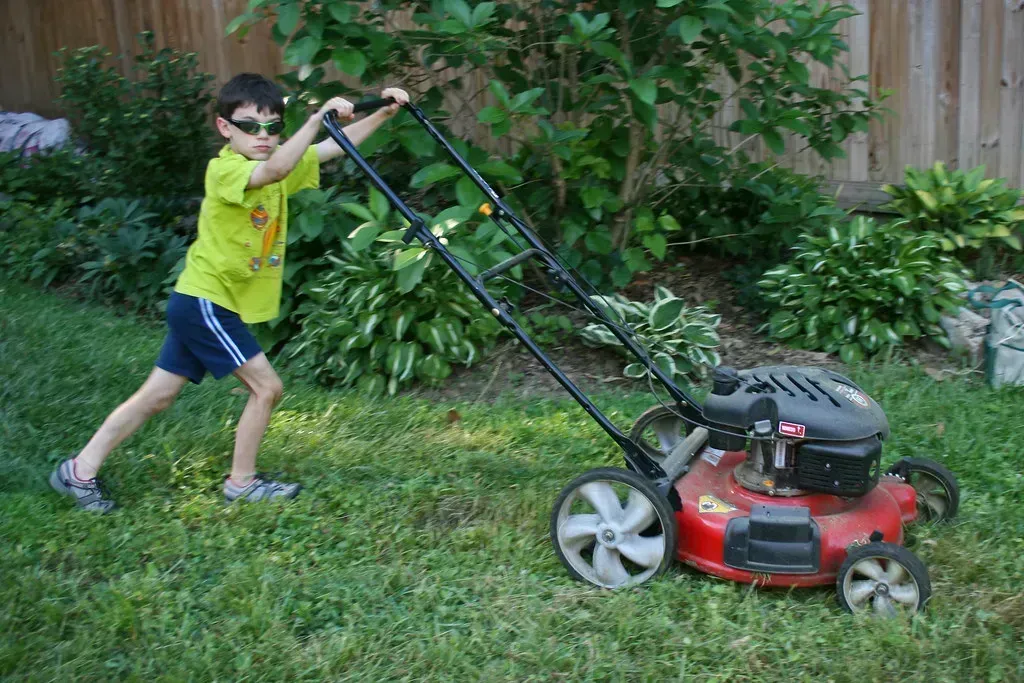
The humble gas lawn mower has been a weekend staple for generations. But regulators see it differently. According to the California Air Resources Board, using a commercial gas-powered lawnmower for an hour creates the same amount of smog-forming pollution as driving a car 300 miles from LA to Las Vegas. That is a hard statistic to argue with.
The state of California banned the commercial sale of all gas-powered lawn equipment at the beginning of 2024. This was a seismic shift for the industry. Colorado has already implemented restrictions on state agencies using gas mowers during the summer ozone season to reduce ground-level pollution.
Policies such as these have triggered a backlash, with states like Texas, Florida, and Ohio prohibiting outright bans on gas-powered equipment in an effort to protect oil and gas industries. Still, the broader trend is clear. Retail giants like Home Depot and Lowes are decreasing their inventory of gas-powered lawn equipment in favor of other options. When the big-box stores start shifting their shelves, you know something real is happening.
3. Gas-Powered Chainsaws: Next on the Chopping Block
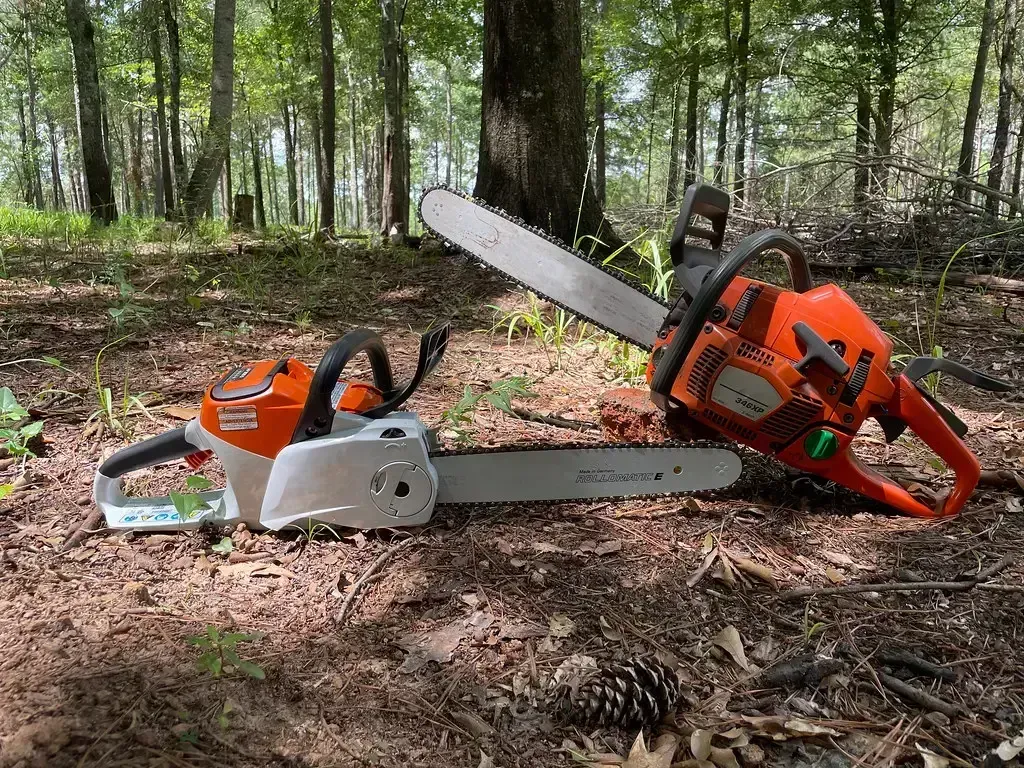
Let’s be real: the chainsaw feels like the last tool anyone would try to regulate. It’s loud, powerful, and deeply American. Yet here we are. Following the pattern of other gas-powered tools, chainsaws are likely next on the regulatory chopping block, with their two-stroke engines producing significant emissions and noise levels that can exceed 100 decibels, enough to cause hearing damage.
As of January 1, 2025, gas-powered leaf blowers are banned for use in Irvine, California by residents and small businesses, and gas-powered landscaping equipment including chainsaws are banned for use by large businesses. Irvine is just one example of where things are heading. In January 2026, gas-powered landscaping equipment including chainsaws will be banned for residents and small businesses there as well.
Washington state legislator Amy Walen introduced House Bill 1868, which would ban gas-powered outdoor power equipment produced after January 1, 2026, including chainsaws, lawn mowers, leaf blowers, and snow blowers. The electric chainsaw technology has improved dramatically. It’s hard to say for sure whether it fully matches gas power for heavy-duty use, but regulators aren’t waiting around to find out.
4. Gas-Powered String Trimmers and Hedge Trimmers: Quietly Swept Up
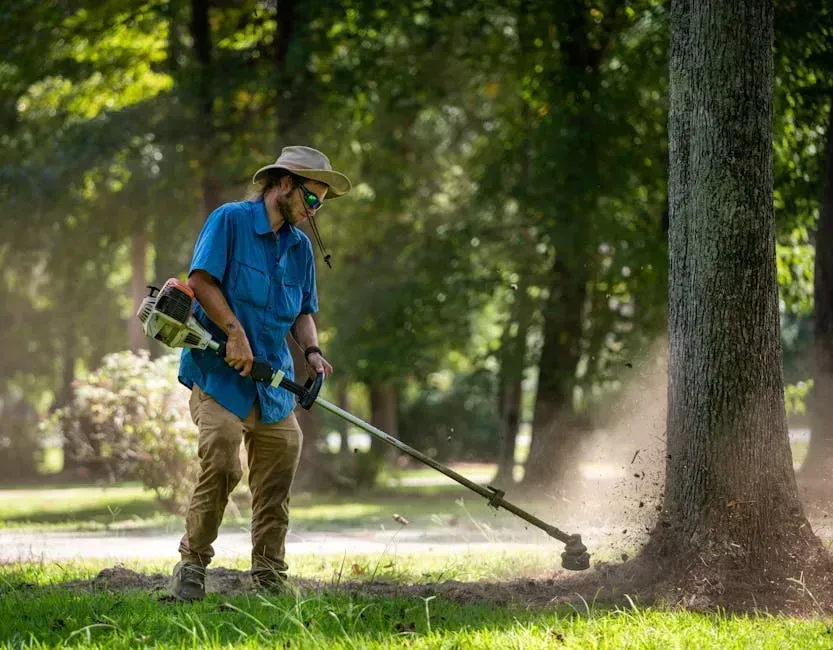
String trimmers and hedge trimmers rarely make the news on their own, but they are being quietly swept up in the same wave of regulations. In January 2024, the State of California banned the sale of new small off-road engine-powered garden equipment, including string trimmers and hedge trimmers. These tools fall under the same “small off-road engine” category that regulators have targeted.
Gas-powered leaf blowers, lawn mowers, and snow blowers are known to emit dramatically high amounts of carbon monoxide, carbon dioxide, hydrocarbons, volatile organic compounds, nitrogen oxides, and particulate matter into the air, far surpassing the amount produced by the average car or truck. String trimmers use the same dirty two-stroke technology.
California’s Air Resources Board is arguably the second most powerful environmental regulator in the country after the EPA, and for decades CARB has set stricter emissions rules that more than a dozen states copy, putting more than half of Americans under CARB rules. That means whatever California decides about these trimmers is unlikely to stay confined to California for long. Think of California as the regulatory canary in the coal mine.
5. Neonicotinoid Pesticides: Pulled from Garden Center Shelves

Here is a tool that looks innocent enough, a little bottle of insecticide sitting on the garden center shelf. Neonicotinoids, or “neonics,” are systemic pesticides that plants absorb, turning their leaves and nectar into neurotoxins for any insect that takes a bite, and they are a primary driver of the global bee population collapse. That is a serious accusation with mounting scientific weight behind it.
As of January 1, 2025, the sale of neonicotinoid pesticides is no longer allowed in retail nurseries and garden centers in California, and they may only be used or possessed in urban settings by licensed applicators. The list of affected chemicals includes some very common product ingredients. Nearly 150 pesticide products containing neonicotinoids, including the common insecticide imidacloprid and its relatives acetamiprid, clothianidin, dinotefuran and thiamethoxam, are now off-limits to consumers in California.
At least 11 states have restricted or banned residential use of neonicotinoid pesticides, including California, Colorado, Maine, Maryland, Minnesota, Nevada, New Jersey, New York, Rhode Island, Vermont, and Washington. Vermont’s law went even further. Beginning July 1, 2025, Vermont prohibits outdoor uses of neonicotinoids harmful to pollinators, and beginning in 2029, it prohibits the use of field crop seeds treated with neonicotinoids. That is a sweeping timeline that signals the direction of travel nationwide.
6. Glyphosate Weed Killers: A Legal and Regulatory Battlefield

If you’ve ever grabbed a bottle of Roundup to deal with weeds along your fence line, you’ve used glyphosate. It’s the world’s most widely used herbicide and also one of the most controversial. Roundup has been under a microscope since 2015, when the International Agency for Research on Cancer declared glyphosate a possible human carcinogen, and since then manufacturer Monsanto, purchased by Bayer, has been battling thousands of lawsuits alleging the product caused non-Hodgkin’s lymphoma.
Bayer has agreed to settle nearly 100,000 U.S. lawsuits for $10.9 billion, while still denying claims that Roundup caused cancer. Despite this, the federal EPA has not issued a national ban. Because of mounting cancer concerns, a growing number of cities and counties are banning or limiting glyphosate, including municipalities in California, Connecticut, Florida, Illinois, Iowa, Maryland, Massachusetts, New Mexico, and Washington.
In 2024, the EPA rejected a petition to ban glyphosate brought by environmentalists, stating it would not reassess glyphosate because no new evidence about the chemical’s toxicity had surfaced. Still, the legal battles are far from over. In 2024 and 2025, at least eleven states saw legislation introduced that aimed to codify language around federal pesticide labeling requirements, reflecting the ongoing fight over who gets to regulate glyphosate. This one is moving slowly at the federal level but fast at the local one.
7. Gas-Powered Snow Blowers: Caught in the Crossfire
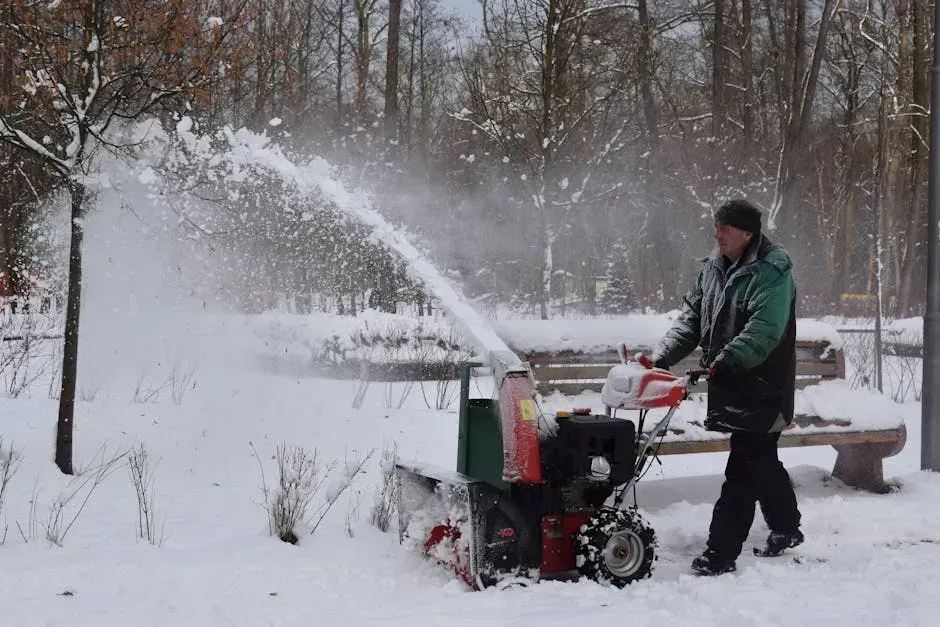
Snow blowers tend to be overlooked in the lawn equipment debate because, well, they only come out a few months of the year. But they run on the same small gas engines that regulators are aggressively targeting. Gasoline-powered lawn and garden equipment, including snow blowers, is noisy, polluting, and putting public health at risk.
Gas-powered snow blowers are known to emit dramatically high amounts of carbon monoxide, carbon dioxide, hydrocarbons, volatile organic compounds, nitrogen oxides, and particulate matter. That exhaust in a cold, closed-off driveway or garage hits harder than most people realize. Washington state’s proposed House Bill 1868 specifically included snow blowers in its ban on gas-powered outdoor power equipment produced after January 1, 2026.
Bans and limits vary from state to state, but gas-powered small engines of all types are being considered for bans throughout the country. Snow blowers are part of that “all types” category, even if they haven’t generated the same headlines as mowers and leaf blowers. It might be a good idea to buy electric, as these bans are slowly making their way across the country. Honestly, that advice applies as much to snow blowers as anything else.
8. Glue Traps: A Federal Measure Is Already in Motion
This one might genuinely surprise you. Glue traps, those flat sticky boards people stick under sinks and in garages to catch mice and other pests, are facing a serious regulatory pushback. They look harmless but the animal welfare and public health arguments against them are gaining real traction. The CDC actually advises against using them because trapped, terrified animals urinate and defecate, creating a hotspot for diseases like hantavirus.
They are also indiscriminate, and wildlife rehabilitators frequently treat songbirds, owls, and even kittens caught in the glue. The collateral damage goes far beyond the intended targets. West Hollywood and Ojai, California, have already banned the sale and use of these traps, and a federal ban, H.R. 7018, was introduced in Congress in 2024.
It’s hard to say for sure how fast the federal bill will move, given the current political climate around regulation. But municipal bans are spreading, and the combination of animal welfare advocacy and genuine public health concerns is proving to be a potent mix. According to data cited by Frontiers, localized pollution, collapsing bee populations, and animal welfare concerns are driving a legislative overhaul of exactly these kinds of backyard tools. The glue trap is now caught in that same net.
The backyard has always felt like private territory, a place where the rules of the outside world don’t quite apply. That feeling is fading fast. From the gas-powered rumble of a Saturday morning mow to the quiet bottle of weed killer tucked in the garden shed, regulators are making it clear that the tools we use at home have consequences that reach well beyond our property lines. What do you think about it? Tell us in the comments.