Flying used to feel almost routine. You booked a ticket, showed up, and trusted that everything would work out. For many Americans, that quiet, unspoken confidence has taken some serious hits in recent years, and in 2025, it feels shakier than ever.
A survey from The Associated Press and NORC Center for Public Affairs Research shows that only about two thirds of U.S. adults now say plane travel is “very safe” or “somewhat safe,” down from roughly seven in ten the previous year. That shift in sentiment didn’t happen in a vacuum. It was driven by real incidents, mounting complaints, and a growing sense that the aviation system isn’t always looking out for the passenger first. So which airlines are Americans most wary of? Let’s dive in.
1. Frontier Airlines: The Complaint King Nobody Wanted
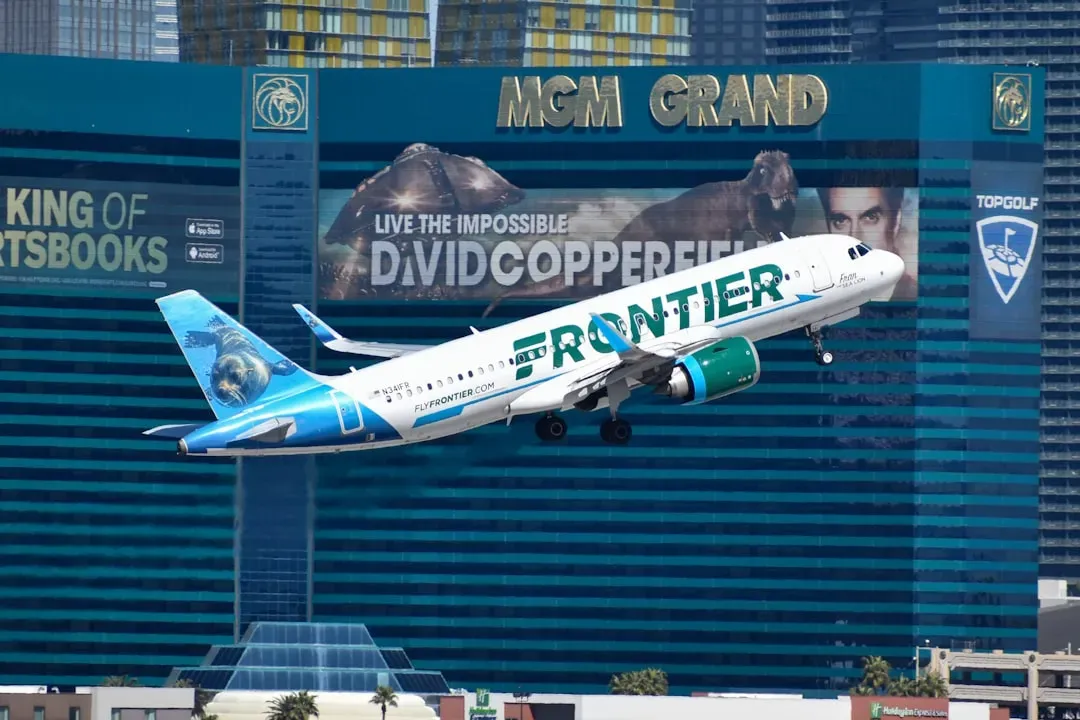
Let’s be real: when your airline tops the “worst” list for multiple years in a row, that’s not a streak to be proud of. Frontier again had the worst ratio of complaints to boarded passengers, the benchmark the DOT uses, with a complaint ratio of 23.3 per 100,000 passengers – more than 10 points higher than the next worst airline, Spirit, at 12.8. Those are not just numbers on a spreadsheet. Those are thousands of real passengers, furious enough to file a formal government complaint after failing to resolve things directly with the airline.
Frontier Airlines had the highest complaints among major airlines, with Spirit Airlines and JetBlue following. Since 2022, Frontier has experienced a significant increase in complaints, with a staggering 68% rise. What’s fueling this? Many travelers voiced frustrations citing issues such as delayed and canceled flights and insufficient customer service as primary concerns. While Frontier offers low fares, attracting cost-conscious travelers, the trade-offs in service and reliability have become a topic of heated debate. Cheap upfront, expensive in aggravation.
2. Spirit Airlines: Discount Fares, Premium Frustration
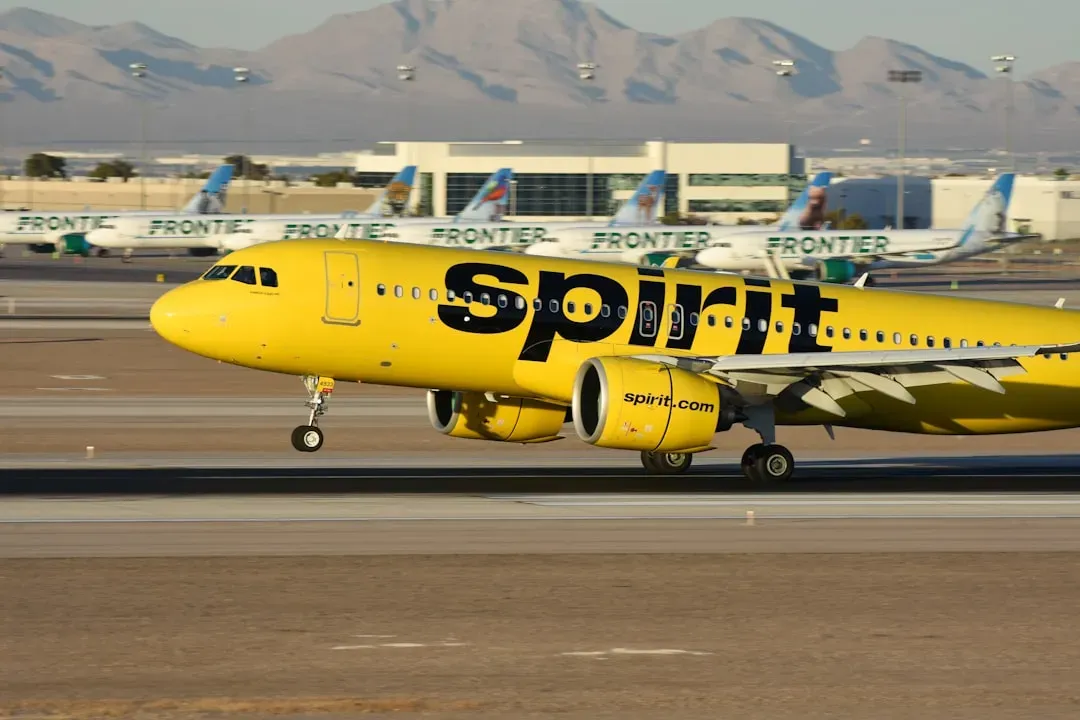
Spirit Airlines has built its entire brand around one promise: rock-bottom ticket prices. Honestly, it works, at least until it doesn’t. A survey by the Public Industry Research Group on airline complaints had unflattering things to say about Spirit. Spirit customers filed 12.8 complaints per 100,000 passengers in 2024, the second-highest among U.S. airlines. That same survey reported that its cancellation rate was the third-highest, just after Frontier. From mishandling wheelchairs to bumping paying customers, there were few categories in which Spirit didn’t rank near the bottom of the pack.
Spirit was the only other airline besides Southwest to gain points with customers in 2025, jumping up three percent for an overall score of 69. That’s a tiny improvement, but think about it: a score of 69 out of 100 is still barely a passing grade. If you go by surveys, complaints, and fees, Spirit and Frontier are historically the worst in the developed world. They also scrape the bottom in nearly every other category. There’s a reason almost nobody says they love either airline. Although they tend to offer the cheapest fares around, you’re certainly getting what you pay for, with the lowest scores, ratings, and statistics.
3. JetBlue: The Former Darling That Lost Its Way
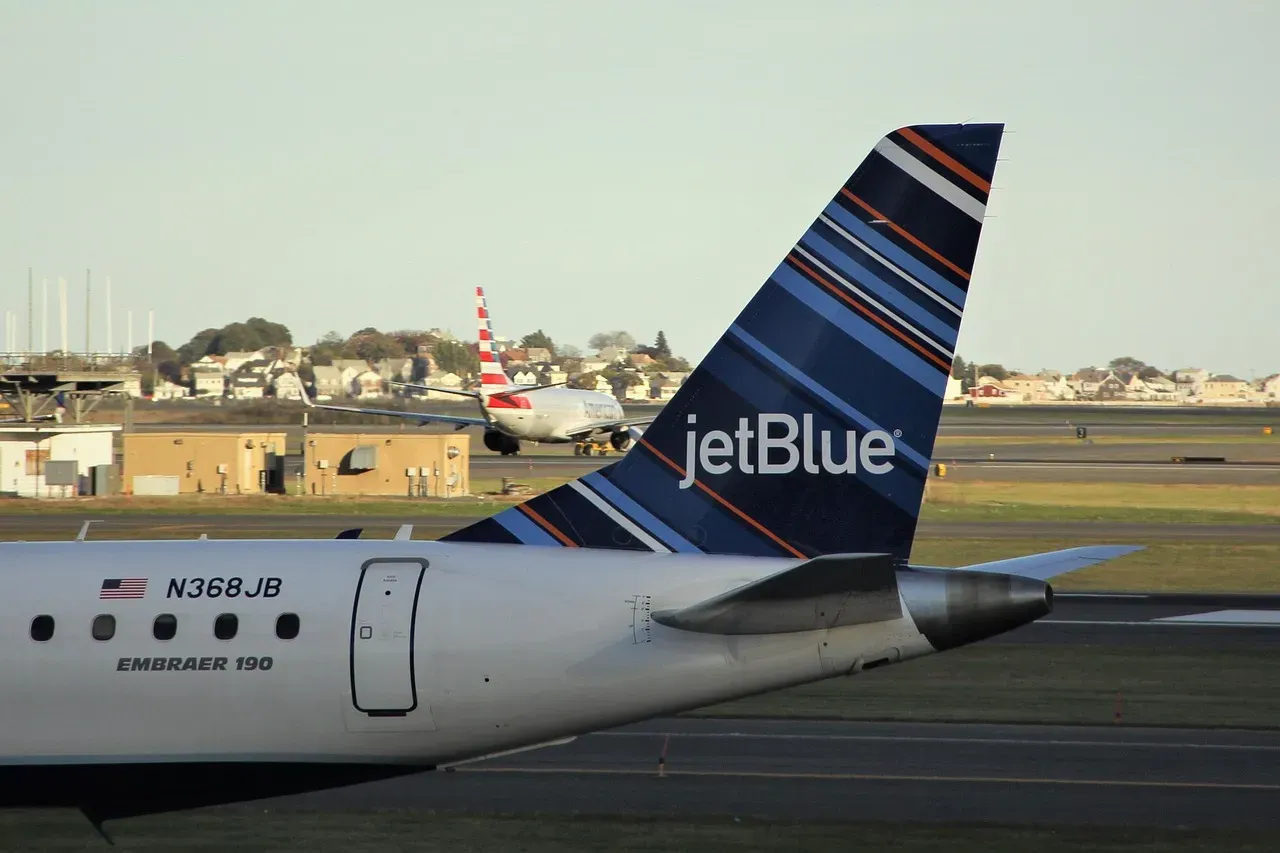
There was a time when JetBlue felt like the cool, passenger-friendly alternative to the big legacy carriers. Those days feel like a distant memory. JetBlue came in as the third worst complaint ratio among major U.S. airlines, at 10.4 per 100,000 passengers in 2024. That’s a significant gap from where the airline used to sit in customer satisfaction rankings, and travelers have noticed.
In 2023, Frontier had the worst complaint ratio at 32.99, more than double that of Spirit at 14.76. JetBlue also had a double-digit ratio, at 13.32. That puts JetBlue in the company of carriers that passengers genuinely dread dealing with. The airline has faced repeated struggles with on-time performance, and complaints lodged against U.S. airlines hit another record in 2024, marking the fourth year in the last five that complaints against U.S. carriers increased to new highs, as travelers sounded off about problems including canceled flights, lost baggage, and stalled refunds. JetBlue contributed significantly to that pile.
4. American Airlines: A Year of Catastrophe and Crisis
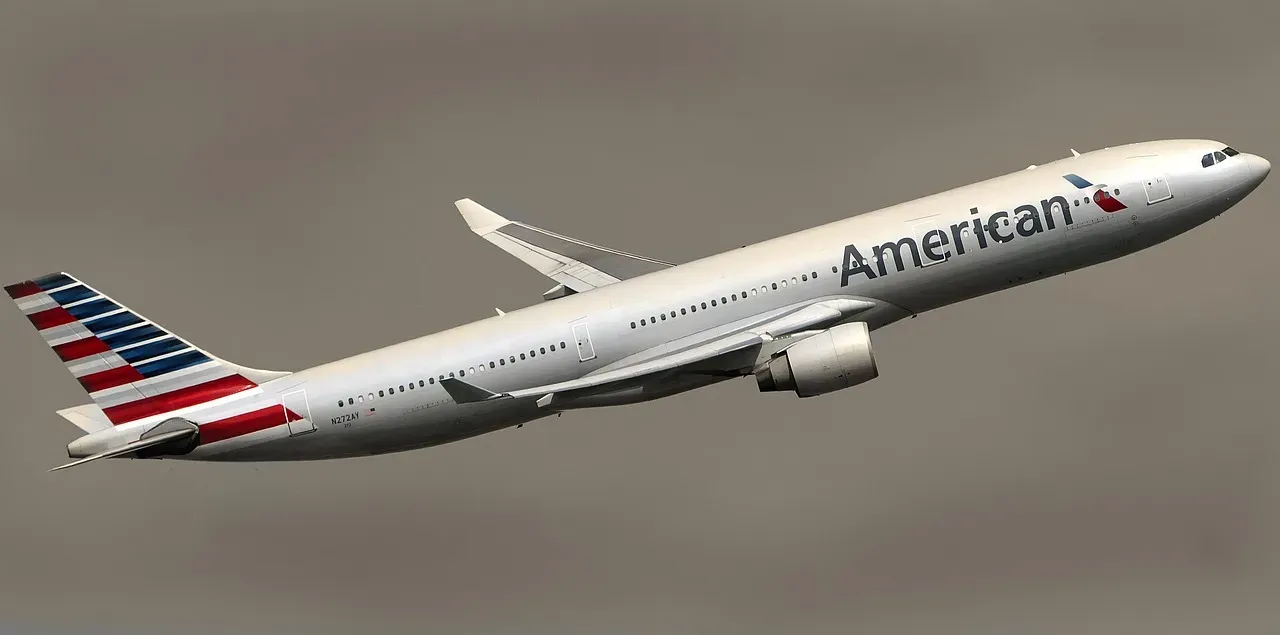
No airline has faced a more shattering year in recent memory than American Airlines. On January 29, 2025, a Bombardier CRJ700 airliner operating as American Airlines Flight 5342 and a United States Army Sikorsky UH-60 Black Hawk helicopter collided in mid-air over the Potomac River in Washington, D.C. The collision occurred at an altitude of about 300 feet, approximately half a mile short of the runway threshold at Ronald Reagan Washington National Airport. All 67 people aboard both aircraft were killed.
It was the first major U.S. commercial passenger flight crash since Colgan Air Flight 3407 in 2009, and the deadliest U.S. air disaster since the crash of American Airlines Flight 587 in 2001. The legal fallout has been significant. The United States government admitted fault for the mid-air collision over the Potomac River in January, according to a court filing. The collision between American Airlines Flight 5342 and a U.S. Army Blackhawk helicopter killed 67 people. It was the deadliest plane crash on American soil in more than two decades. The reputational damage for American Airlines will take years to measure fully.
5. United Airlines: Big Network, Big Problems
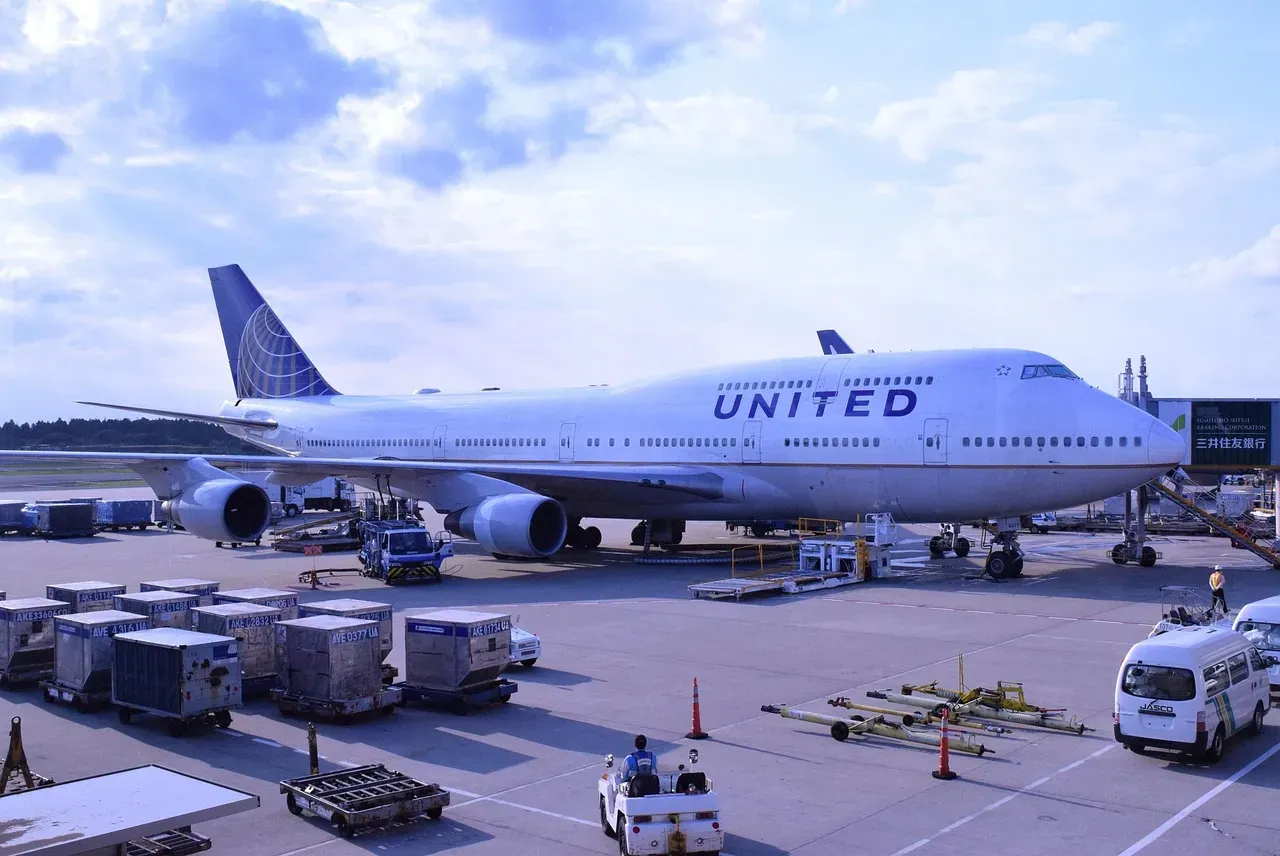
United Airlines is the kind of carrier that looks impressive on paper: a sprawling global network, millions of loyal frequent flyers, and a sleek modern fleet. United Airlines ranks third on aviation dissatisfaction indexes. Despite improvements in its fleet and operations, United’s size amplifies every problem. A high number of customer complaint searches and average review ratings of 3.3 out of 10 placed it near the top of the dissatisfaction chart.
United is not the most reliable airline in the business as far as cancellations go. The Department of Transportation reports that its cancellation rate for the first half of 2025, a comparatively whopping 1.35%, was one of the worst in the business. It’s hard to trust an airline when there’s a real chance your flight just doesn’t happen. Despite being one of the largest and oldest carriers in the world, American and United struggle with customer service reputation, frequent complaint searches, and a wave of negative reviews. Passengers often describe long hold times, lost bags, and unhelpful support after cancellations or delays. The airline’s scale means even small problems affect thousands of people daily.
6. Alaska Airlines: The Boeing Problem It Couldn’t Control
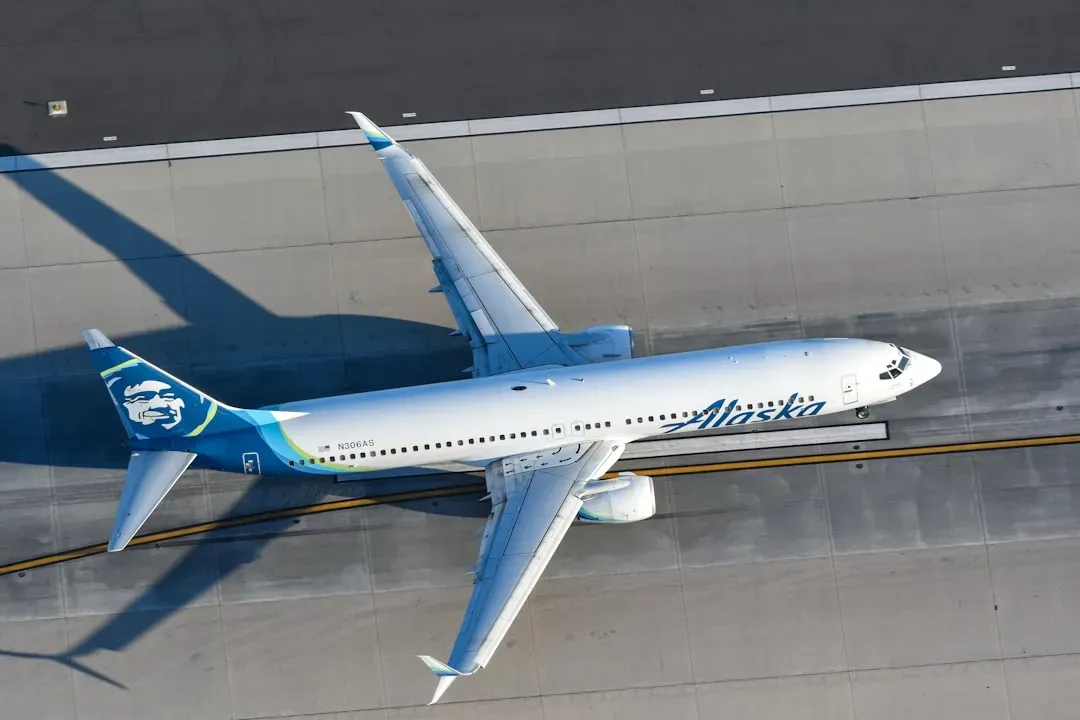
Alaska Airlines entered 2024 with a solid safety reputation, only to have it tested in a way nobody could have predicted. Alaska Airlines Flight 1282 was a scheduled domestic passenger flight from Portland International Airport to Ontario, California. Shortly after takeoff on January 5, 2024, a door plug on the Boeing 737 MAX 9 aircraft blew out, causing an uncontrolled decompression of the aircraft. The aircraft returned to Portland for an emergency landing.
According to the National Transportation Safety Board’s final report, the probable cause of the Alaska Airlines Flight 1282 door plug blowout was a systemic failure of Boeing’s manufacturing process and ineffective oversight by the Federal Aviation Administration. The in-flight separation was caused by four crucial bolts that were never reinstalled after being removed at the factory. It’s worth noting that Alaska’s crew handled the crisis with remarkable professionalism, and the airline’s complaint ratio remains among the lower ones in the industry. Southwest, Alaska, and Hawaiian drew fewer complaints per 100,000 passengers compared to the worst offenders. Still, the images of a gaping hole in a pressurized cabin, mid-flight, are not something passengers easily forget.
7. Allegiant Air: Cheap, But at What Cost?
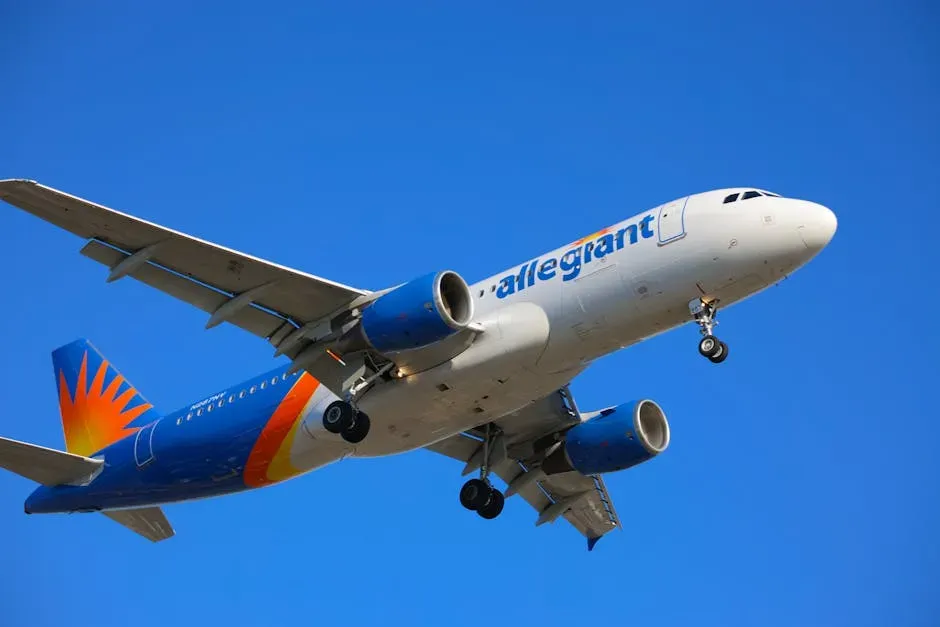
Allegiant Air occupies a peculiar corner of the airline world. It connects smaller cities to vacation destinations, operates older aircraft, and competes almost entirely on price. The positives with Allegiant are its perfect safety record and lower-than-average costs. But according to research, that’s about it. It holds the title of worst U.S. airline for passenger comfort. Comfort isn’t everything, but it matters more than many budget carriers admit.
None of Allegiant’s positives are enough to save it from the lower ranks. What keeps Allegiant Air down? Firstly, hidden fees for baggage and a general lack of services inevitably decrease customer satisfaction. Think of it like buying the cheapest possible tent before a camping trip, only to discover it has no rainfly and the zipper breaks immediately. Allegiant doesn’t make it easy to figure out how much you’ll pay because it varies by flight. You basically have to go through the booking process to see how much it will cost you to bring a change of clothes. Then there are fees for reserving a seat, boarding in an earlier group, or even printing out a boarding pass when you check in.
8. Delta Airlines: A Toronto Scare and Slipping Scores
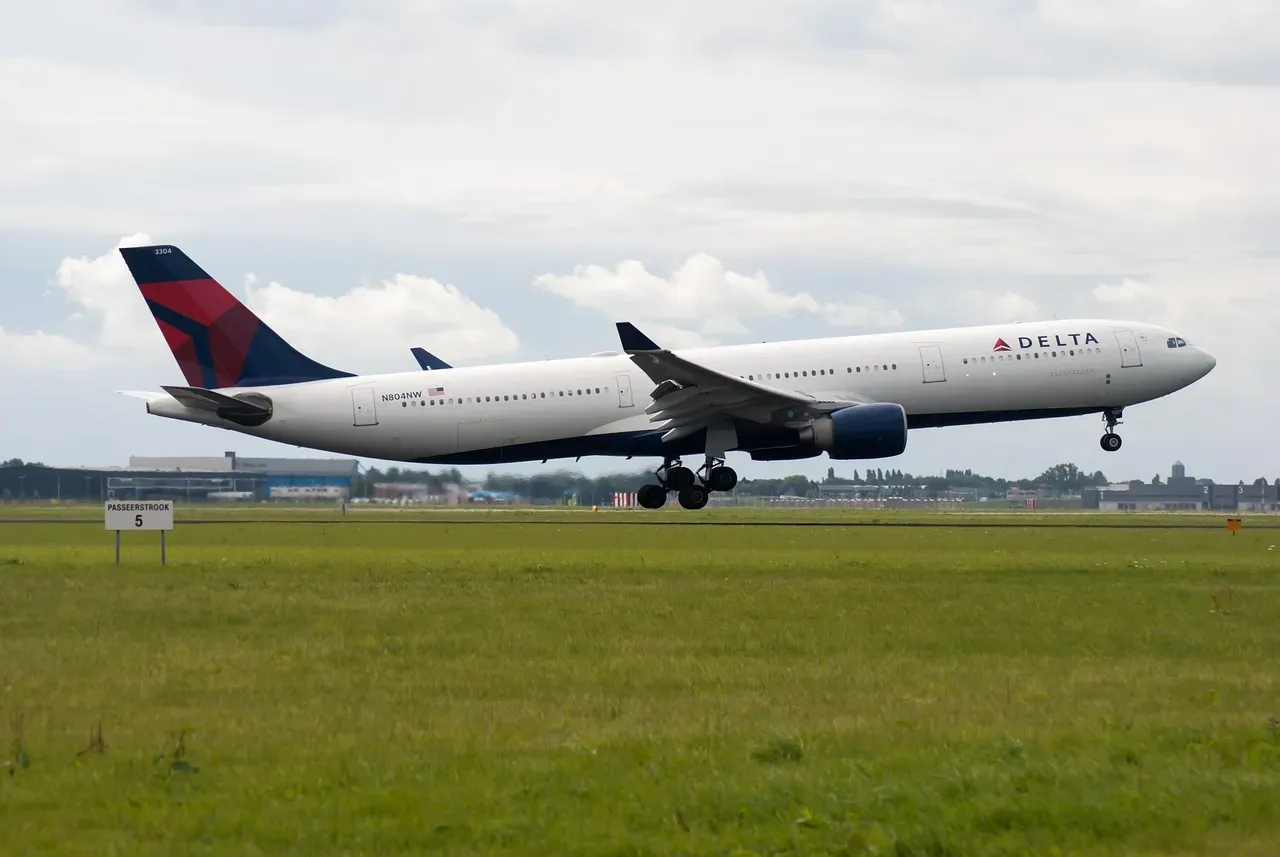
Delta has long been considered one of the better U.S. carriers, and by many measures, it still is. Regionally, Delta led North America for punctual arrivals in Cirium’s 2025 On-Time Performance Review. That’s genuinely impressive for a carrier of its size. However, 2025 delivered a shocking image that rattled travelers across the country.
A Delta Connection flight flipped after a hard landing on the ground in snowy Toronto. Everyone on board survived, but the images captured the country’s attention. Visuals of an upside-down commercial aircraft don’t exactly inspire confidence, no matter the ultimate outcome. Customers’ overall satisfaction with United States airlines dropped 4% in 2025 compared to last year, according to a report from the American Customer Satisfaction Index. U.S. airlines collectively scored 74 out of 100, down four points from last year’s record-high satisfaction score of 78 points. Delta felt that slide too, as trust across the industry softened following a string of alarming incidents.
9. Boeing-Dependent Carriers: The Manufacturer Fear Factor
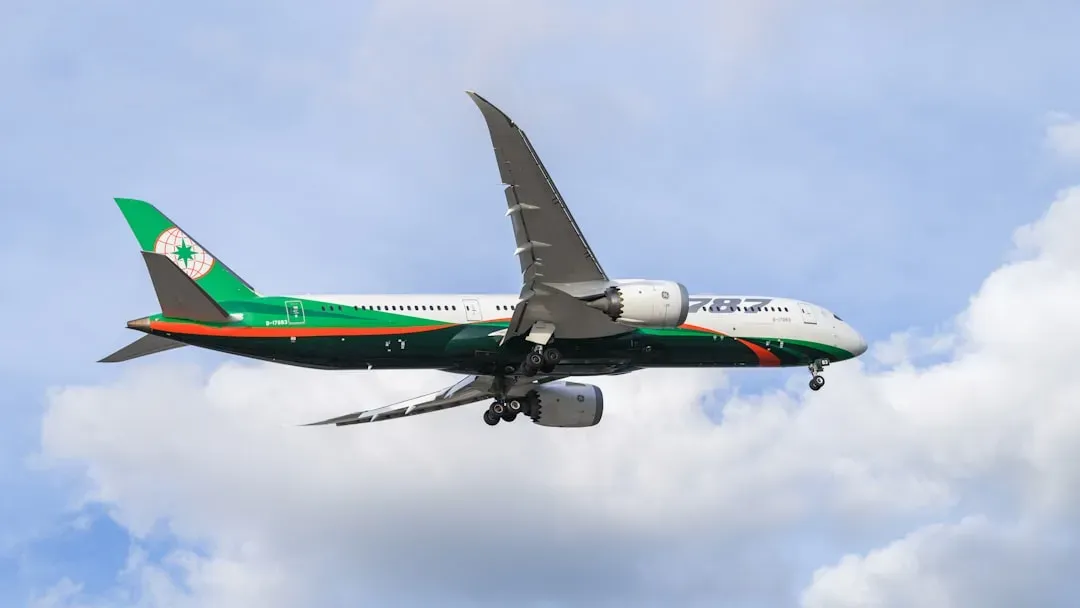
This one is harder to assign to a single carrier, but it’s impossible to ignore. Many Americans have developed a specific fear tied not to an airline’s name, but to the aircraft it flies. A Morning Consult survey found that net trust in Boeing dropped by 14% between late 2023 and early 2024. Travel search engine Kayak now lets travelers filter out Boeing aircraft when booking flights. That’s a stunning consumer behavior shift, one that directly impacts airlines still operating large fleets of Boeing jets.
Boeing was still working to rebuild public trust after the crashes of two 737 MAX 8 jets in 2018 and 2019 that killed 346 people. Then the Alaska door plug incident happened, followed by the D.C. midair collision. The aviation industry is already facing a trust deficit. Boeing has suffered repeated controversies over its safety practices and internal culture, from emergency landings and structural failures to the deaths of two whistleblowers in 2024. Airlines operating large Boeing fleets have been caught in that crossfire whether they deserved to be or not.
10. The U.S. Aviation System as a Whole: The Trust Crisis Nobody Wanted
Here’s the thing that gets overlooked in debates about individual airlines: the trust problem in 2025 is bigger than any single carrier. One third of voters say that recent crashes have made them less likely to fly on a plane, and an additional 28% say that the crashes have made them more scared of air travel, even though it hasn’t affected their likelihood of flying. That’s a combined majority of the American flying public reporting some form of heightened anxiety about the skies.
Voters blame a variety of factors for the recent crashes, predominantly a shortage of air traffic controllers and airline companies cutting costs on maintenance and training, and think that recent moves to fire hundreds of FAA personnel will make flying less safe. That concern is not irrational. Airlines in 2024 experienced 437 tarmac delays of more than three hours on domestic flights and 61 tarmac delays of more than four hours on international flights, the most domestic tarmac delays in one year since the Tarmac Delay Rule took effect in 2010. The system is strained, and passengers can feel it every time they sit on a runway going nowhere, or watch a news alert flash across their phone screen about yet another aviation incident.
Just over half of U.S. adults have a great deal or moderate amount of confidence in federal government agencies to maintain air safety, down slightly from about six in ten the previous year. That erosion of institutional trust is the most worrying trend of all. Not because flying is statistically unsafe, but because perception shapes behavior, and right now, the gap between aviation’s impressive safety record and the public’s confidence in it is growing wider by the month. What would you do before your next flight – research the airline, the aircraft, or both?