
There’s a whole unspoken world happening at a fine-dining table that most guests never see. Every gesture, every placement, every fold of that crisp white cloth sends a message to the staff around you – whether you intend it or not. Most diners arrive focused on the menu, the wine list, and the conversation. The napkin? It barely crosses their mind. That’s exactly the problem.
What you do with your napkin is surprisingly important. It can signal the start or end of a meal, send hints to your server, or, if you do it wrong, create real confusion for the staff trying to serve you. Honestly, a seasoned captain can read a table in seconds, and the napkin is one of the first things they notice. Here’s what’s really going on behind those polished smiles. Let’s dive in.
1. Tucking the Napkin Into Your Collar
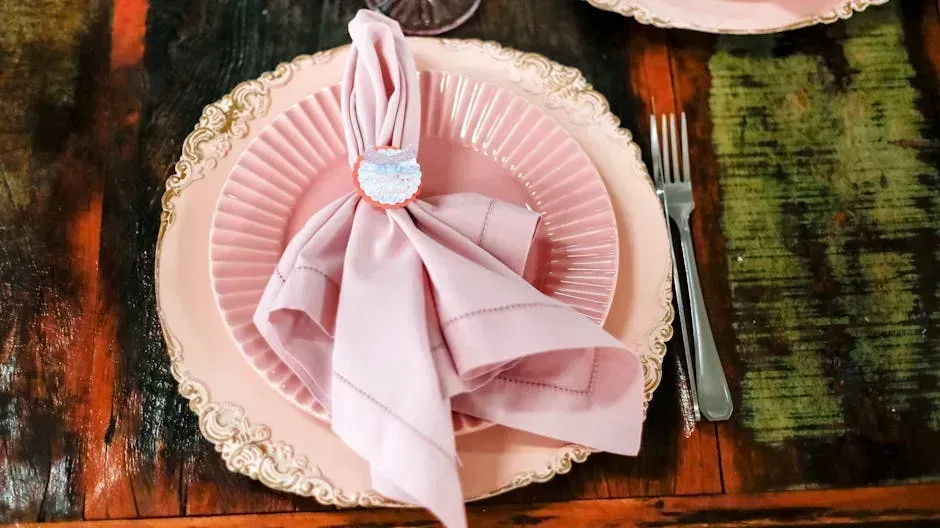
Let’s be real – this one is the big one. Nothing signals “first time in a fine dining room” quite like tucking the corner of your linen napkin into your shirt collar like you’re about to eat a bowl of spaghetti at your grandmother’s kitchen table in 1987. It happens more often than you’d think, and every time it does, the floor staff notice.
According to etiquette expert Nick Leighton, “the napkin just gets placed on the lap … it doesn’t get tucked in anywhere.” Despite what you may have seen on sitcoms or cartoons, that collar tuck is simply not acceptable. The rule is firm and consistent: don’t tuck a napkin into your collar, between the buttons of your shirt, or in your belt.
The only exception that etiquette sources acknowledge is that you may ask for a special bib if you’re eating lobster or another particularly messy dish. The restaurant can provide the right tool for that. The linen napkin placed by the staff for you, however, is designed to rest on your lap – not become a bib. It’s a small distinction that means everything to the people serving you.
A dinner napkin is folded in half and then placed on the lap. You might not think anyone will notice that under-the-table detail, but people will notice and likely frown upon tucking it into your shirt when messy food arrives. Unless a special bib is offered and the setting is casual, leave your napkin in your lap.
2. Wiping Your Mouth Instead of Dabbing
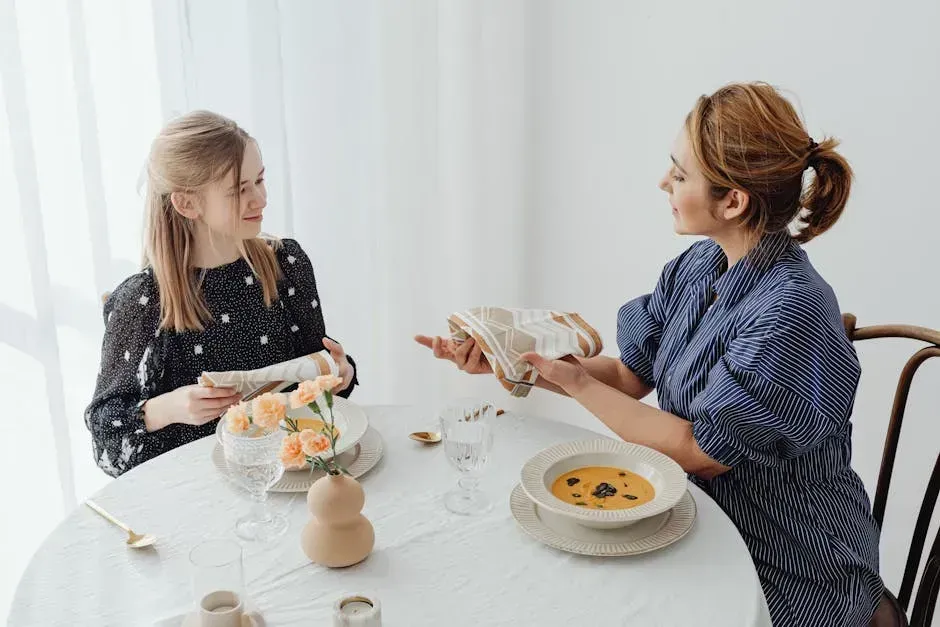
This one seems minor. Honestly, I get why people don’t think about it. Wiping your mouth feels natural and efficient – you just drag the fabric across your lips and move on. But in a fine-dining setting, that vigorous back-and-forth motion is one of those things that makes a captain quietly wince.
When it comes to napkin etiquette, the “dab, don’t rub” guidance is not just a vague recommendation. It is a formal rule that governs how you handle your napkin. Simply wiping your face with a swiping motion might feel natural, but this is not the proper way to go about it. Think of it like treating a fine silk shirt. You’d never aggressively scrub at it. Same principle.
Should an occasion arise where your napkin is needed, never use a wiping motion. Instead, simply dab at the corners of the mouth. If your napkin becomes stained during dinner, refold it below table level so that the stains are not visible to other diners.
Use your napkin frequently during the meal to blot or pat, not wipe, your lips. Over-wiping makes you seem flustered or self-conscious. The best diners use the napkin sparingly, lightly, and always below the table. That’s the standard staff are trained to observe.
3. Placing the Napkin on the Table When You Step Away
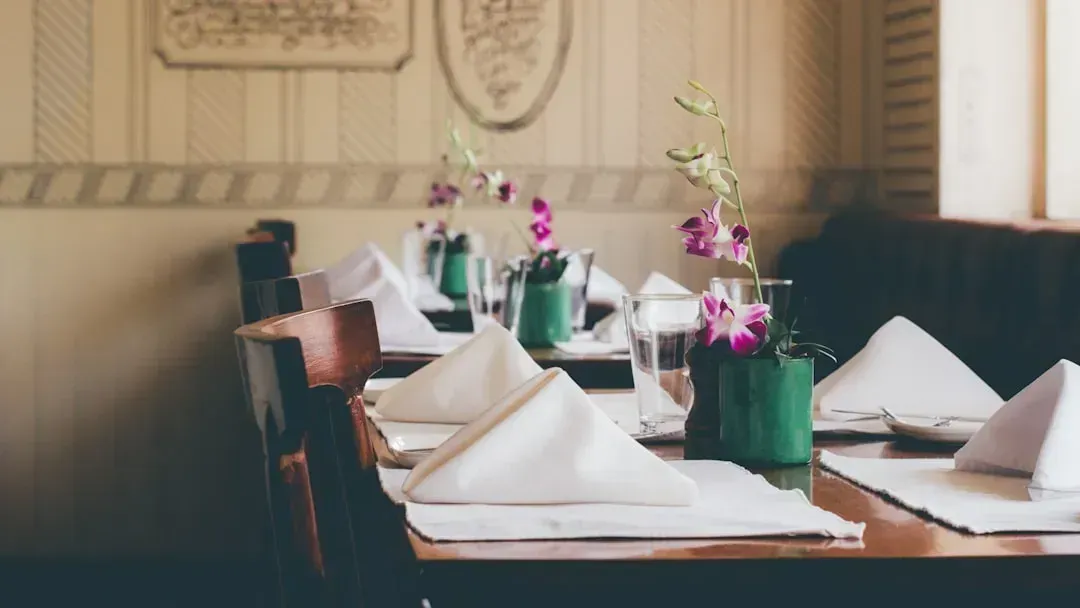
Here’s the thing – this one genuinely creates real service confusion, not just a quiet inner grimace. When a diner excuses themselves to visit the restroom mid-meal and drops their napkin on the table rather than on their chair, it sends exactly the wrong signal to the staff watching.
Before you ever push back your chair, you must make a choice. Are you an Elvis or the Terminator? Elvis “has left the building,” but the Terminator “will be back.” The napkin is how you make that distinction crystal clear, without uttering a word. If you’re just excusing yourself, your napkin belongs on your chair.
In higher-end restaurants, it’s customary to place your napkin on the seat of your chair, not draped over the back of it, if you need to leave the table but aren’t leaving the restaurant. This signals to the server that you will be back soon and that you’re not done with your meal. By contrast, the napkin goes on the table to the left of the plate if you are finished.
Don’t be surprised if you come back to the table with a freshly folded or entirely new napkin. A server at a fine-dining restaurant will likely use your absence to replace your stained napkin or at least fold it back into a neat shape. That’s the level of attention being paid. Every move at the table is being read.
4. Blowing Your Nose Into the Napkin

I’ll be straightforward here: this is the habit that genuinely horrifies staff the most. It’s not an exaggeration. It happens regularly enough that it’s discussed openly among restaurant workers, and it never stops being shocking.
Restaurant workers have recounted countless occasions of walking past a table only to see a guest blowing their nose into the cloth napkin. It is deeply unpleasant, and staff are obligated by management to clear the table after a meal – including taking off those cloth napkins. No one wants to touch a cloth napkin that has bodily residue in it.
It is important to never use restaurant napkins for personal tasks that don’t involve eating, like blowing your nose. Doing so on the dining table is considered inappropriate in formal dining etiquette. Such misuse of napkins may cause discomfort to your fellow diners and spoil the whole dining experience. Napkins are kept for cleanliness during the meal, not as tissues.
A restaurant napkin is not a Kleenex tissue. If you need to blow your nose, don’t do it at the table. Remove yourself to a restroom and attend to the matter in private. It’s a simple rule. Yet it gets broken constantly. The restroom exists precisely for moments like this.
5. Placing the Napkin on the Plate at the End of the Meal
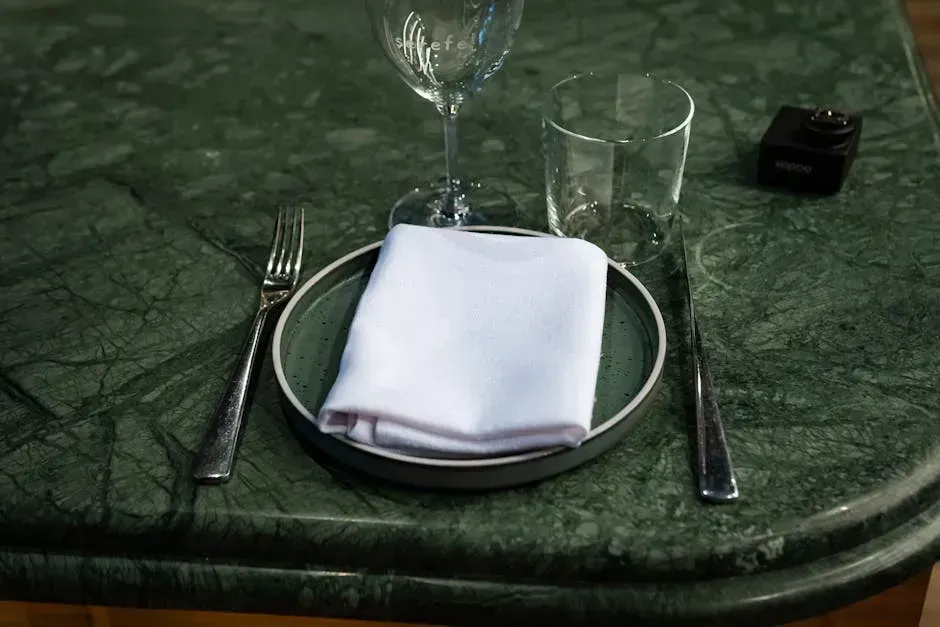
You’ve had a wonderful evening. The dessert is cleared. You’re ready to go. So you ball up your napkin, toss it onto the plate in front of you, and start reaching for your coat. From where the staff are standing, this moment is quietly painful to watch.
Never place your napkin on top of your food or plate after you’re done. Always set the napkin to the left of your plate once you’re done, not on it. These small touches show respect for the meal, your fellow diners, and the establishment.
After the meal is over, you should place your napkin neatly on the table to the left of your dinner plate, with no soiled areas showing. Don’t refold your napkin, wad it up, or place it on your plate. Think of it like finishing a book. You close it gently and set it aside. You don’t crumple the pages and throw it in a corner.
At the end of the meal, you may loosely fold your napkin while keeping the soiled side out of view and place it to the left of your plate. If there is no plate in front of you, keep it in the center of your place setting. This also serves as a signal to the server that you are finished. It’s elegant, clear, and considerate – which is ultimately what fine dining is all about.
The Bigger Picture: Napkins Are a Silent Language
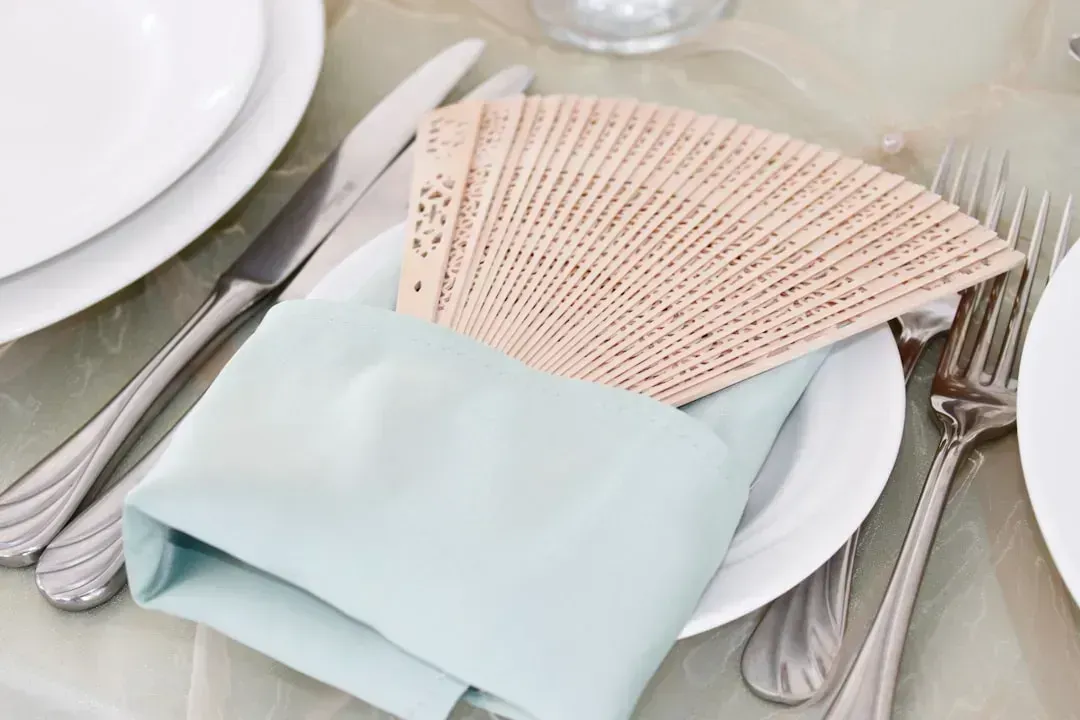
Here’s something most diners never consider: in a fine-dining room, staff are not just watching for requests. They are reading the table continuously, and the napkin is one of the most consistent signals available to them. It’s almost like a non-verbal conversation happening in real time throughout your entire meal.
Paying attention to the napkin’s message is central to how trained staff operate. A napkin placed on a lap signals a guest is ready to eat. A napkin folded in half signals they are done with the dish and ready for the next course. A fully folded napkin is a universal language signaling a guest is finished with their meal entirely.
Fancy manners are more than just a way to show off high social status. They are also markers of respect and civility, particularly important in cross-cultural settings, where etiquette becomes a kind of common language. According to Pamela Eyring, President and Director of The Protocol School of Washington, how you conduct yourself at the table is a true indication of how professional you actually are. Proper etiquette can elevate the impression you leave on those around you.
It’s hard to say for sure whether most diners know about these unspoken rules. My instinct says the vast majority simply never learned them, and there’s nothing wrong with that. The beauty of fine dining etiquette is that once you know it, it becomes effortless. The napkin stops being just a piece of fabric and starts being a tool that actually makes your evening flow better – and keeps the staff from exchanging those knowing glances across the room. What would you have guessed was the most common offense?