
Most relationship friction doesn’t announce itself. It doesn’t arrive as a single dramatic event but rather as an accumulation of small, repeated behaviors that slowly erode the sense of safety and ease a partner once felt at home. The trouble with these habits is that they’re often invisible to the person doing them, while the person on the receiving end absorbs the weight a little more each day.
Marital distress has powerful effects on both partners, often leading to great sadness, worry, a high level of tension, anxiety, and depression. What’s worth understanding is that most of the habits listed here aren’t rooted in cruelty. They’re patterns, often learned long before the marriage began, that quietly chip away at connection over time.
1. Stonewalling During Conflict

Men are consistently more likely to stonewall than women. They tend to withdraw emotionally from conflict discussions while their partners remain emotionally engaged, and in the Gottman Love Lab studies, roughly 85 percent of stonewallers observed were men. When a husband goes silent, leaves the room, or offers only flat one-word responses during a difficult conversation, it doesn’t feel neutral to his partner. It feels like abandonment.
Research published in the Journal of Marriage and Family Therapy found that couples who experience chronic stonewalling show higher physiological stress, lower relationship satisfaction, and greater emotional distance over time. The silent treatment often provokes the other spouse to push harder, leading to criticism or anger, which reinforces the stonewalling, creating a cycle of ongoing relationship conflict. Over months and years, this cycle becomes the default, and both partners end up feeling stuck in it.
2. Unpredictable Mood Swings

When a husband’s mood or behavior changes dramatically without warning, it creates a sense of walking on eggshells. A partner might never know whether they’ll be met with affection or anger, interest or indifference, and this unpredictability makes it impossible to feel emotionally safe, as the nervous system remains constantly vigilant, trying to detect and prepare for potential threats. That kind of hypervigilance is exhausting to sustain.
Husbands experiencing internal stress may struggle with excessive worry, which can lead to frustration and emotional exhaustion for both partners. The affected individual may also experience mood swings, irritability, and an inability to relax, all of which contribute to a tense home environment. Even when the husband isn’t directing his mood at his partner, she still has to navigate it, often every single day.
3. Dismissing or Minimizing Her Concerns

One of the more subtle but deeply damaging habits is the tendency to brush off a partner’s worries as overreactions. When a husband consistently responds to concerns with phrases like “you’re being too sensitive” or “it’s not a big deal,” the message received is that her emotional reality doesn’t deserve acknowledgment. When there are continued arguments or dismissals in a relationship, research shows it restricts the processes that lead to good mental health. Unresolved conflict and emotional invalidation can influence sleep and mood and lead to anxiety and depression.
Receiving negative messages as if they are normal and acceptable is a significant mistake in a relationship. Over time, a partner who is consistently dismissed stops bringing her concerns forward at all. The silence that follows isn’t peace. It’s disengagement, and it tends to breed resentment quietly and steadily.
4. Excessive Criticism

Criticism, defined as attacking a partner’s character rather than addressing a specific behavior, is one of Gottman’s Four Horsemen of relationship destruction. These patterns create emotional distance, erode trust, and prevent healthy conflict resolution. A husband who regularly criticizes how his partner cooks, manages the household, parents, or speaks isn’t just offering feedback. He’s sending a message about her fundamental worth.
Negativity in a relationship is a toxic factor, with communications that include criticisms, sarcasm, or pointed remarks directed at the other person. Daily negativity can be extremely draining for both parties and can lead to severe anxiety. The cumulative effect of this kind of communication is that a partner begins to second-guess herself in almost every area of life, which makes ordinary decision-making feel stressful and uncertain.
5. Controlling Behavior

Control issues in relationships often manifest as excessive monitoring, decision-making without consultation, or restricting a partner’s independence. When a husband needs to control aspects of life ranging from finances to friendships, social activities to personal choices, it can trigger profound anxiety. This controlling behavior sends the message that the partner isn’t trusted or capable, gradually eroding her confidence and amplifying her anxiety.
A healthy power balance means that both partners have a voice and regard each other’s input as having equal importance. The opposite experience is one where the partner feels controlled. A wife who cannot make basic decisions about her own time, friendships, or spending without navigating her husband’s reaction is not living freely in her own home. That loss of autonomy, even when subtle, is a reliable source of ongoing anxiety.
6. Emotional Unavailability

In a marriage, loneliness happens when a person feels their partner doesn’t understand their needs and wants. A lack of attention increases the risk of mental health issues like anxiety and depression. This could be because a spouse is a workaholic and rarely present, or it could be more deliberate, such as being consistently ignored. Either way, the impact on mental wellbeing is real and measurable.
Loneliness affects sleep, increases stress, lowers self-esteem, and causes a spiral of negative thinking. A husband who is physically present but emotionally absent, who doesn’t ask questions, share feelings, or offer genuine connection, can leave his partner feeling more isolated than she would living alone. That particular kind of loneliness is especially hard to name and even harder to explain to others.
7. Refusing to Discuss Problems

A husband who becomes overly avoidant may withdraw from difficult conversations and social situations, and this avoidance can lead to a sense of isolation for both parties. When a wife repeatedly tries to raise an issue and her husband redirects, deflects, or flatly refuses to engage, the problem doesn’t disappear. It grows. She’s left carrying the weight of it alone while also managing the frustration of being shut out.
Couples with high levels of marital distress fight frequently, with conflict remaining unresolved and becoming exhaustive. Alternatively, the spouses may not fight at all but stand apart in complete alienation, no longer doing kind things for each other and no longer communicating. Both versions are damaging in their own way, and refusal to engage with problems is often what turns the second scenario into a permanent state.
8. Constant Negativity and Pessimism

A partner who is always pessimistic will drain their spouse’s energy, which often causes anxiety. When there is a need for both partners to collaborate, the negatively-minded one becomes the progress inhibitor. This kind of habitual negativity is easy to dismiss as “just his personality,” but the cumulative drain on a household’s emotional atmosphere is significant.
Living with someone who consistently sees the worst-case scenario, complains regularly, or responds to good news with skepticism trains a partner to stop sharing positive things. A stressor that nearly all partners experience is conflict, which can be detrimental to their health and relationships if navigated poorly. Conflict has been associated with heightened depressive and anxiety symptoms, poorer subjective health, and increased functional impairment over time. A climate of negativity is, in its own way, a form of low-grade ongoing conflict.
9. Using Anger as a Communication Tool
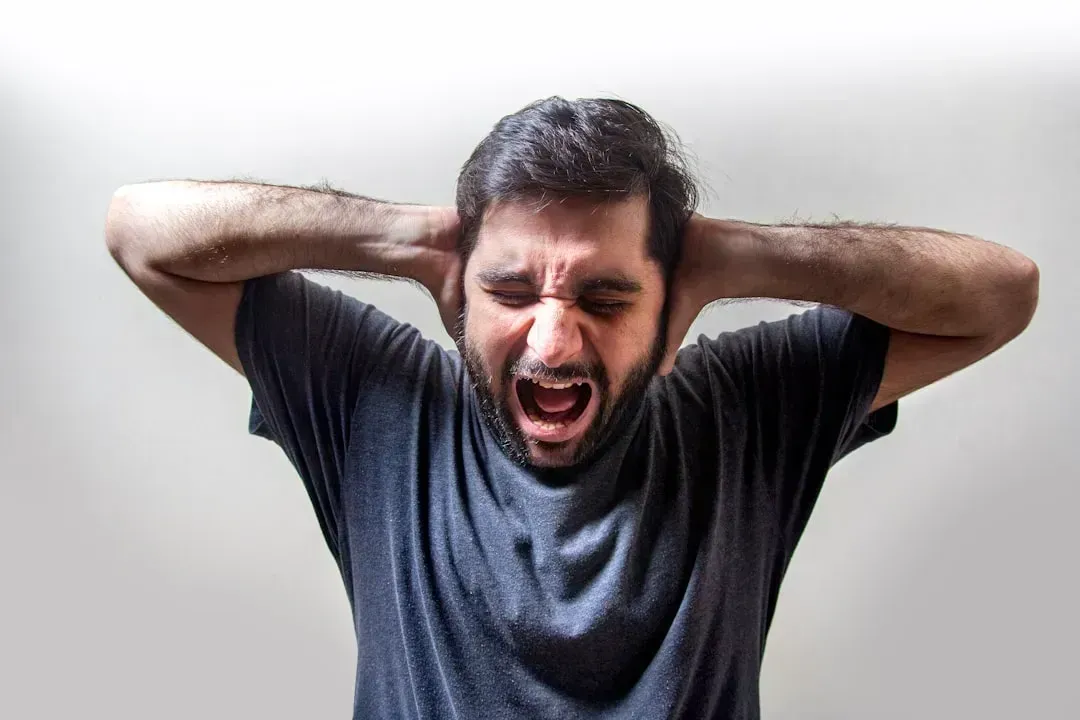
Sometimes in relationships one partner can be quick to lose their temper, with anger simmering below the surface waiting for an outlet. When this is a regular occurrence, it becomes a major cause of anxiety, as family members live with a constant level of underlying tension, never knowing when the next eruption will come. This is the eggshell effect in its most recognizable form.
Individuals with unhealthy anger often experienced a childhood that was chaotic, unpredictable, and possibly unsafe. They struggle to trust others and themselves, and thus stay on guard, anticipating conflict, feeling they can gain control of a situation through explosive emotions. Understanding the roots of the behavior doesn’t make it less damaging for the person absorbing it. Chronic exposure to a partner’s unregulated anger is a well-documented source of ongoing anxiety.
10. Withdrawing Affection Without Explanation

When physical affection, warmth, or basic kindness suddenly disappears without any acknowledged reason, a partner is left to fill in the silence with her own interpretations, most of which tend toward self-blame. Unpredictable reactions and erratic behavior can increase uncertainty and anxiety. If a partner never knows how her husband will respond, this unpredictability contributes to anxious thoughts and feelings on a sustained basis.
Frequent unresolved arguments, the loss of good feelings, and the disappearance of friendship, intimacy, and vitality are signs that a marriage is experiencing real distress. Withdrawal of affection communicates rejection even when no word is spoken. For many women, the absence of warmth is harder to cope with than open conflict, precisely because there’s nothing concrete to address or resolve.
11. Dismissing the Mental Load She Carries

The mental load refers to the invisible cognitive and organizational work of running a household: tracking appointments, managing children’s needs, anticipating what needs to be bought, planned, arranged, and remembered. When a husband consistently fails to recognize this work or treats it as not really work, the imbalance creates chronic low-grade stress. Partners of those dealing with anxiety or significant emotional burden often take on more than the normal share of domestic, economic, parenting, and other responsibilities.
Despite marriage’s overall health benefits, all couples experience stress that can increase health risks. Marital stress can alter endocrine, cardiovascular, and immune function, which are key pathways from troubled relationships to poor health. When one partner silently carries a disproportionate share of the cognitive burden, those physiological pathways are active far more often than either person may realize. Acknowledgment costs nothing, but its absence is felt constantly.
12. Prioritizing Screen Time Over Connection

It’s one of the more modern versions of emotional withdrawal, and it’s become remarkably common. A husband who reaches for his phone during dinner, scrolls through content while his partner talks, or spends entire evenings in front of a screen while sitting beside her is technically present but functionally absent. Living in the same space without genuine emotional availability threatens the attachment bond that naturally results from proximity, emotional closeness, and time genuinely spent together.
The stresses and strains of everyday life, the emergence of disconnecting habits, communication blocks, and a waning of emotional connection can quickly derail an otherwise happy partnership. Habitual screen prioritization sends a quiet but consistent message about what holds value. When a partner consistently feels less interesting than a device, that feeling doesn’t stay contained to evenings. It shapes how she understands her place in the relationship.
13. Broken Promises and Unreliable Follow-Through

Broken trust is a very common cause of anxiety in relationships. It could result from a partner feeling like they can no longer rely on the other person, from blowing off plans to just not following through on promises. Trust is crucial in a partnership, and once it’s gone, it takes time, patience, and genuine effort to rebuild. The habit of not following through rarely feels significant in isolation. But repeated across months and years, it becomes a pattern that shapes expectations.
The most overarching reason that relationship anxiety takes hold in struggling relationships is long-term stress. Usually this stress develops over time, and long-term stress is known to cause anxiety, and can even contribute to anxiety disorders. When a wife learns she cannot count on what her husband says he will do, she stops planning around him and starts building internal systems that don’t rely on him at all. That quiet self-protection is a sign that trust has already eroded, even if neither partner has named it yet.
None of these habits exist in isolation. They tend to cluster, reinforce one another, and become the invisible architecture of a household’s emotional climate. The difficulty is that they’re rarely dramatic enough to trigger a direct conversation, yet their effects accumulate steadily over time. Recognizing a pattern is always the first step, and in most cases, these behaviors can shift when there is genuine willingness to pay attention to what’s actually happening between two people.