
There’s a particular kind of exhaustion that comes not from conflict, but from silence. From suspecting something is wrong while being told everything is fine. Many women describe this as one of the loneliest experiences in a relationship, a quiet uncertainty that nobody around them seems to name out loud.
Some relationship problems don’t arrive as blowout arguments. They slip in gradually, cloaked in charm or dismissed with a wave of the hand. The seven patterns below are ones women consistently recognize, worry about, and quietly fear their partners will never fully acknowledge.
1. Emotional Unavailability Dressed Up as Strength

Recent psychology research sheds light on why some men have trouble being emotionally present in relationships. Studies show that traditional masculine gender norms, which expect men to be tough, stoic, and self-reliant, are linked to emotional suppression and difficulty with intimacy. Psychologists call this “restrictive emotionality,” and it’s a key aspect of the emotionally unavailable personality style.
An emotionally unavailable man can be physically affectionate and want sex, often on his terms, but stops short at expressing his emotions or feelings. He may talk a big game and declare his undying love, but then avoid genuine emotional intimacy. What makes this so confusing for women is that the warmth is real but lopsided. The connection never quite deepens, no matter how long she waits.
2. Gaslighting That Masquerades as Perspective
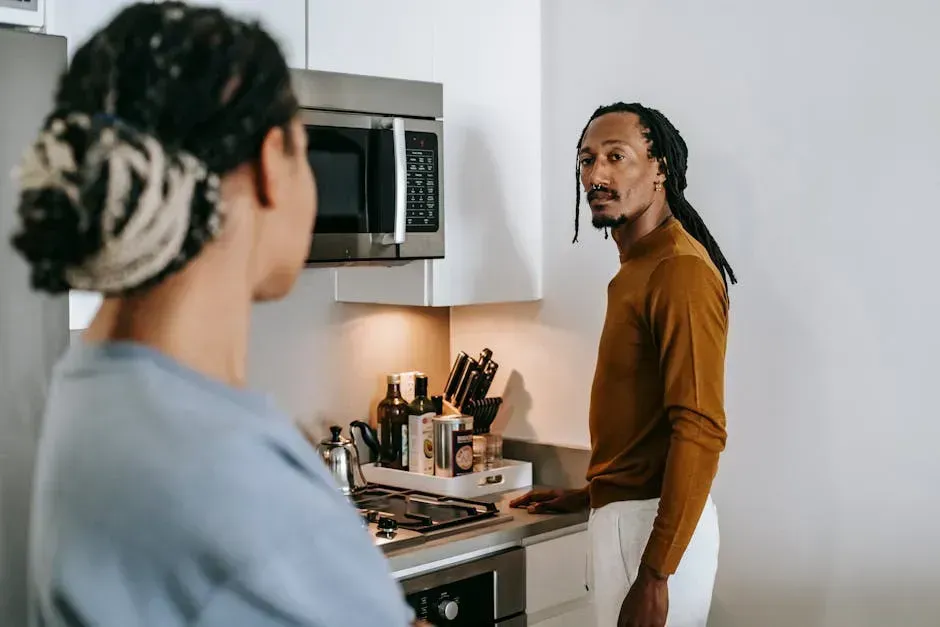
Gaslighting is not just lying. It’s psychological erosion, the kind that makes you question your memory, your instincts, even your sanity. He tells you that you’re overreacting, that it never happened, or that you’re too sensitive when you call out something rude. This kind of manipulation can slowly wear down your confidence and make you question your instincts over time.
Toxic behavior rarely shows up all at once. It slips in quietly, often hiding behind charm, chemistry, or cute little quirks, which is exactly why people keep asking: what are some red flags in a guy? Women often describe this red flag as the hardest to name early on, precisely because each individual incident seems too small to raise a concern.
3. Controlling Behavior Hidden Behind Care

He may make decisions for you and check your phone and social media accounts. A chronic need to hold the car keys to your life is a telltale sign of controlling behavior, and it’s a problem. The insidious part is that control often arrives wearing the costume of protection, attentiveness, or jealousy framed as love.
Controlling behavior can escalate into further abuse or manipulative behavior and is sometimes a precursor to physical or emotional abuse. Missed red flags during the honeymoon phase can lead to an abusive relationship. Women frequently recognize this pattern only in retrospect, once the behavior has normalized so gradually it no longer feels abnormal.
4. Carrying the Entire Emotional Load Alone

Extensive research consistently demonstrates that, in heterosexual contexts, women tend to perform a greater share of emotional labor in their romantic relationships compared to their partners. A study centered on heterosexual couples with young children found a significant inequality such that fewer than 6% of men reported being more engaged in emotional labor than their partners, whereas a majority of women, over 50%, shouldered the greater responsibility.
Over the past three decades, there has been a documented “male friendship recession,” with men tending to maintain smaller, less emotionally intimate social circles than women. Traditional norms of masculinity, which discourage vulnerability and emotional expression, often lead men to rely exclusively on their partners for emotional processing. Women who perform this disproportionate emotional labor frequently report burnout, resentment, and a loss of personal well-being. By taking on the role of primary emotional support, they often neglect their own emotional needs, leading to psychological and relational imbalances.
5. Commitment Ambiguity Used to Stay in Control

You never have “the talk.” You desperately want to ask what you two are doing or whether you are exclusive, but you don’t want to scare him off. Months pass. You’re acting like a couple. But there’s no title. No clarity. No definition. This deliberate fog is something many women identify as one of the most draining experiences in modern dating.
The concept of commitment issues tends to come up most often in the context of romantic relationships. Someone with commitment issues will often demonstrate fear or unwillingness to commit to a long-term relationship. This typically refers to an inability to talk about the future or lack of desire to take the next steps when a relationship begins to progress. The fear women carry is not simply about a label on the relationship. It’s about whether their needs and investment are even being acknowledged.
6. Blame-Shifting Instead of Accountability

Men who are emotionally unavailable often share a narrative that blames the other person, without taking accountability for their part of the dynamic. There’s frequently a pattern where they leave the relationship just as it’s about to get serious, or end things because they are afraid of getting stuck. These are all signs of someone who has fear associated with emotional intimacy.
If, after sharing your experience and perspective, you don’t have the sense that your partner cares about their impact on you, this is a potential warning sign of deeper trouble in the relationship. Your feelings and experience should matter to your partner. If an emotionally unavailable man senses a threat or intrusion that puts him in a state of feeling vulnerable or emotionally overwhelmed, he is quick to go into defense mode, attacking and expressing anger, deflection, and blame to shut down the conversation. Women dread this pattern in particular because it leaves them holding the weight of every unresolved issue.
7. Using Mixed Signals to Maintain the Upper Hand

Ghosting, breadcrumbing, and noncommittal relationships are often normalized or even celebrated as empowerment or self-reliance. The ability to disappear without explanation is framed as confidence, while emotional clarity is perceived as neediness. Social media and modern dating culture further reinforce emotional unavailability. In this landscape, inconsistency becomes expected, detachment becomes desirable, and many people learn to tolerate ambiguity rather than ask for reciprocity.
He drops subtle comments to see how you react, creates small conflicts to gauge your loyalty, or pretends to be unavailable just to see how much effort you will make. This is not passion. This is control dressed as strategy. These psychological games reflect immaturity, not intelligence. Real connection grows through trust, not manipulation. The fear beneath this red flag runs deep. Women often worry that naming it will be dismissed as oversensitivity, keeping the dynamic locked in place indefinitely.
What ties all seven of these patterns together is not cruelty, necessarily, but the refusal to acknowledge. Problems that go unnamed tend to grow. Recognizing these red flags is less about building a case against a partner and more about trusting what you’ve already noticed. Most women who later describe these dynamics say the signals were there from early on. The harder question is always the same: what do you do once you’ve seen them clearly?