
Florida has long worn the crown as America’s retirement paradise. Sun, beaches, no state income tax, and year-round warmth – it sounds like everything a tired, hardworking person deserves after decades on the job. The dream is easy to sell. The reality, though, is a very different story.
Thousands of retirees have discovered – sometimes too late – that life in the Sunshine State comes with a stack of fine print nobody warned them about. From eye-watering insurance bills to brutal summers that never seem to end, the shock can hit hard and fast. Let’s dive in.
1. The Home Insurance Crisis Is Absolutely Real – and Ruthless

Honestly, nothing prepares you for opening that first insurance renewal letter. Florida’s average annual cost of home insurance hit $8,292 in 2025, an 18% increase over 2024. That’s not a typo. For a retiree on a fixed income, that single line item can blow up an entire monthly budget.
A full 70% of Florida homeowners have experienced rising insurance costs or coverage changes, such as their insurer dropping them, according to a 2024 Redfin survey. Think about that – nearly three out of four homeowners. Many insurance companies in Florida are leaving the state entirely, while others are choosing to significantly raise rates, limit coverage, or even cancel policies.
From 2017 to 2023, Florida suffered over $50 billion in insured losses from catastrophic events. That mountain of losses has shattered the market. For some Florida homeowners, the only option is the state-created insurer of last resort, Citizens Property Insurance Corporation, which has seen its policy count surge. It’s not exactly the safety net you imagined when you signed your mortgage.
2. Hurricane Season Is Not Just Background Noise
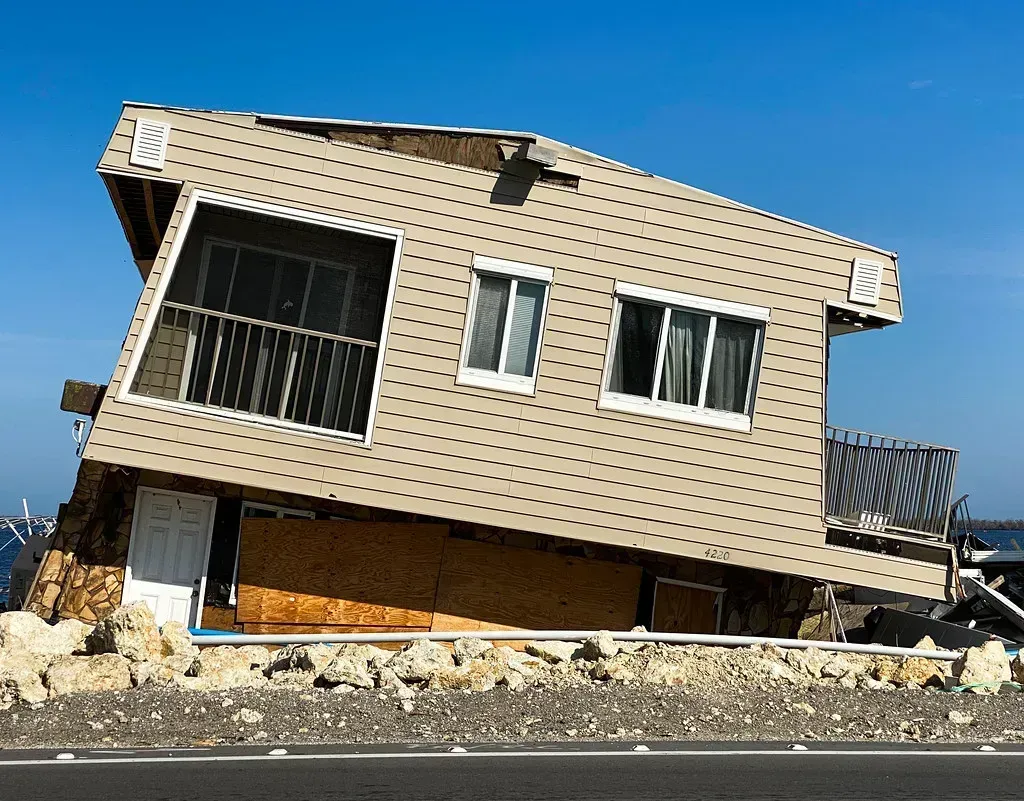
Before moving, most retirees think of hurricanes the way people in the Midwest think of tornadoes – it happens, but probably not to me. Florida will correct that assumption quickly. The 2024 hurricane season featured above-normal activity and matched five other years for the most hurricanes to make landfall during a single season.
In September 2024, Hurricane Helene hammered Florida and the Southeast, killing more than 230 people, making it the deadliest hurricane to strike the U.S. since Hurricane Maria. Some estimates put the economic impact as high as $200 billion. That is not a background event. That is life-altering.
Retirees who move to Florida are often shocked to discover that deductibles for hurricane insurance often range from 2% to 5%, and sometimes as much as 10%, of the policy coverage amount, rather than the fixed dollar amount they were used to up north. On a $400,000 home, that means a deductible of up to $40,000 before your insurer pays a single cent. Since 2020, the state has experienced at least 34 billion-dollar weather events, including severe storms, floods, and tropical cyclones, according to NOAA data.
3. Property Taxes Keep Climbing – Despite What You Were Told

Everyone hears “no state income tax” and assumes Florida is cheap to own property in. Let’s be real – that’s only half the story. According to Redfin and CoreLogic data, home prices in Florida rose 64% over the last five years, while property taxes increased 47.5% from 2019 to 2024. That’s a staggering climb for anyone on a pension or Social Security check.
Tax bills have gotten so high that more than 66% of Floridian voters passed a ballot measure to increase their property tax break. Property taxes have skyrocketed nearly 60% within the last five years in Florida. Even voters are screaming about it now. Families in Miami-Dade, Orlando, and Tampa often spend more than 30% of their income on housing.
Miami-Dade homeowners paid up to $8,400 in property taxes in 2024, compared to just $2,600 in Pasco County – a $5,800 yearly difference for the same $400,000 home. Where you plant your flag in Florida matters enormously. The state falls short for retirees with its high home prices, high property taxes, high sales tax, and high homeowners insurance.
4. The “No Income Tax” Perk Has Some Very Real Catches

Yes, Florida has no state income tax, and yes, that matters. Florida does not have any personal income tax, and this applies equally to Social Security benefits, pensions, IRA and 401(k) withdrawals, investment income, and even military or public pensions. That part is genuinely great. Here’s the thing though – the state makes up for it elsewhere.
Don’t confuse “no state income tax” with “no taxes at all.” State and local taxes in Florida can take a real bite out of retirement savings. The combined state and local sales tax averages 7% in Florida, according to the Tax Foundation. That sales tax applies every single time you shop, dine out, or buy anything taxable – and it adds up fast.
That combined sales tax rate is higher than what retirees from snowbird states such as Michigan, Pennsylvania, Massachusetts, and New Jersey are accustomed to paying. So if you relocated from a low-sales-tax state, the sticker shock on everyday purchases can feel like a betrayal. States with no income tax, like Florida, might seem appealing, but often have higher property taxes or sales taxes that can offset the benefits.
5. Home Prices Have Exploded Beyond What Retirees Anticipated

The Florida housing market of even five years ago barely resembles what exists today. In just half a decade, the median price of a single-family house in Florida rose $150,000, or 60%. In July 2024, the median sale price was $409,700. If you planned your retirement around lower housing costs, that math no longer works the way you thought it would.
The cost of living in larger cities like Miami and Fort Lauderdale is over 20% higher than in Jacksonville, Orlando, and Ocala. That’s a massive spread within one state. According to World Population Review, the average weekly cost of groceries for Florida households is $287 weekly, making it one of the most expensive factors in living costs.
Florida is no longer the retirement haven it once was, according to a Bankrate survey that placed it eighth on a list of the best states to retire in the country. Eighth. A decade ago, it would have been first without question. The bottom line, according to Bankrate’s analyst, is that Florida isn’t as affordable as it once was for retirees.
6. The Heat and Humidity Are a Full-Time Problem

People from the Northeast or Midwest imagine warm Florida winters and think that’s the whole story. They forget about summer – a relentless, punishing, seven-month ordeal that no amount of YouTube videos can truly prepare you for. Florida has one of the highest statewide average temperatures during the summer months of June, July, and August. If you live in Florida, it is likely that your air conditioner will be running non-stop for most of the summer.
Think of it like living inside a greenhouse that you can never leave without sweating through your clothes. Average monthly utility costs increased from $583 in 2024 to $611 in 2025, with cooling and energy usage playing a significant role in warmer climates like Florida. That cooling bill is unavoidable – it’s not a luxury, it’s a survival cost.
In Florida, heat, humidity, insurance costs, and storm preparedness are constant considerations that tend to become more pronounced with time. For older adults with certain health conditions, the heat isn’t just uncomfortable – it can be genuinely dangerous. Many retirees find themselves locked indoors from May through October, which is not what they had in mind when they pictured their golden years.
7. Florida Ranked Near the Bottom for Healthcare Access

This one genuinely surprises people, and it probably should get talked about more. Florida is ranked number 49 out of all states in overall healthcare access and affordability. That’s nearly last in the entire country. For retirees who may have increasing medical needs, that ranking carries real consequences.
Access to healthcare is measured by identifying barriers that might prevent the delivery of care, such as the inability to obtain insurance coverage, having to travel long distances to healthcare centers, and lack of sufficient facilities and healthcare professionals. In practice, this means some retirees in Florida face long waits, limited specialists, or have to drive hours for certain procedures.
It’s worth noting that routine costs can vary dramatically by city. In Tampa, doctor visits average $126.53 and dentist appointments cost around $112.45, while Cape Coral sees higher medical costs, with doctor visits at $167.79 and dental visits at $129.57. The disparity within a single state is striking. For those relying on Medicare and supplemental plans, navigating Florida’s healthcare landscape can be a real challenge.
8. The Crowds, Traffic, and Overcrowding Are Exhausting
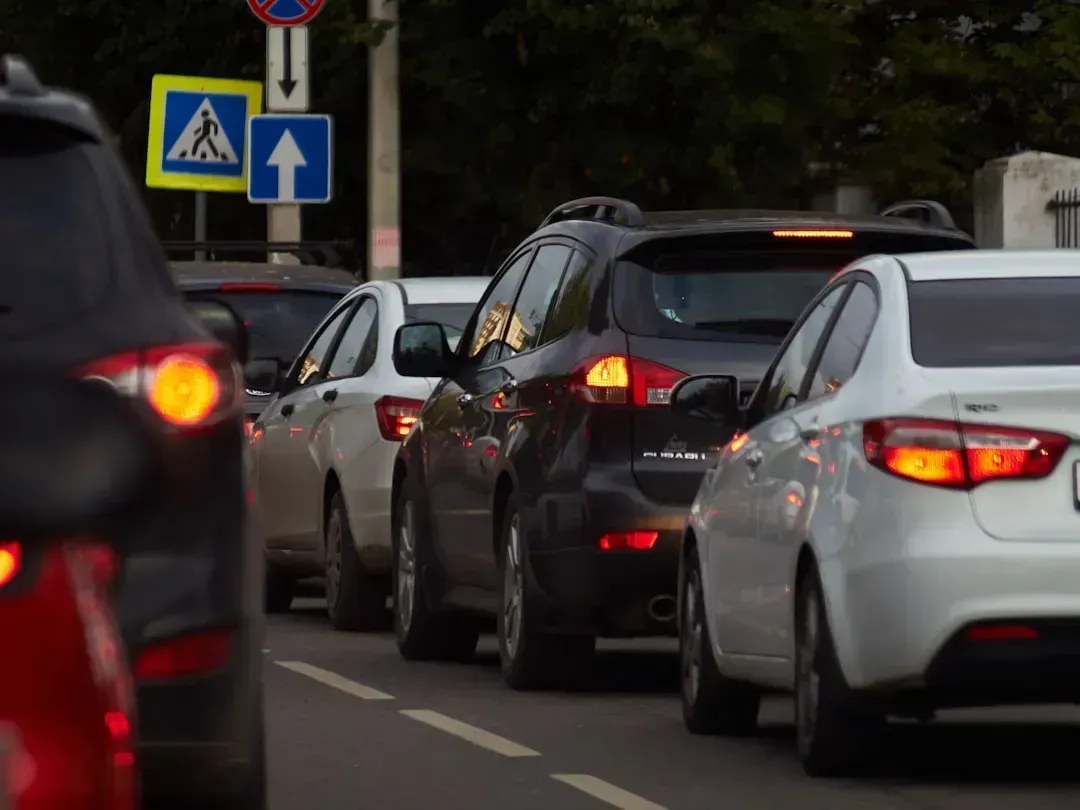
Retirement was supposed to be peaceful. Nobody pictures gridlock traffic on a Tuesday morning. Florida saw its population surge by more than 467,000 in 2025, the largest single-year gain in more than a decade, according to data from the U.S. Census Bureau Population Estimates Program. Everyone is moving to Florida – and you can feel it on every road and in every grocery store line.
Because the state of Florida is known for its beautiful weather and numerous attractions, residents have to deal with other people who want to experience that tropical splendor, even temporarily. During both the summer and winter seasons, many of the roads, beaches, and attractions are packed with people. The beaches you imagined strolling peacefully in the early morning are often shared with thousands of others by 9 a.m.
The Federal Trade Commission ranked Florida number one with respect to consumer fraud. A total of 474,314 reports were filed in the state in 2024, representing 2,163 reports per 100,000 people. A high-population state attracts high-population problems. Scammers and fraudsters specifically target retirement communities, and the volume of fraud cases in Florida is, frankly, alarming for anyone moving there on a fixed income.
The bottom line is this – Florida remains a beautiful, warm, and genuinely appealing state for retirement in many ways. The tax benefits on income are real, the winters are glorious, and the lifestyle options are abundant. But the financial pressures, the insurance nightmare, the relentless heat, and the overcrowding have fundamentally changed what it means to retire there. The state’s overall allure will likely continue attracting seniors, but those on fixed incomes might be wise to explore alternative locations. What would you have guessed would be the biggest dealbreaker? Tell us in the comments.