There’s a certain kind of reading that doesn’t let you stay settled. You pick up the book, find a comfortable chair, and somewhere around page fifty you realize the chair isn’t comfortable anymore. Not because anything is wrong with it, but because the book has shifted something inside you. That’s the kind of reading this list is about.
The ten books below span fiction, memoir, and rigorous nonfiction. Some have won the most prestigious literary prizes in the country. Others have reshaped entire policy conversations. What they share is the ability to put you face to face with an America that doesn’t always match the version you think you know. That can be unsettling. It can also be the most valuable thing a book ever does.
1. James by Percival Everett (2024)

James is a novel by American author Percival Everett published by Doubleday in 2024, reimagining Mark Twain’s Adventures of Huckleberry Finn but narrated by Huckleberry’s friend Jim, the fugitive slave, rather than by Huck. Unlike in Twain’s original, where Jim is depicted as simple, credulous, and superstitious, Everett’s Jim is skeptical, deeply calculating, and secretly more literate and erudite than most of the white people around him. In fact, Jim’s entire personality in Twain’s novel is revealed, in Everett’s version, to be a self-preservationist act put on to avert white suspicion. Jim carefully performs the role expected of him by white society while finding his own covert ways to resist.
The novel won the 2024 Kirkus Prize, the National Book Award for Fiction, and the 2025 Pulitzer Prize for Fiction. The Pulitzer Prize Board described James as “an accomplished reconsideration of Huckleberry Finn that gives agency to Jim to illustrate the absurdity of racial supremacy and provide a new take on the search for family and freedom.” What challenges readers most isn’t the subject matter alone. It’s the realization of how much the original story concealed.
2. Evicted: Poverty and Profit in the American City by Matthew Desmond (2016)

Evicted is a 2016 nonfiction book by American sociologist Matthew Desmond, set in the poorest areas of Milwaukee, Wisconsin, during the 2008 financial crisis and its immediate aftermath. The book follows eight families struggling to pay rent, many of whom face eviction. Through a year of ethnographic fieldwork, Desmond’s goal is to highlight the issues of extreme poverty, affordable housing, and economic exploitation in the United States.
Evicted won multiple awards, including the 2017 Pulitzer Prize for General Nonfiction. The Pulitzer committee selected the book “for a deeply researched exposé that showed how mass evictions after the 2008 economic crash were less a consequence than a cause of poverty.” While poverty can cause evictions, evictions also cause poverty – they are extremely disruptive to people’s lives, and families can end up losing everything as a result, including jobs, possessions, and sometimes their children. It’s a cycle most Americans don’t see, and Desmond makes it impossible to unsee.
3. Between the World and Me by Ta-Nehisi Coates (2015)
Written as a letter to his son, Between the World and Me is Ta-Nehisi Coates’ deeply personal exploration of race, identity, and the Black experience in America. Coates reflects on his own life and the systemic racism that has shaped American society. The book is compact, barely 150 pages, but it carries enormous moral weight. Coates doesn’t write to comfort the reader. He writes to tell the truth.
It provides an unflinching look at race in America and challenges readers to confront uncomfortable truths about injustice and inequality. Coates wrote about the Black experience in America with a raw honesty that challenges everything many readers thought they understood about race and American history. Reading it is like being in a conversation where someone is telling you truths you had never heard, or never wanted to hear. The discomfort many readers feel is not a flaw in the book. It is the point.
4. Educated by Tara Westover (2018)

Tara Westover’s memoir Educated recounts her struggle to escape a strict, survivalist family in rural Idaho, where she was denied an education. Despite having no formal schooling, she eventually earned a PhD from Cambridge University. The powerful memoir explores the transformative power of education and the search for personal freedom. The book refuses to cast easy villains. Westover’s family is both her source of harm and her origin – a tension she never fully resolves, which makes the story all the more honest.
Educated challenges readers on multiple levels. It forces a reckoning with how much of what we know, and who we become, is shaped by access to knowledge itself. The portrait of rural American fundamentalism it draws is neither mocking nor romanticized. It simply is. That restraint is what makes it so hard to shake.
5. The Color Purple by Alice Walker (1982)

Set in the early twentieth century South, The Color Purple follows the life of Celie, a Black woman who survives abuse, racism, and trauma to find strength and healing through love, sisterhood, and spirituality. Walker’s novel is a powerful exploration of resilience, self-love, and the journey to empowerment. Told entirely through letters, the book’s intimacy is its force. You don’t observe Celie from a distance. You’re inside her voice from the very first page.
The Color Purple challenges readers to confront difficult topics such as racism, sexism, and abuse while offering a transformative story of personal growth. The novel won both the Pulitzer Prize and the National Book Award in 1983, making Alice Walker the first Black woman to win the Pulitzer Prize for Fiction. What discomforts many readers is how tender the book becomes despite what it puts its characters through. That tenderness is inseparable from the challenge.
6. To Kill a Mockingbird by Harper Lee (1960)
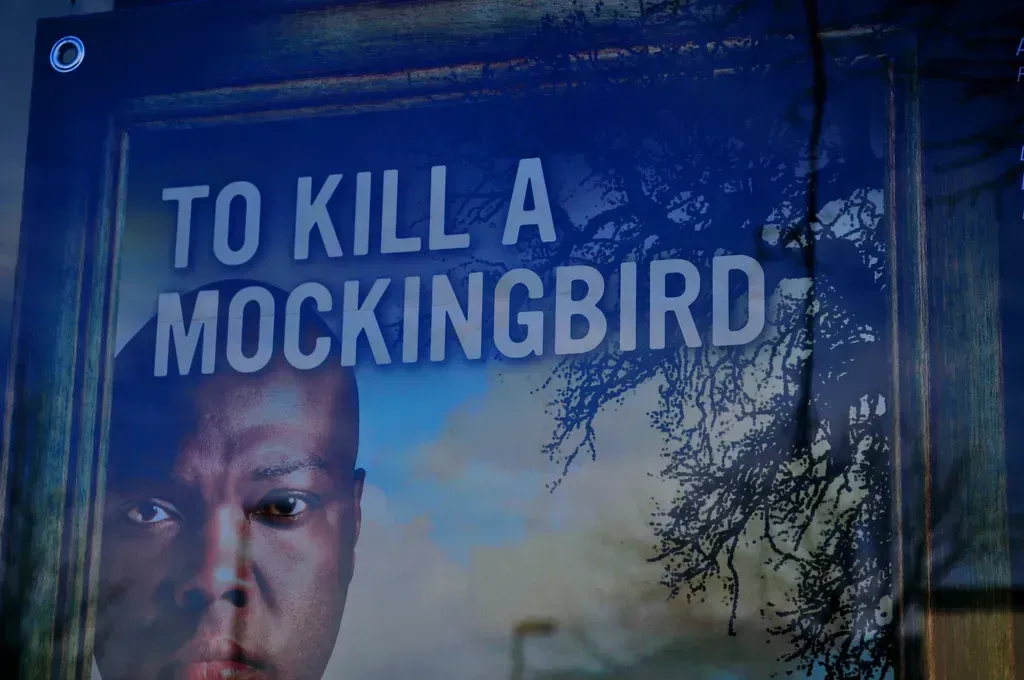
Harper Lee’s To Kill a Mockingbird is no stranger to the American Library Association’s “Banned or Challenged Books” list. Even so, the news caused quite a stir when, in October 2017, officials for the Biloxi, Mississippi school board removed the novel from the school’s curriculum. To Kill a Mockingbird deals with issues including rape, race, sexism, and classism. It was removed on the grounds that language used in the novel makes students “uncomfortable.” That discomfort is precisely what the book is designed to produce.
Published in 1960 and awarded the Pulitzer Prize the following year, the novel remains one of the most assigned and most contested books in American classrooms. Through the eyes of young Scout Finch, it portrays small-town racial injustice in Depression-era Alabama with a clarity that still stings. The challenge today is reading it not as a reassuring story about a good white man, but as a record of how deeply systemic prejudice was embedded in everyday American life.
7. Strangers in Their Own Land by Arlie Russell Hochschild (2016)

Sociologist Arlie Russell Hochschild spent five years in rural Louisiana speaking with Tea Party supporters to understand a worldview far from her own liberal Berkeley perspective. The result is one of the most genuinely curious and empathetic political books of the past decade. Hochschild develops what she calls a “deep story” – a felt narrative that explains why people support policies that seem, from the outside, to work against their own economic interests.
The real challenge facing all American citizens is to extend the boundaries of our empathy as far as we can, beyond our own communities and comfort zones and out into the wider tapestry of American life. Hochschild takes that challenge seriously in a way few political writers do. The book unsettles readers on both the left and the right. It doesn’t offer a verdict. It offers understanding, which is often harder to sit with.
8. The New Jim Crow by Michelle Alexander (2010)

Michelle Alexander’s landmark work argues that mass incarceration in the United States functions as a system of racialized social control that echoes – and in some ways extends – the legal discrimination of the Jim Crow era. The book draws on legal history, social science, and personal testimony to construct a case that is difficult to dismiss. At the time of its publication, it reshaped how many Americans think about the criminal justice system.
What makes it uncomfortable isn’t Alexander’s argument alone. It’s the accumulating weight of evidence she marshals behind it. The book asks readers to consider whether systems they have taken for granted as neutral are, in practice, anything but. It has sold well over a million copies and is now widely taught in law schools, universities, and activist organizations across the country. You don’t have to agree with every conclusion to leave it permanently changed.
9. Blood Meridian by Cormac McCarthy (1985)
The story of one teenage runaway in the nineteenth-century American South, Blood Meridian is challenging to read simply because it is so brutally violent. Yet it is also Cormac McCarthy’s magnus opus – the work that sealed his reputation as one of the twentieth century’s greatest writers. Through the hostile landscape of the Texas-Mexico border, the Kid, a fourteen-year-old Tennessean, is swept up in a relentless tide of blood. While Americans hunt Indigenous people, collecting scalps as bloody trophies, they too are stalked as prey.
The novel offers no moral handrail. McCarthy refuses to comfort the reader with the idea that the violence is aberrant or exceptional. Instead, he presents westward expansion as something close to its historical reality: a catastrophe dressed up as progress. That reframing of one of America’s foundational myths is what makes Blood Meridian so persistently disturbing and so persistently necessary.
10. Lies My Teacher Told Me by James W. Loewen (1995)

A complex understanding of the past is vital to understanding what’s happening in the United States today. Many Americans don’t get the historical background they need in school. To write Lies My Teacher Told Me, James W. Loewen looked at twelve different history textbooks used across the country and found plenty of falsehoods they had been perpetuating to students. The book doesn’t just identify errors. It asks why those errors are there in the first place.
Loewen examines how American history has been systematically sanitized, hero-worshipped, and stripped of conflict in the textbooks that shape what students believe about their country. Topics like the true causes of the Civil War, the reality of Reconstruction, and the legacy of colonialism receive the honest treatment they rarely get in standard curricula. For readers raised on a standard American school education, the experience of reading Loewen is less like learning history and more like discovering it for the first time.
Each of the ten books above offers something different: a perspective shift, a factual corrective, an emotional confrontation, or a moral test. None of them promise to leave you where you started. That’s not a warning. It’s the whole reason to read them.