
There’s something quietly authoritative about a book recommendation from someone who has spent a lifetime inside language. Nobel Prize winners in Literature aren’t just celebrated authors – they’re among the most rigorous, perceptive readers alive, and their tastes tend to reach well beyond the obvious. When those readers gravitate toward psychological thrillers, you pay attention.
The books below sit at the intersection of literary weight and psychological unease. Some blur genre lines deliberately. Others wear their tension on the surface while concealing something deeper underneath. All of them have been praised, championed, or written by Nobel laureates – people who understand, perhaps better than anyone, what a story can do to a reader’s mind.
The Stranger by Albert Camus (1942)

Albert Camus’s The Stranger, published in 1942, remains one of the most widely read works associated with Nobel Prize in Literature winners. The novel follows Meursault, an emotionally detached man in French Algeria who commits a senseless murder and faces trial – not so much for the act itself, but for his failure to grieve his mother. It’s an unsettling, almost clinical read, and the dread builds entirely from inside the protagonist’s flat, affectless voice.
The psychological thriller, at its core, explores our internal fears, our relationships, and the way we see ourselves in our domestic world – and it plays on our fears about things that could go wrong within that sphere. It doesn’t have to be domestic, but it usually takes place within a small group, which gives it that claustrophobic feeling. Camus’s novel does precisely this, stripping the reader of comfortable moral footing. Camus won the Nobel Prize in Literature in 1957 for his novels and short stories, in which the fantastic and the realistic are combined in a richly composed world.
Never Let Me Go by Kazuo Ishiguro (2005)

Never Let Me Go was named to Time’s All-Time 100 English-Language Novels published between 1923 and 2005. The story follows three friends – Kathy, Tommy, and Ruth – raised in a seemingly idyllic English boarding school, slowly revealing its horrifying true purpose. The psychological terror here is not sudden; it creeps in with each page, building dread through understatement rather than shock.
Ishiguro writes Great Novels about Big Themes that are also highly readable. According to the Nobel Prize judges, he is a writer “who, in novels of great emotional force, has uncovered the abyss beneath our illusory sense of connection with the world.” Kazuo Ishiguro won the 2017 Nobel Prize for Literature and was knighted by the British monarch a year later. Few novels leave readers quite so quietly devastated.
Blindness by José Saramago (1995)
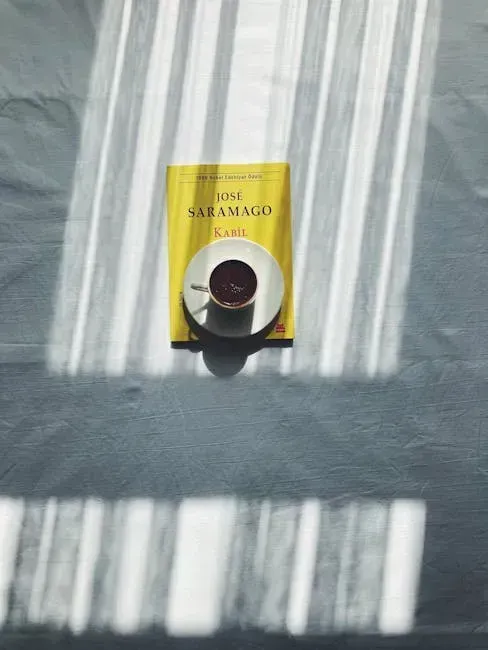
Blindness, translated by Giovanni Pontiero, is a novel in which a pandemic of blindness grips the world, coming out in 1995. As society collapses under the strain of mass sightlessness, a small group of survivors must navigate internment, violence, and the fragile boundaries of human morality. Saramago uses the blindness as both a literal event and a searing metaphor for collective indifference, making the psychological horror feel entirely plausible.
Saramago won the Nobel in 1998, recognized for his “parables sustained by imagination, compassion and irony” that “continually enable us once again to apprehend an elusory reality.” On Goodreads, Blindness carries an average rating of 4.18 from over 344,000 ratings, making it one of the most beloved and widely read works by any Nobel laureate. The claustrophobia is total.
Beloved by Toni Morrison (1987)

Toni Morrison, according to the Nobel judges, gives life “to an essential aspect of American reality.” Beloved is a powerful, unsettling story of the inherited trauma of slavery told through the lives of one haunted family. The ghost at the center of the novel is both literal and psychological, forcing the protagonist Sethe to confront memories she has spent years burying. Morrison never lets the reader look away.
Morrison’s other novels also explored race and gender long before they became diversity buzzwords in the publishing industry. Toni Morrison was awarded the Nobel Prize in Literature in 1993, and Beloved remains her most viscerally haunting work – a story where the past doesn’t stay buried and the psychological weight of that truth is felt on every single page.
The Vegetarian by Han Kang (2007)

Han Kang is a South Korean author known for her lyrical and haunting prose that explores trauma, memory, and the human body against the backdrop of Korea’s turbulent history. The Vegetarian tells the story of Yeong-hye, a woman who stops eating meat after a disturbing dream, setting off a spiral of family violence, desire, and psychological disintegration. The novel is structured in three parts, each narrated by a different character orbiting Yeong-hye, which means readers never fully enter her mind – making her all the more unsettling.
Han Kang won the Nobel Prize in Literature in 2024, recognized for her intense poetic prose that confronts historical traumas and exposes the fragility of human life. On Goodreads, The Vegetarian has gathered over 400,000 ratings, reflecting its enormous and lasting impact on readers worldwide. It’s a short book. It stays with you for a long time.
The Tin Drum by Günter Grass (1959)

Günter Grass, who won the Nobel Prize in Literature in 1999, gave the world one of fiction’s most disturbing and unforgettable narrators: Oskar Matzerath, a boy who decides at age three to stop growing and wills himself into the asylum where he writes his memoirs. Psychological thrillers are page-turners where the plot often revolves around something strange happening to an ordinary person, with a foreboding atmosphere where the reader is drawn along by twists and turns as the book progresses. The Tin Drum takes that blueprint and inflates it to surreal, operatic extremes.
The Tin Drum, published in 1959, holds an average Goodreads rating of 3.95 across nearly 47,000 ratings. The novel’s psychological power rests entirely in Oskar’s warped, self-serving perspective – an unreliable narrator taken to its logical extreme. The horror of Nazi Germany seen through his eyes becomes something simultaneously absurd and deeply, genuinely terrifying.
The Appointment by Herta Müller (2001)

Four friends share an apartment in Ceaușescu’s Romania, and fear becomes the furniture they live among. Müller writes in fragments and flashes, mirroring how surveillance and suspicion fracture everyday reality into jagged pieces. The beauty of her prose sits right next to its brutality, creating a reading experience that sticks with you long after you close the cover.
Critics praise it endlessly, but classroom syllabi and book club lists often reach for more conventional narratives. That’s a shame, because this novel captures totalitarianism’s psychological texture better than most political thrillers ever could. Herta Müller won the Nobel Prize in Literature in 2009, and The Appointment is one of her most concentrated and claustrophobic works – a book that makes paranoia feel like something you could reach out and touch.
Detective Story by Imre Kertész

From Nobel Laureate Imre Kertész comes a riveting novel about a torturer for the secret police of a Latin American regime who tells the haunting story of the father and son he ensnared and destroyed. A slim, explosive novel of justice railroaded by malevolence, Detective Story is described as a warning cry for our time. The frame of a detective narrative is used here to expose something far darker than any whodunit: the mechanics of state terror told from the inside.
Kertész was the first Hungarian author to win the Nobel Prize in Literature since the prize began, claiming the award in 2002. (The next Hungarian laureate would not follow until László Krasznahorkai in 2025.) Detective Story is often overlooked compared to Kertész’s better-known Fatelessness, but it’s a tightly wound, psychologically precise piece of fiction that reads almost like a confession – and lands like one too.
The Melancholy of Resistance by László Krasznahorkai (1989)
The Melancholy of Resistance was the first novel by Nobel laureate László Krasznahorkai to be translated into English, published in 1998. Author Ellen Mattson, a member of the Swedish Academy that decides the winner of the Nobel Prize in Literature, called it “my absolute favourite among Krasznahorkai’s novels.” A circus arrives in a small Hungarian town carrying what is advertised as the world’s biggest whale, and the arrival slowly unravels the community’s grip on order and reason.
The Nobel Prize in Literature for 2025 was awarded to Hungarian author László Krasznahorkai “for his compelling and visionary oeuvre that, in the midst of apocalyptic terror, reaffirms the power of art.” Krasznahorkai’s work often engages themes of apocalypse, alienation, melancholy, and dystopian reality. The Melancholy of Resistance is perhaps the purest distillation of all of it – a slow, inexorable spiral that feels less like a thriller and more like a dream you cannot wake from.
The Golden Notebook by Doris Lessing (1962)

Psychological thriller energy pulses beneath the surface of this literary fiction, revealing a life that narrows through one damaging choice after another. Later and more famous works by Lessing often draw attention away, leaving many new readers unaware of the raw force carried by her earliest voice. The Golden Notebook follows Anna Wulf, a writer and political activist fracturing under the pressure of her own contradictions, using four separate notebooks to contain the different parts of herself.
According to the Nobel Prize judges, Doris Lessing was “that epicist of the female experience, who with scepticism, fire and visionary power has subjected a divided civilisation to scrutiny.” The Golden Notebook, published in 1962, is one of the most shelved of all Lessing works by readers on Goodreads. The novel’s psychological intensity comes not from an external threat but from the splintering of identity itself – which, in its own way, is the most unsettling kind of thriller there is.
What ties these ten books together is not genre classification but a quality of attention. Each one places you inside a consciousness under pressure, asking you to sit with discomfort, ambiguity, and fear rather than looking away. Nobel Prize winners understand, almost by definition, that great literature doesn’t offer easy exits. These books don’t either – and that is precisely what makes them worth reading.