
Most women don’t announce the moment dread sets in. There’s no dramatic declaration, no formal complaint filed. It happens quietly, somewhere between the office parking lot and the front door, when the thought of walking into their own home starts to feel like bracing for impact. That shift doesn’t appear overnight. It builds slowly, driven by patterns that repeat often enough to become the emotional wallpaper of a marriage.
Relationship research consistently shows that the negative behaviors in a marriage carry more weight than the positive ones when it comes to long-term satisfaction. Negative aspects of relationships tend to be more highly associated with marital longevity, as well as psychological and physical well-being, than the positive aspects of relationships. That’s a sobering reality. The habits below aren’t always born from cruelty. Many are the result of inattention, old conditioning, or simple comfort taken too far. Still, the cumulative damage is real.
1. Stonewalling During Conversations

Stonewalling is a communication pattern where one person in a relationship withdraws from interaction, refusing to engage or respond. It can be a conscious or unconscious behavior, often stemming from feeling overwhelmed or emotionally flooded. When a wife walks through the door hoping for even brief connection and instead meets a wall of silence or one-word answers, the effect is immediate and cutting. She stops expecting anything, and that lowering of expectations is where dread is born.
Emotional disconnection, whether intentional or not, communicates indifference, rejection, or a dismissive attitude. Instead of caring and love, the stonewaller invalidates their partner’s concerns. Over time, this can erode overall satisfaction, trust, and intimacy. According to Gottman’s research, the rate of stonewalling among men is roughly 85 percent of the time, compared to about 15 percent for women. That’s not a small gap.
2. Leaving Messes Without a Second Thought
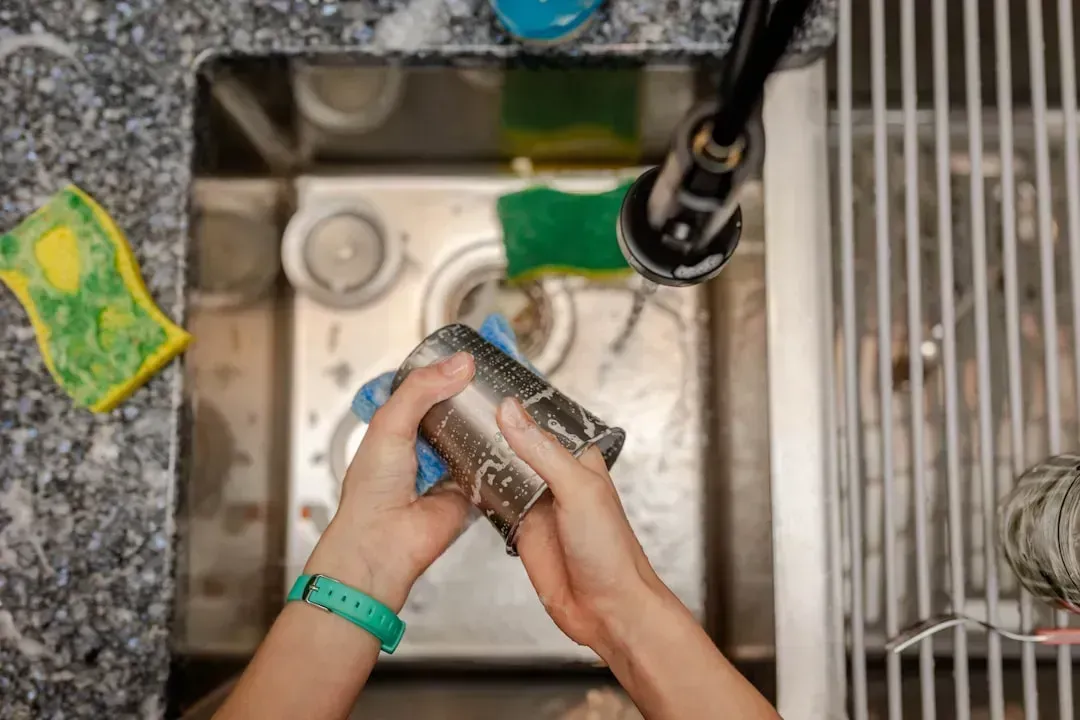
A pile of dishes left in the sink when someone else is on their way home from work sends a message, even if none was intended. It says: your time matters less. Women often say they’re suffering burnout from domestic duties and their male partners don’t get it, no matter how much they try to communicate it. The unequal distribution of domestic labor doesn’t just exhaust women, leaving them angry, resentful and depleted, it also harms their mental health.
Research from Harvard Business School suggests that up to roughly one in four married couples end their relationships because of household chores. Researchers found that arguments over who did what at home were the third leading reason for divorce among 3,000 couples. A dirty kitchen isn’t a trivial complaint. It’s a recurring symbol of a deeper imbalance that accumulates weight with every repetition.
3. Ignoring the Mental Load Entirely

There’s the visible housework, and then there’s the invisible architecture behind it: remembering the dentist appointment, noticing the toilet paper is almost gone, mentally tracking what needs to happen and in what order. For many women in straight relationships, the mental load is a burden that often goes unnoticed by their significant other. A 2022 study conducted by Harvard University revealed that women tend to shoulder the majority of cognitive household labor, roughly 70 percent, whereas men typically assume responsibility for 30 percent. This gap is double that observed for physical household labor.
The mental load involves remembering things like doctors’ appointments, researching schools, noticing when household supplies run low, and delegating tasks like scheduling help before having company over. When a husband remains oblivious to this invisible effort and makes no attempt to share it, his wife doesn’t just feel tired. She feels profoundly alone in the work of keeping life functioning.
4. Emotional Withdrawal and Being Checked Out

One of the hallmark signs of emotional disconnection in a marriage is emotional detachment. A husband experiencing this may stop engaging in meaningful conversations or family activities. He may seem physically present but emotionally absent, leading his spouse to feel isolated and disconnected. For a wife, this is genuinely disorienting. She shares a bed, a home, a life with someone who has somehow become a stranger who just happens to live there.
Modern life demands more from men than ever before. Between work, family, and social obligations, many husbands feel overextended. The pressure to excel in all aspects can lead to burnout, causing them to withdraw emotionally from their spouses and families. Understanding the cause doesn’t make the effect any less damaging. Coming home to emotional absence, night after night, genuinely conditions a wife to stop hoping for connection.
5. Constant Irritability and Short-Fused Reactions

Frustration frequently manifests as irritability or short tempers in marriage. Small annoyances that would once have been shrugged off may trigger angry outbursts. This is particularly evident in situations where the husband feels overwhelmed or underappreciated. When a wife can’t predict what mood will greet her at the door, she starts mentally calculating on the drive home. She rehearses her words. She adjusts her tone in advance. That kind of perpetual self-editing is exhausting.
While the causes of depression vary, research reveals that marital hostility is a contributing factor. Researchers found that husbands’ hostile and anti-social behaviors increased their wives’ symptoms of depression over time. A consistently irritable husband doesn’t just create an unpleasant atmosphere. He actively contributes to his wife’s psychological deterioration, often without realizing it.
6. Refusing to Engage With Household Decisions

Some husbands opt out of household decisions entirely, then express frustration with outcomes they had no hand in shaping. A wife is left carrying the full cognitive weight of running a home while also fielding complaints about how it’s being run. Research shows that the unequal division of household labor and relationship planning can create long-term dissatisfaction and strain in relationships. This is particularly true when one partner carries the majority of the cognitive load, keeping track of schedules, planning dates, and managing household responsibilities, while the other remains less involved. Over time, this imbalance can lead to burnout, decreased emotional intimacy, and ongoing conflict.
The wife who manages every detail, from school calendars to meal planning to utility reminders, eventually stops feeling like a partner and starts feeling like a household manager. When she comes home, she isn’t arriving at rest. She’s arriving at a second shift. That realization, repeated daily, produces a very specific kind of dread.
7. Defaulting to the Couch the Moment He’s Home

On average, wives spend more of their time at home doing housework, while husbands have more leisure time. The visual contrast of a husband relaxed on the sofa while a wife handles dinner, supervises homework, and answers emails has become almost a cultural cliché. The problem is it isn’t just a cliché. For many women, it’s their Tuesday evening, and their Wednesday, and their Thursday.
Women’s stress levels improve when their husbands chip in with housework. The science on this is straightforward. Cortisol levels can affect sleep, weight gain, burnout, and weakened immune resistance. A wife who comes home to a husband deeply settled into leisure while nothing has been addressed isn’t experiencing a minor annoyance. She’s experiencing measurable physiological stress.
8. Dismissing Her Concerns or Downplaying Her Feelings

When a wife tries to raise a problem and her husband responds with minimizing language, such as “you’re overreacting” or “it’s not that serious,” the issue doesn’t resolve. It compounds. She absorbs the dismissal, files it alongside dozens of others, and next time she needs to speak up, she weighs whether it’s worth the effort. One of the most challenging feelings for any person in an intimate relationship is the dread of what you know, or think you know, is going to happen on the other side of your front door, night after night.
Research following married couples over 16 years found that wives reported greater marital tension than husbands. That gap reflects the quiet accumulation of unaddressed feelings. Couples were more likely to divorce when wives reported higher marital tension, a greater increase in marital tension, and greater cumulative marital tension. The pattern of dismissal is not a minor irritant. It is one of the most reliable predictors of a marriage ending.
9. Making Her Ask for Help Over and Over

There’s a particular kind of exhaustion that comes not from doing everything yourself, but from having to identify every task, explain why it matters, and ask for participation repeatedly. A Gallup poll of more than 3,000 heterosexual couples revealed women handle the majority of domestic labor. Men are taking on more childcare and housework than ever before, but women consistently perform more physical and emotional labor in their families. The gap remains, and with it, the friction of asking.
When a wife has to remind her husband to do the same things week after week, a subtle message is internalized: her needs are not worth remembering. Over time, this breeds serious resentment and can poison a relationship beyond repair. The dread isn’t always about conflict. Sometimes it’s about the anticipated weariness of walking in and already knowing what will and won’t have been done.
10. Using “Weaponized Incompetence”

Weaponized incompetence is when a husband performs a task so poorly or halfheartedly that his wife eventually stops asking, taking over the responsibility herself. Whether intentional or not, the outcome is identical: she ends up responsible for everything, and he’s off the hook. Weaponized incompetence and imbalanced domestic labor are high on the list of catalysts for couples splitting up.
Sharing household chores ranks as the third-highest issue associated with a successful marriage, behind only unfaithfulness and a satisfying physical relationship. When a wife recognizes that incompetence is being used as a strategy, even unconsciously, trust erodes. She stops wanting to come home to someone who finds ways out of partnership while she carries the weight.
11. Bringing a Bad Mood Home and Spreading It Around

Everyone has hard days at work. The trouble arises when one partner consistently offloads that frustration the moment the door opens, treating home as an emotional dumping ground rather than a shared space. A cold greeting, pointed sighs, or a heavy silence that fills every room are signals a wife learns to decode before she even takes off her coat. Over time, she stops wanting to walk in.
For some people, the heart sinks as the key goes in the front door and a sense of peace feels like it’s about to end. So many people find ways to not come home, working longer hours, or finding things to do without their partner as a form of escape. When home feels like walking into someone else’s bad mood rather than mutual refuge, the psychological math changes. A wife begins to calculate whether the drive home can be extended.
12. Neglecting Emotional Intimacy Outside the Bedroom

Physical and emotional intimacy may wane in troubled marriages, leaving the couple feeling more like roommates than romantic partners. When a husband shows interest in his wife mainly in a physical context but rarely initiates genuine conversation, remembers small details about her life, or shows warmth for its own sake, she begins to feel more like a function in the household than a person worth knowing. That realization tends to arrive quietly, without an argument to mark the moment.
Research has found that more happily married women showed healthier cortisol patterns, while women who reported marital dissatisfaction had flatter cortisol profiles, which have been associated with chronic stress. Emotional intimacy isn’t a luxury in a marriage. It’s part of the biological and psychological infrastructure of a wife’s wellbeing. When it disappears, the body registers the loss.
13. Never Acknowledging Her Efforts

Appreciation, expressed simply and sincerely, costs nothing and does more work than most people realize. A husband who takes his wife’s contributions for granted, her labor, her planning, her presence, trains her over time to expect nothing. The unequal distribution of domestic labor doesn’t just exhaust women, leaving them angry, resentful and depleted, it also harms their mental health. That inequality is linked to lower relationship satisfaction for both partners, higher risk of divorce, less intimacy, and worse outcomes for children.
In modern relationships, achieving an equal partnership in managing household tasks and relationship responsibilities is a common struggle. Without that shared engagement, one partner, most often women, frequently bears the brunt of planning, organizing, and emotional labor, leading to stress, resentment, and even reduced intimacy. A wife who goes unacknowledged doesn’t just feel undervalued. She feels invisible. When home is where you feel invisible, it stops feeling like home at all.
None of these 13 habits requires a dramatic incident to do real damage. They work slowly, through repetition, building a low-grade tension that a wife carries long before she can even name it. The dread that eventually settles in isn’t about one argument or one bad evening. It’s the cumulative weight of feeling unseen, unheard, and unreached in the one place that was supposed to be different from everywhere else.
What keeps many marriages intact isn’t an absence of bad habits. It’s a willingness to notice them and actually change. That willingness, or the lack of it, tends to determine everything.