
Most men who are burning out don’t look burned out. They show up, they deliver, they keep moving. The problem is that the version of burnout most people imagine – someone crumbling at their desk, unable to function – isn’t the version that quietly takes hold in a lot of men’s lives. Men’s burnout symptoms tend to show up as detachment, irritability, and cynicism instead of sadness, and those warning signs are easy to miss.
Burnout is classified by the World Health Organization as an occupational phenomenon with three core dimensions: emotional exhaustion, depersonalization, and a collapsed sense of accomplishment. Researchers who study burnout across professions note that symptoms don’t appear all at once – they accumulate over months or years of chronic stress. What makes it particularly dangerous for men is how well it hides in plain sight, disguised as toughness, drive, or simply “handling it.”
1. He’s More Irritable Than Usual – And Can’t Explain Why

Flashes of temper or irritability – snapping at partners or children, bursts of road rage, frustration at slow technology – are among the clearest behavioral signs of burnout in men. These moments often feel disproportionate to the trigger, which can confuse both the man experiencing them and the people around him.
Men can develop a feeling of pessimism and irritability that seeps into other areas of life, such as relationships. The tricky part is that irritability doesn’t announce itself as a mental health symptom. It usually gets written off as a bad week, a short fuse, or just personality – which is exactly why it goes unaddressed for so long.
2. Everything Feels Flat – Even the Things He Used to Love
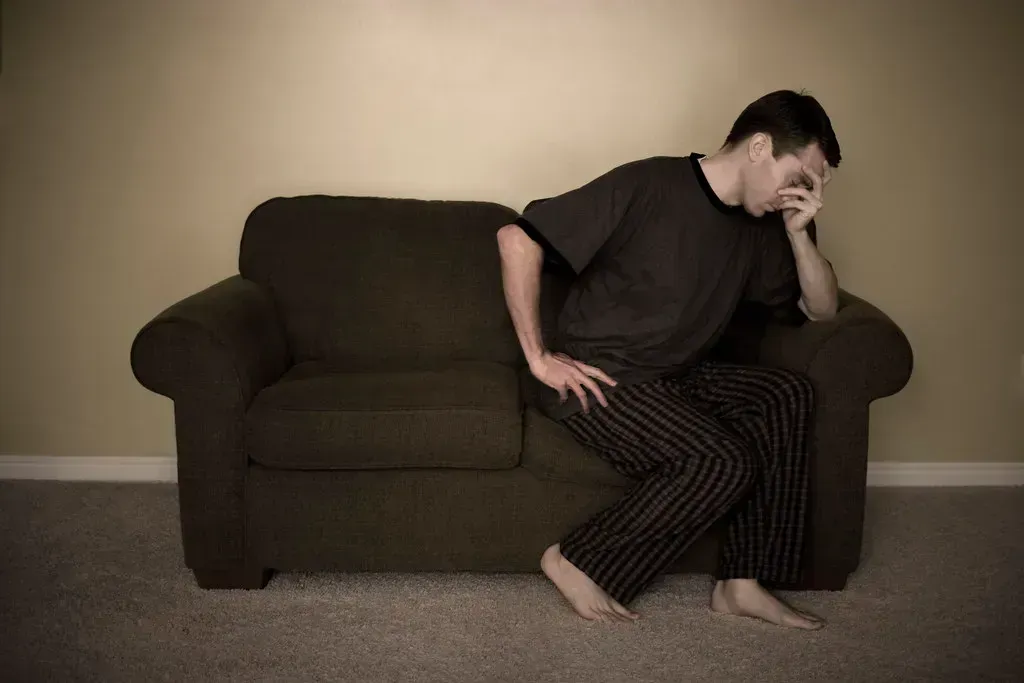
A significant drop in enthusiasm can be an indication of burnout. It’s not always noticeable at first – it might start as a lack of interest in one thing, then another, until it gradually spreads to all aspects of life. A man who used to be animated about his hobbies, his work, or his weekend plans suddenly finds himself indifferent to all of it.
Burnout in men rarely looks like collapse. It shows up as emotional numbness, low motivation, and irritability – and often goes unrecognized. That emotional flatness isn’t laziness. It’s a warning signal from a system that has been running too hard for too long.
3. He’s Checked Out at Work but Still Showing Up

He stops caring about work he used to find meaningful. Colleagues become annoyances. Clients become tasks. He goes through the motions with a low-grade contempt that surprises even him. Performance can stay intact for quite a while during this phase, which makes it easy for both the man and his employer to miss what’s really happening.
Burnout researchers call this depersonalization – treating people and situations as objects rather than things that matter. In men, it’s the most pronounced burnout dimension, and the hardest to spot because it looks like composure. He’s not failing. He just no longer cares about succeeding.
4. Sleep Isn’t Restoring Him Anymore

Sleep technically happens but never refreshes. Changes in appetite or sleep habits that he writes off as “just stress” are actually linked to deeper burnout. Research on burnout and recovery shows that physical health problems increase as burnout deepens, including chronic fatigue and a nervous system stuck in overdrive.
The relationship between sleep problems and burnout is complex, as it can be influenced by various factors. Science has identified a strong correlation between sleep issues and the risk of developing burnout. Waking up exhausted after a full night is one of those signs that gets dismissed as aging or poor sleep hygiene – rarely as the burnout signal it often is.
5. He’s Drinking More, Scrolling More, Numbing More

Avoidance mechanisms – a default state of resorting to a numbing mechanism, whether it’s scrolling for hours, drinking alcohol, vaping, or smoking – are a recognized behavioral pattern in burned-out men. These aren’t habits that appear out of nowhere. They fill a gap where emotional processing used to be.
Behavioral symptoms of burnout include procrastination, reduced productivity, withdrawal from responsibilities and social interactions, and reliance on coping mechanisms such as overeating, alcohol, or drugs. When a man starts needing something to “take the edge off” every single evening, that edge is worth paying attention to.
6. Concentration and Memory Have Quietly Declined

Burnout caused by chronic stress perpetuates a constant state of mental and physical exhaustion, hindering cognitive performance and everyday memory. Tasks that once came easily now require more effort and more time. Forgetting names, losing train of thought mid-sentence, or rereading the same paragraph three times – these become strangely routine.
Emotional and cognitive manifestations of burnout include anxiety, irritability, sad mood, difficulty concentrating, and memory loss. Most men attribute these changes to age or distraction rather than linking them to the sustained pressure they’ve been living under. That misattribution keeps the real cause invisible.
7. He’s Physically Falling Apart – With No Clear Medical Cause

Men experiencing early burnout may suffer from various physical symptoms, including headaches, digestive issues, muscle and joint pain in the neck, shoulders, and back, palpitations, and sleep problems. These complaints are real, not imagined – the body genuinely bears the load of chronic stress in measurable, physical ways.
If a doctor can’t find a medical condition behind back pain, insomnia, or digestive issues – and a man has been running hard for a long time – burnout is worth considering. The frustrating thing is that multiple doctor visits often turn up nothing, which leads men to conclude they’re fine. They’re not.
8. He’s Become Cynical About Things He Once Believed In

Research defines burnout as a syndrome with three factors: exhaustion, cynicism, and a sense of ineffectiveness. It is common for women to report fatigue, while men tend to become more cynical. Cynicism is also referred to as depersonalization – a distancing from emotion. What starts as healthy skepticism gradually tips into a bleak, dismissive outlook on work, relationships, and the future.
The dangerous aspect of cynicism as a burnout sign is how socially acceptable it looks. A man who makes dark jokes about his job, dismisses his own achievements, or shrugs at things that once mattered is often just seen as “realistic.” In clinical terms, he’s exhibiting a core marker of burnout syndrome.
9. He’s Withdrawing from People – Even the Ones He Cares About

Behavioral manifestations of burnout include withdrawal and aggressive behavior. Social withdrawal in burned-out men often looks passive – fewer texts returned, skipped social events, less engagement at the dinner table. It doesn’t necessarily feel like a choice; it feels like there’s simply nothing left to give.
Many men report feeling disconnected from loved ones or hobbies and growing cynical about work or life. Isolation fuels burnout, so when it takes hold, it creates a feedback loop – the more withdrawn a man becomes, the harder recovery gets. It’s one of the most self-reinforcing aspects of the condition.
10. His Sex Drive Has Dropped Noticeably

Burnout syndrome isn’t just a workplace issue – it deeply affects overall health, emotional balance, and intimate relationships. Chronic stress impacts mood, immune function, and sexual health, leading to decreased desire, hormonal imbalances, and relationship challenges. Testosterone is particularly sensitive to prolonged cortisol elevation, which is a direct byproduct of sustained burnout.
A loss of sexual desire in men is rarely discussed in the context of burnout, even though the connection is well-established in research. Men will often chalk it up to being tired, being busy, or simply getting older – almost anything except the actual cause. That avoidance keeps a very treatable problem in place far longer than necessary.
11. He Feels Like He’s on a Treadmill He Can’t Stop

People working beyond 40 hours weekly become six times more likely to experience burnout. Yet men in demanding roles rarely feel like they can simply reduce their hours. The compulsion to keep going – even when the tank is empty – is often framed internally as discipline or responsibility rather than as a danger signal.
A symptom of masculinity, for some, is a constant need to be in control, have power over any circumstance, and be successful. Men don’t get a break from these continuous demands. The treadmill feeling – exhausted but unable to stop – is one of the most telling internal signs of burnout, and also one of the most ignored.
12. Small Problems Feel Overwhelming

Motivational manifestations of burnout include progressive disengagement and a decrease in self-esteem or motivation. When a man’s capacity for resilience has been eroded by chronic stress, everyday friction – a delayed email, a minor argument, a change in plans – can land with disproportionate weight. He may not even understand why small things feel so heavy.
This lowered threshold for stress tolerance is easy to mistake for weakness or a bad attitude. In reality, it reflects a nervous system that has been running on cortisol for far too long, with insufficient recovery. The response is physiological, not a character flaw.
13. He’s Stopped Caring About His Physical Health

Neglecting personal care is a recognized sign of burnout. Taking care of physical health isn’t vanity – it’s a necessity. When a man starts skipping it because he’s too exhausted or just doesn’t see the point anymore, it’s time to reassess what’s really going on. Gym sessions get canceled. Meals become whatever’s fast. Sleep hygiene falls away.
The reasoning is usually practical – not enough time, not enough energy – but it’s worth noting how selective this logic tends to be. Men who once prioritized fitness or nutrition often maintain their work output while abandoning personal upkeep entirely. That specific trade-off is a quiet but telling sign of depletion.
14. He Feels Ineffective, Even When Results Are Good

Depersonalization is the experience of feeling unreal, detached, and often unable to feel emotion. This can lead to inefficiency and a lack of productivity that further increases the prevalence of the previous symptoms. Men find it harder to recognize signs of inefficiency in their work compared to women, possibly because men do not have the same health literacy in this area.
Burnout includes reduced professional efficacy as one of its three core dimensions, alongside energy depletion and increased mental distance from one’s job. A man can be delivering strong results externally while experiencing a crushing internal sense of inadequacy. The gap between output and self-perception is one of the more disorienting aspects of burnout in high-functioning men.
15. He’s Using Work as the Only Thing That Defines Him

Society’s deeply embedded “breadwinner ethos” drives men to validate themselves through work performance. When work is the primary – or only – source of identity and self-worth, the stakes of every professional failure or stall become enormous. There’s no buffer, no second identity to fall back on. Pressure compounds relentlessly.
Many men are conditioned from a young age to push through their feelings and “tough it out.” Society often encourages men to be strong, independent, and self-reliant. Expressing vulnerability or asking for help is often seen as a weakness, which leads many men to hide their struggles or dismiss their own needs. A man who only knows how to be a worker is particularly exposed when that role starts to hollow out.
16. He Dismisses the Problem – Even When Others Point It Out

Sometimes, men simply don’t understand why they don’t feel “right,” have limited knowledge of mental health, and do not have the ability or confidence to articulate what they are feeling or look for support. When a partner, friend, or colleague raises a concern, the typical response is reassurance – “I’m fine, just tired” – followed by getting back to work.
Men working under pressure are significantly less likely to seek professional counseling compared to women. Studies show men are less likely to recognize or seek help for burnout symptoms than women. Denial isn’t stubbornness so much as a learned response – and recognizing it as a symptom rather than a personality trait is actually the first useful step.
17. He’s Still High-Functioning – Which Is Exactly Why No One Notices

A man might go to work every day, perform well, and meet deadlines. He might be the first one to show up and the last one to leave. On the outside, he seems like he has everything under control. But on the inside, he may feel exhausted, unable to focus, and increasingly disconnected from his work and personal life.
There’s a simple reason most men miss their own burnout early: the burnout symptoms look like masculinity working correctly. Clinical experience confirms that burnout doesn’t just go away by itself – the situation typically gets worse without proper care. The man who looks the most capable is sometimes the one carrying the heaviest, most invisible load.
Burnout that goes unnamed tends to deepen slowly and silently. According to the Mental Health America 2024 Mind the Workplace Report, three-quarters of U.S. employees report high rates of work stress negatively impacting sleep, and three in five report an impact on their relationships. These aren’t abstract statistics – they describe real erosion happening in real lives, often without anyone in that life having the language to name it. Recognizing the signs, particularly the ones that look like strength, is the most honest place to start.