History tends to move in straight lines, cause to effect, action to consequence. Most of the time, that framework holds. Then you come across a handful of moments where names, dates, and events line up in ways that feel less like logic and more like something out of a dream. Not supernatural, necessarily. Just deeply strange.
Statisticians will tell you that given enough data points, patterns emerge from pure chance. That’s true, and worth keeping in mind. Still, some of these coincidences are tight enough, specific enough, and verifiable enough that even the most rational historians pause before filing them away as nothing more than noise.
1. The Lincoln and Kennedy Parallels That Just Won’t Stop
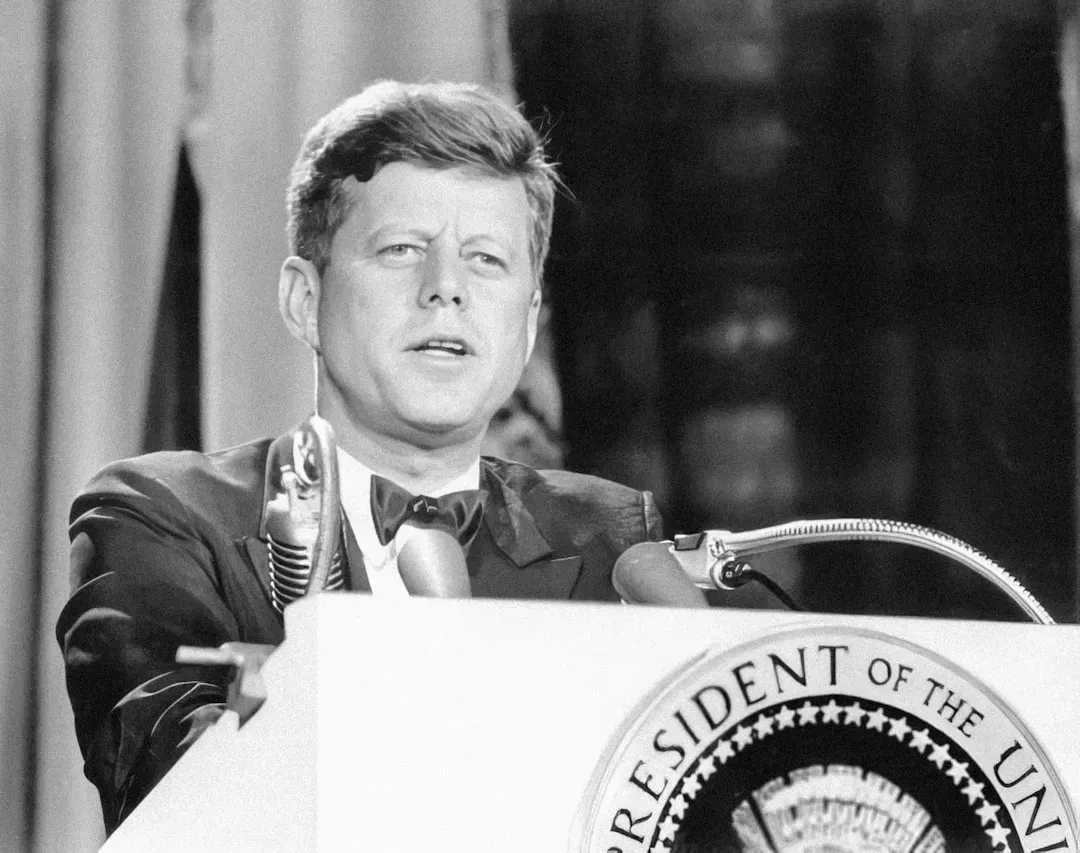
Both presidents were elected to Congress in ’46 and later to the presidency in ’60, exactly one hundred years apart. Both were shot in the head on a Friday and in the presence of their wives. That alone might be dismissed as coincidence, but the list doesn’t stop there.
Both assassins were known by their three names, composed of fifteen letters. Booth ran from a theater and was caught in a warehouse; Oswald ran from a warehouse and was caught in a theater. Both of the presidents’ successors were Southern Democrats named Johnson, with six-letter first names and born in ’08. Skeptics rightly point out that many of the widely shared details are embellished or simply false, but the core overlaps remain genuinely difficult to wave away.
2. Edgar Allan Poe Names the Victim Forty-Six Years Early
![2. Edgar Allan Poe Names the Victim Forty-Six Years Early (Image Credits: From LoC "Famous People" collection, Library of Congress, Prints and Photographs Division [LC-USZ62-10610]., Public domain)](https://nvmwebsites-budwg5g9avh3epea.z03.azurefd.net/scaredof/88efc71182c63f66507158d42c7bd3c6.webp)
The Narrative of Arthur Gordon Pym of Nantucket, written and published in 1838, is Poe’s only complete novel. It relates the tale of the young Arthur Gordon Pym, who stows away aboard a whaler. Various adventures and misadventures befall Pym, including shipwreck, mutiny, and cannibalism. In the novel, the crew draws lots to decide who will be killed for food. The man who loses is named Richard Parker.
In 1884, the yacht Mignonette sank, with four men cast adrift. After weeks without food, they decided that one of them should be sacrificed as food for the other three, just as in Poe’s novel. The loser was a young cabin boy named Richard Parker, coincidentally the same name as Poe’s fictional character. There’s little to no chance that anyone on board the Mignonette had ever read Poe’s novel.
3. Morgan Robertson Sinks an “Unsinkable” Ship Fourteen Years Too Soon
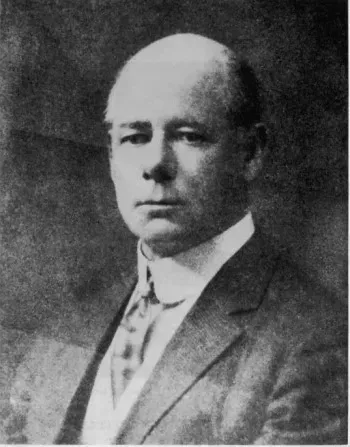
In 1898, writer Morgan Robertson published a novella about a gigantic luxury liner called Titan that struck an iceberg in the North Atlantic and sank in April with too few lifeboats on board. Fourteen years later, Titanic met an eerily similar fate on its maiden voyage, also marketed as practically unsinkable and also fatally short on lifeboats.
Robertson wasn’t a ship designer or maritime expert with insider knowledge. He was just a writer crafting what he thought was a cautionary tale about hubris and technological overconfidence. Shipbuilding trends and hubris were well known in Robertson’s day, which helps explain his premise in rational terms. Even so, the tight match in name, route, month, and disaster keeps unsettling readers long after both ships went down.
4. Napoleon and Hitler: A 129-Year Echo
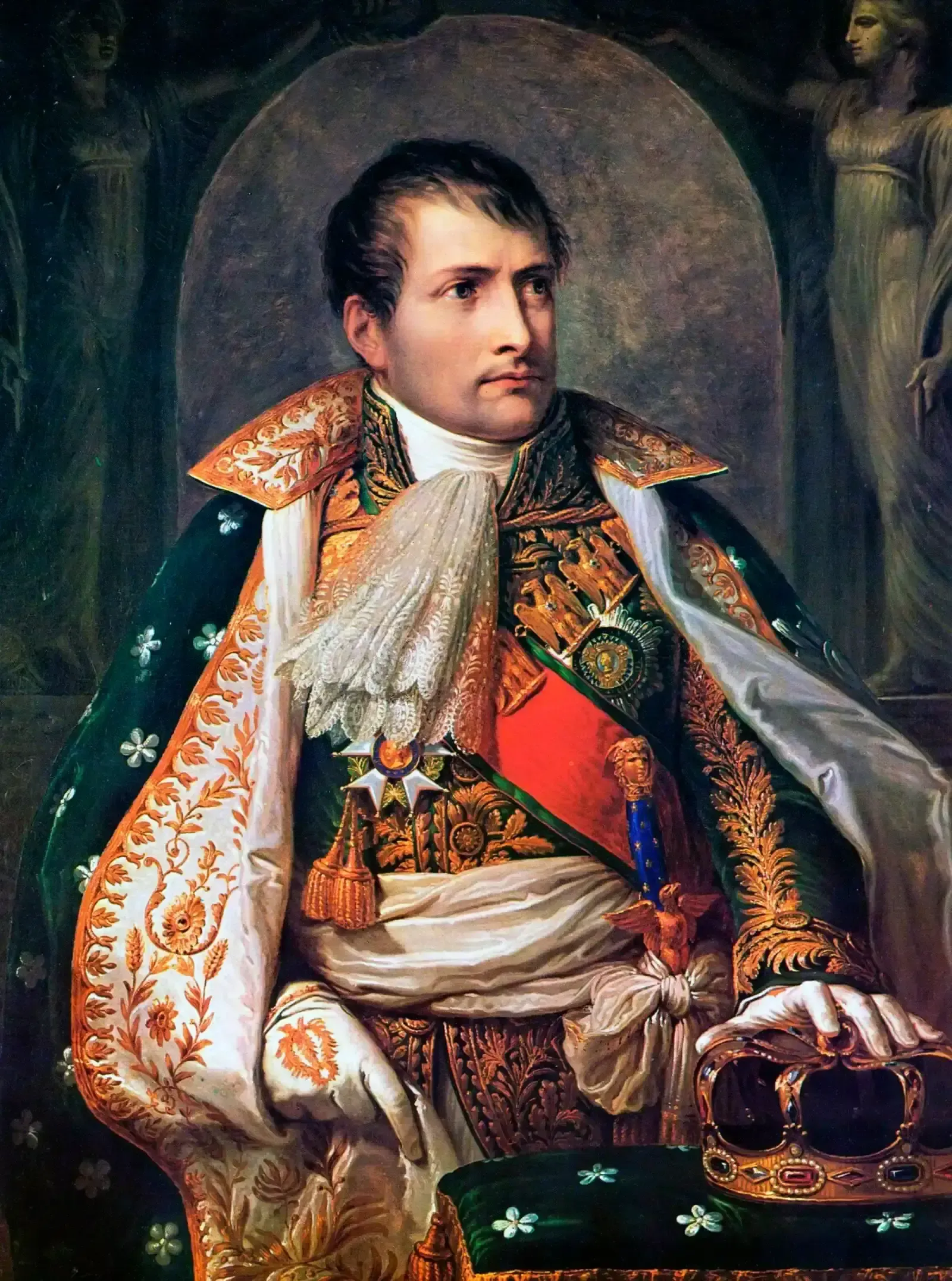
On June 22, 1941, Nazi Germany launched Operation Barbarossa, the invasion of the Soviet Union. Almost exactly 129 years earlier, Napoleon with his Grand Armée launched the invasion of Russia, which ended in a historic defeat. Separated by 129 years, both invasions began in summer and ended in frozen disaster. The parallels in strategy and failure remain among the most analyzed coincidences in modern military history.
By the time Napoleon and Hitler invaded Russia, their armies had marched during warm weather, and their respective campaigns lasted a full year or more, only to end in heavy defeat not only because of the Russian counterattack, but also because of the severe cold that occurred by the end of those years. The timing wasn’t the only thing they shared. Both Napoleon and Hitler were revolutionary leaders, neither arising as part of the status quo or traditional government, each having a spectacular rise to absolute power, and each was referred to as a “corporal.”
5. The Curse Inscription on Tamerlane’s Tomb

On June 20, 1940, Soviet archaeologists uncovered the tomb of Tamerlane, a descendant of Genghis Khan. A warning inscription read “Whoever opens my tomb will unleash an invader more terrible than I.” They opened it anyway. Just two days after the tomb was disturbed, Nazi Germany launched its invasion of the Soviet Union.
The legend grew when Stalin ordered the body reburied with honors in 1942, just days before the Soviets claimed victory at Stalingrad. Local protectors claimed that the tomb was cursed and that opening it would bring destruction. When the archaeological team ignored these warnings on Stalin’s orders, they reportedly experienced numerous technical difficulties almost immediately. Whether you read it as eerie timing or pure coincidence, the sequence is hard to forget.
6. Mark Twain and Halley’s Comet

Mark Twain liked to joke that he came in with Halley’s Comet and meant to go out with it as well. He was born in 1835, shortly after the comet’s bright pass, and died in April 1910, the day after it returned to the inner solar system. The boast he made years earlier came true with an almost theatrical precision.
Astronomers note that the comet reappears roughly every 75 or 76 years, so someone was bound to match that rhythm eventually. Still, the fact that it was the same person who publicly predicted it, and that he had been saying so for years, gives the coincidence a weight that a straightforward statistical explanation struggles to fully absorb. The alignment still stands as an astonishingly personal astronomical coincidence.
7. Violet Jessop and the Three Sister Ships
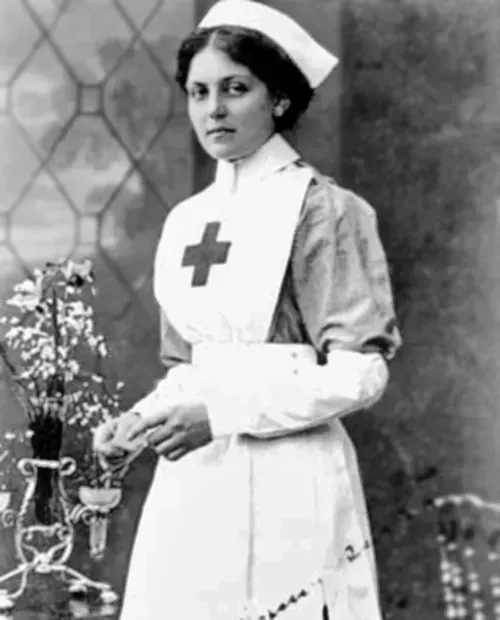
Jessop was aboard the RMS Titanic when it sank in 1912, as well as its sister ship, the HMHS Britannic, when it sank in 1916, with her lifeboat nearly sucked under the boat’s propellers before she jumped out and survived. She was also aboard the third of the sister ships, the RMS Olympic, when it collided with a British warship in 1911, though there were no fatalities in that incident.
Three ships. Three incidents. One woman who walked away from every single one. Jessop died at 83 of congestive heart failure in 1971, which, given her maritime history, might itself qualify as the strangest detail of all. Maritime historians have never found a similar case of a single crew member surviving three separate disasters involving vessels from the same fleet.
8. The Hoover Dam’s First and Last Fatalities Share a Birthday
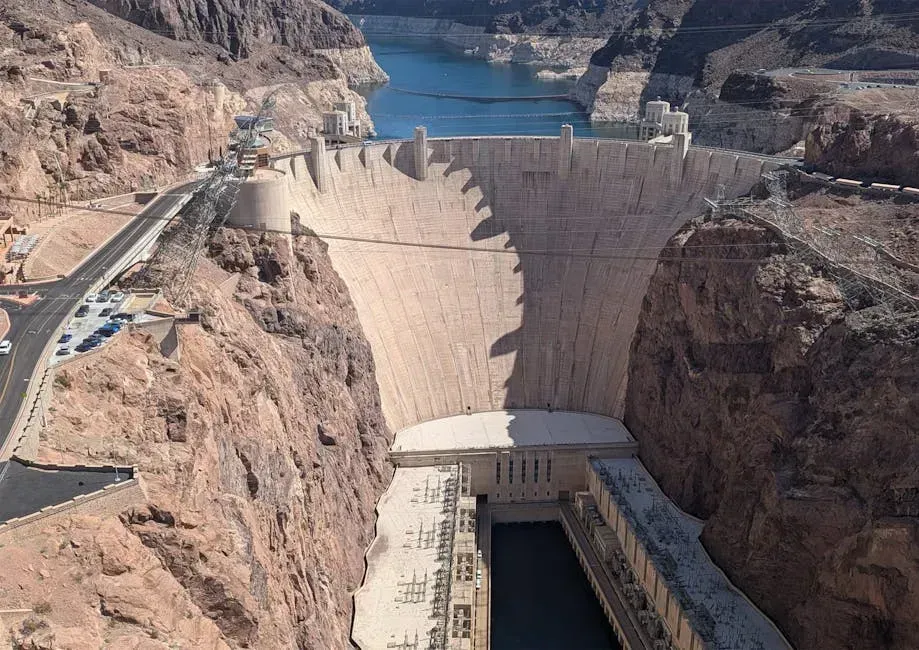
One of the first fatalities during construction was John Gregory Tierney, who drowned during a flash flood in the Colorado River on December 20, 1921. Fourteen years later, on the same day, December 20, 1935, another man died. It was Tierney’s only son, Patrick William Tierney, and he was the last fatality attributed to the dam. He fell to his death from one of the intake towers on the Arizona side of Black Canyon.
Father and son, first and last, same date fourteen years apart. It’s one of the few legends about the building of the dam that is actually true. What makes it so persistently unsettling isn’t the supernatural framing, but simply the arithmetic of it. Of all the days the dam claimed its final worker, it landed on that one.
9. Germany’s “Day of Fate” – November 9
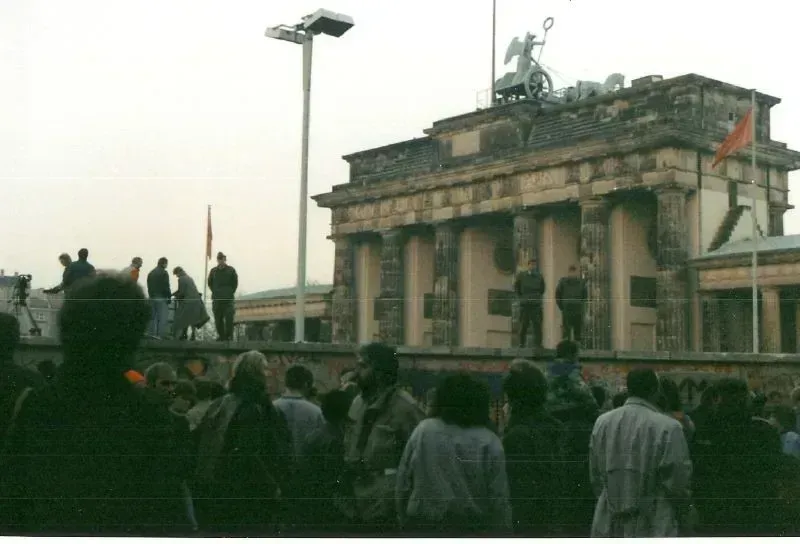
Germans have their own coincidentally significant day: November 9. A number of famous events in German history have fallen on that day, from the announcement of Kaiser Wilhelm II’s abdication of the throne in 1918, which put an end to the German monarchy, to the horrors of Kristallnacht in 1938. In 1989, the Berlin Wall fell on November 9, cementing the day’s standing in the German public consciousness.
Germans even have a word for it: Schicksalstag, or “The Day of Fate.” Few nations have a single calendar date that concentrates so much history, from imperial collapse to state-sponsored violence to one of the most euphoric moments of the twentieth century. Historians have studied this clustering carefully and found no clear mechanism behind it. The date simply kept collecting moments, and at some point, the pattern became impossible to ignore.
What these nine cases share isn’t magic or predestination. They share the quality of being just precise enough, just specific enough, that a simple shrug doesn’t fully satisfy. The human instinct to see patterns is real, and statisticians are right to caution against over-reading them. Even so, a few of these coincidences carry details so exact that they continue to sit in the back of the mind long after the rational explanation has been filed away.