Most people assume that how someone handles money stays neatly locked inside a bank app or a spreadsheet. In my experience advising high-net-worth individuals and everyday earners over the years, that’s almost never the case. Money anxiety doesn’t stay hidden for long. It leaks out, quietly and persistently, into everyday decisions – including the ones people make before they’ve even had their first cup of coffee.
What you wear is one of the most revealing behavioral windows I’ve encountered in this work. It’s not about fashion sense or personal taste. It’s about pattern. Our clothing choices have a significant impact on how we and others see us, and research confirms that our behavior and attitudes are directly influenced by the clothes we wear. When financial anxiety is running in the background, it tends to express itself through very specific, repeatable wardrobe habits that are worth understanding – whether you recognize them in yourself or someone you’re trying to help.
Flooding the Closet with Tags Still Attached
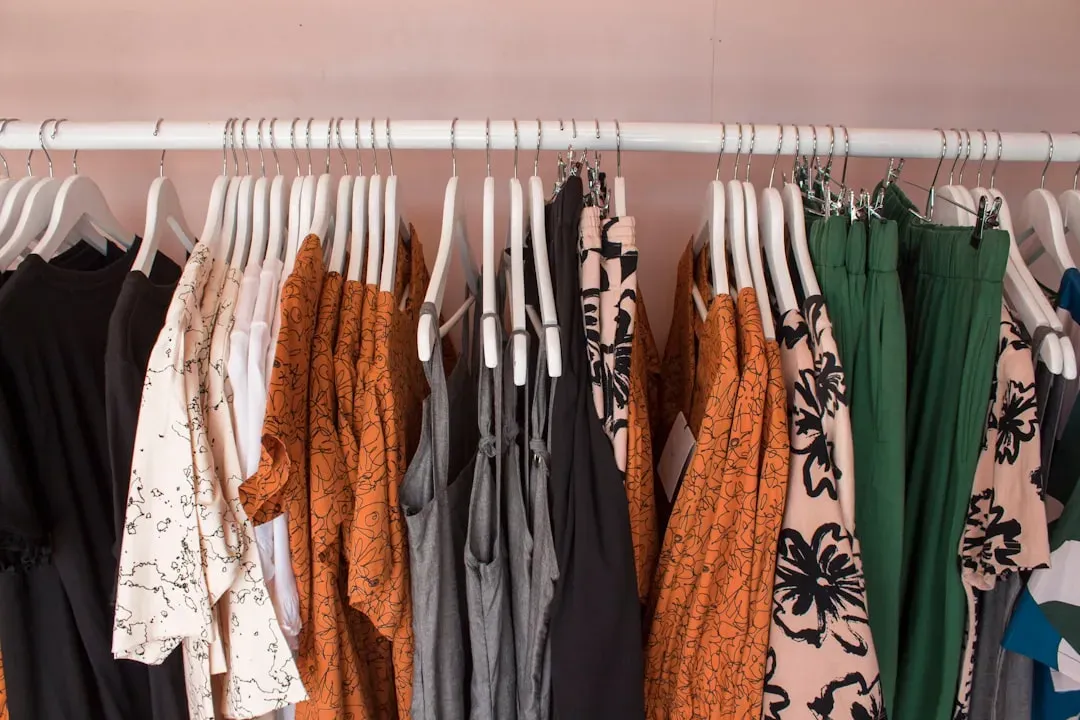
Research suggests that roughly eight in ten clothes in the average wardrobe go unworn – a pattern that can reflect something deeper than disorganization, with some people becoming genuinely addicted to shopping, leading to debt, shame, and guilt. From a wealth management perspective, a closet full of unworn items with the tags still on isn’t a sign of abundance. It’s often the physical residue of emotional spending.
Emotional spending is common, with a significant proportion of people admitting to making purchases based on emotions rather than necessity. Buying clothes delivers a short-term dopamine hit that temporarily relieves financial stress – but the items themselves rarely get worn, because they were never really about the clothes. The closet becomes a ledger of unresolved anxiety.
Obsessive Discount Hunting Even When Finances Are Stable

Shopping behaviors like bulk-buying, hoarding, and chasing sales can look clever on the surface, but when we peel back the layers, they often reveal a scarcity mindset: a quiet fear that there won’t be enough. Clients who compulsively seek out sales racks and clearance bins – even when their portfolio is healthy – are often operating from an old internal script about money being perpetually scarce.
Perceived scarcity can influence people to prioritize short-term concerns over long-term planning. Feeling deprived of a resource – often money – may alter the way a person thinks about that resource and the decisions they make around it. The discount habit feels protective. In reality, it keeps the anxiety alive rather than resolving it.
Wearing Heavily Branded, Logo-Forward Clothing
The visible display of luxury brand logos represents one of the clearest examples of status signaling through consumption. Conspicuous consumption through clothing with prominent designer logos often stems from a need to fit in or appear more affluent, even if it means stretching one’s finances. Research published in the Journal of Consumer Psychology found that individuals with lower financial self-esteem are significantly more likely to purchase items with visible logos.
People from disadvantaged backgrounds may face higher levels of status anxiety – a psychological discomfort stemming from a perceived low position in the social hierarchy. In such cases, visible symbols of wealth can act as compensatory mechanisms to manage insecurity and boost self-esteem. Ironically, the people who most need to signal wealth through logos are typically those experiencing the greatest financial insecurity. Genuinely wealthy clients I work with tend to move in the opposite direction entirely.
Wearing Clothes That Are Quietly Falling Apart

Those with a scarcity mindset are often unwilling to spend money on themselves, whether that means buying a new piece of clothing, going to a concert, or simply going out to eat. This can manifest as wearing shoes with worn-out soles, keeping faded shirts for far too long, or holding on to a suit that stopped fitting well years ago. The rationale is always frugality, but the driver is usually fear.
A scarcity mindset is the belief that resources like money are always limited. This can lead to overly conservative financial behavior, such as hoarding cash instead of investing, or feelings of inadequacy and fear, even when financial security has been achieved. Refusing to replace a worn coat even when the budget allows for it is a wardrobe version of that same dynamic – conservation as a ritual against an imagined emergency.
The Overcrowded Closet Nobody Can Let Go Of
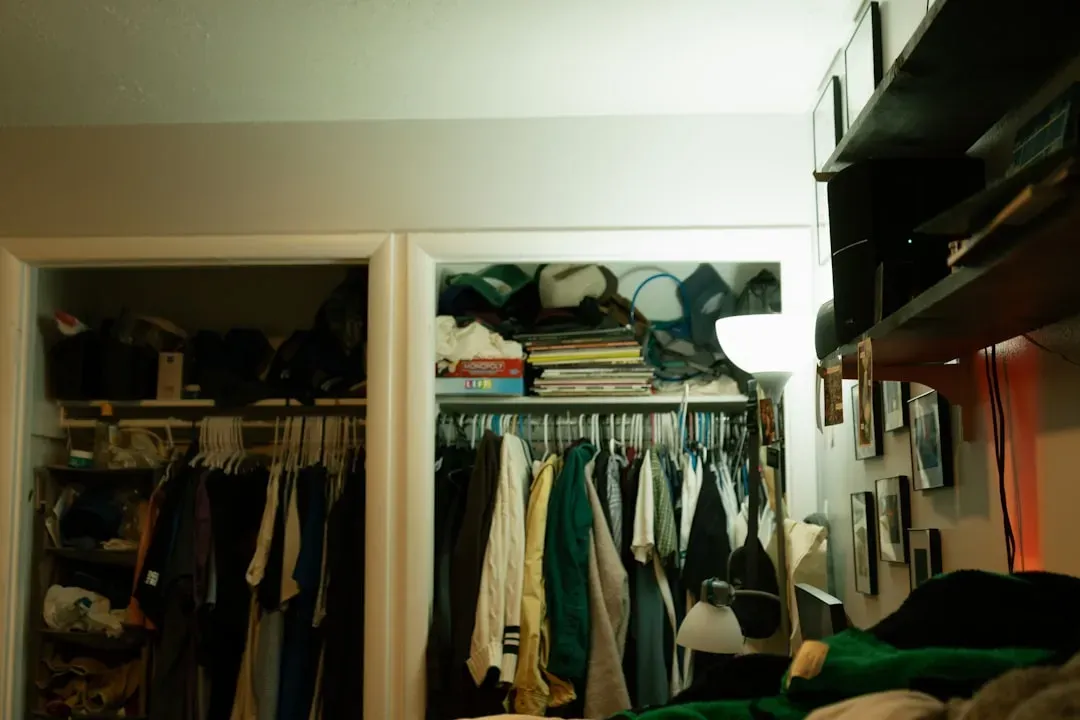
The emotional connection to clothes, fear of scarcity, or an irresistible shopping habit can quickly lead to clutter. Beyond just a messy space, clothes hoarding can also create stress and a sense of overwhelm. In my experience, clients who cannot part with clothing – even items they haven’t touched in a decade – are often holding on to a belief that things cannot be replaced. That belief is almost always about money, not clothes.
A scarcity mindset is a fear-based mentality that is typically passed down generationally, learned from parents, or the result of traumatic events that make the world feel like an unsafe place. It can manifest as the fear of letting go, and it can coincide with being stuck in the past. The wardrobe becomes a kind of emotional insurance policy – one that accumulates daily stress without paying out any real security.
Dressing in Deliberately Invisible, Forgettable Ways

Research suggests that at times of uncertainty and downturn, people dress more formally and traditionally. The shift toward classic, conservative pieces and understated aesthetics becomes a way to signal dependability and stability – qualities people seek during economic hardship. This is adaptive to a point. When it becomes compulsive – when someone consistently makes themselves visually forgettable regardless of context or circumstance – it can reflect a desire to avoid scrutiny of their financial situation.
Those experiencing anxiety may spend excessive time second-guessing outfit choices or overcompensate with overly polished looks, while others gravitate toward dark, oversized, or repetitive outfits that help them “hide.” Deliberate invisibility through clothing isn’t always about introversion. Sometimes it’s about not wanting anyone to look too closely.
Impulse-Buying Expensive Items After Financial Stress

Research in consumer psychology reveals a fascinating paradox: those who most eagerly display status symbols are frequently those experiencing the most significant financial insecurity. Economist Thorstein Veblen first identified this phenomenon in his 1899 work, coining the term “conspicuous consumption,” and recent studies have expanded on his observations, revealing how economic inequality and personal insecurity drive status-seeking behaviors.
Research from institutions like London Business School and Cornell University demonstrates that when a person’s self-esteem is threatened, their desire for status goods increases as these products serve to nurse their psychological wounds. A client who has just received bad financial news and immediately reaches for a luxury purchase isn’t being reckless so much as self-medicating. The wardrobe becomes a coping mechanism – which makes it expensive in more ways than one.
Refusing to Dress for the Role They Actually Want

Clothing choices can have a significant impact on mood and self-perception. Research suggests that wearing clothing associated with positive attributes or personal goals can evoke corresponding emotions and bolster self-esteem. Clients who consistently underdress for their aspirations – job interviews, client meetings, networking events – often do so not from laziness but from a deeply internalized belief that they don’t deserve the success they’re seeking.
There has been an evident shift toward a more holistic approach to wealth management, recognizing that financial health is intrinsically linked to psychological well-being. This trend emphasizes the importance of addressing not only financial strategies and goals but also the emotional and psychological aspects of managing wealth. Dressing beneath one’s actual potential is a behavioral expression of that emotional gap – and it tends to hold people back both financially and professionally.
The Performative “Stealth Wealth” Overcorrection

There is a growing cultural movement toward minimalism and authenticity, particularly among younger, affluent consumers. These individuals often reject overt displays of wealth in favor of experiences, sustainability, and personal growth. Psychologically, this shift represents a form of “inward signaling” – a way to prioritize intrinsic values over extrinsic validation. That’s genuinely healthy. The problem is when minimalism becomes a performance of its own – when someone dresses ostentatiously understated specifically to signal that they don’t need to signal anything.
Even minimalism can become performative – a new kind of status marker that communicates taste, awareness, and privilege. In this way, even the rejection of logos can become a logo of its own. True financial peace doesn’t require an aesthetic. When someone needs their wardrobe to communicate that they’re above caring, they usually aren’t quite there yet.
Constantly Updating the Wardrobe Without Satisfaction

The constant upgrade cycle reveals anxiety about remaining current and relevant rather than genuine success. Sustainable wealth building involves thoughtful asset management, not compulsive consumption. This pattern appears in wardrobes just as it does in cars and home renovations. Clients who are perpetually refreshing their clothing without ever arriving at satisfaction are often chasing a feeling they won’t find on a rack.
A pivotal aspect of mindful money habits is understanding instant gratification – our innate tendency to favor immediate rewards over future benefits. Cognitive biases play a noteworthy role in spending behavior, influencing how we sometimes throw good money after bad. The wardrobe that’s always being rebuilt is one that’s always lacking – not in clothes, but in the confidence that the underlying financial life is actually going to be okay.
Wearing Clothes to Perform a Financial Identity That Doesn’t Exist Yet
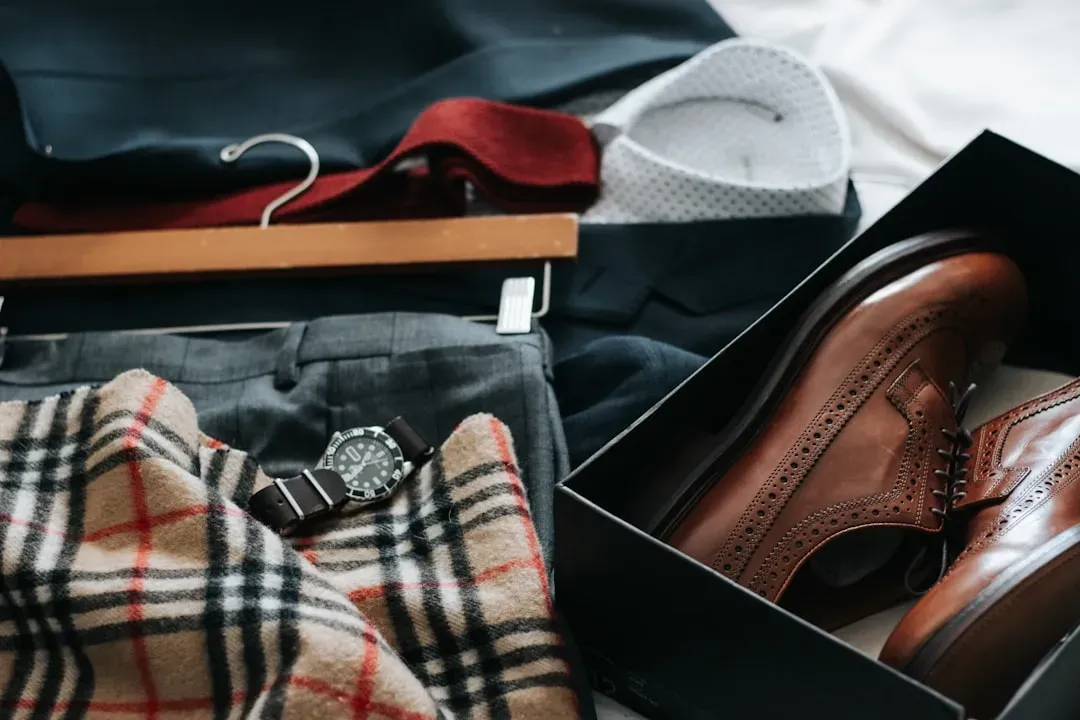
The concept of conspicuous consumption accurately describes how some consumers prefer highly recognizable brands adorned with logos that declare elevated status externally through material symbols. From a socio-psychological perspective, this behavior stems from identity anxiety during class mobility – the need for external validation to confirm new societal positioning. This is one of the most common patterns I encounter: someone who has taken on significant financial risk to look like they’ve already arrived. The wardrobe is aspirational; the balance sheet is precarious.
Studies show that status signaling often happens among people earning less, who then spend a higher percentage of their pay on “status goods” to create an illusion of wealth. The dangerous irony here is that the energy spent maintaining the appearance of financial security actively undermines the actual building of it. Clothes can tell a story, but they can’t rewrite the one happening in your accounts.