Most people don’t wake up one day and decide to stay poor. Financial hardship tends to creep in through a series of small, repeated decisions – habits so ordinary they barely register as problems. The tricky part is that some of these patterns feel completely rational in the moment, especially when money is tight and stress is high.
In 2024, the official U.S. poverty rate stood at 10.6 percent, representing nearly 35.9 million people living below the poverty line. Despite decades of effort and billions invested, most financial literacy programmes around the world struggle to create lasting change, especially in low-income communities where poverty is the norm. The habits below aren’t always about laziness or ignorance – they’re often deeply embedded behavioral patterns that are genuinely hard to see from the inside.
1. Living Paycheck to Paycheck Without a Plan

According to PNC Bank’s annual Financial Wellness in the Workplace Report, roughly two thirds of workers now say they are living paycheck to paycheck, up from 63 percent in 2024. This isn’t just a low-income problem. Even roughly one in five households earning $150,000 or more say they’re still stuck in the cycle, and more than four in ten people reported they couldn’t cover a $1,000 emergency in cash.
What makes this habit so dangerous is the absence of any buffer. Living paycheck to paycheck – defined as spending over 95 percent of income on necessities like housing, groceries, gas, and childcare – leaves little or no leftover funds for savings or discretionary purchases. Research shows that when people are experiencing financial difficulties, they consistently choose for the short term – opting for a smaller reward now rather than a larger one later, often regardless of personality or intent. Without a deliberate plan to break the cycle, each month simply resets the same trap.
2. Carrying High-Interest Debt as If It’s Normal

Americans’ total credit card balance reached $1.277 trillion as of the fourth quarter of 2025, according to the Federal Reserve Bank of New York – the highest balance since they began tracking this data in 1999. Roughly half of Americans now say that carrying revolving credit card debt is simply normal. That normalization is exactly what makes it a poverty trap.
Americans making only minimum required payments on the average amount of credit card debt would accrue nearly $18,500 in interest charges by the time the balance was paid off. About three in five Americans with card debt have been in debt for at least a year – a figure that jumped significantly from just over half in late 2024. Roughly one in five debtors don’t even believe they’ll ever pay it off. High-interest debt doesn’t just cost money – it erodes any chance of building a financial cushion over time.
3. Avoiding Financial Information Due to Stress

Lack of money directly affects how a person makes financial decisions, and procrastination and avoidance behaviors in turn worsen the lack of money – creating a compounding sense of lost control. This cycle, studied by psychologist Leon Hilbert at Leiden University, reveals something counterintuitive: the people who most need to engage with their finances are often the least able to do it emotionally. People in financial difficulty often stop opening letters or fail to check their bank accounts, and that procrastination brings even greater financial shortages in the future.
Too often, financial literacy training focuses on tools like budgets and debt plans while ignoring the fundamental drivers of money behavior – identity, emotion, and belief – and most programs teach budgeting and saving but ignore the emotional and psychological barriers that keep people stuck. Chronic poverty can lead to irrational social cognitive features such as negative emotions, stress, and cognitive biases, as well as the construction of self-reinforcing mechanisms that lead households deeper into the poverty trap. Avoidance, in other words, isn’t a character flaw – it’s a documented psychological response to financial pain that makes the situation measurably worse.
4. Spending Money on Impulse Rather Than Intention

The most common incomplete financial resolutions from 2024 turned out to be not saving enough money, and not spending money thoughtfully enough – both cited by large shares of Americans. Impulse spending isn’t just about big purchases. It’s the accumulated weight of small, unconsidered decisions – subscriptions, convenience costs, and social spending – that quietly drain accounts every month. While roughly two thirds of surveyed Americans hoped to improve their money habits recently, more than one in four don’t even know what interest rate they’re getting from their bank or financial institution.
Adults stuck in poverty often carry deep-seated beliefs formed in childhood, such as “my family has always been poor” or “I’m not good with finances – that’s for educated people,” and without addressing these underlying beliefs and emotional responses to money, knowledge and tools alone fall short. Spending without intention tends to reflect these deeper narratives. Individual characteristics like risk aversion, attention, and saving propensity can lead to poor financial choices, and these individual drivers are reinforced by institutional mechanisms such as lack of financial inclusion and economic segregation – leading to persistent inequality and poverty traps.
5. Having No Emergency Fund
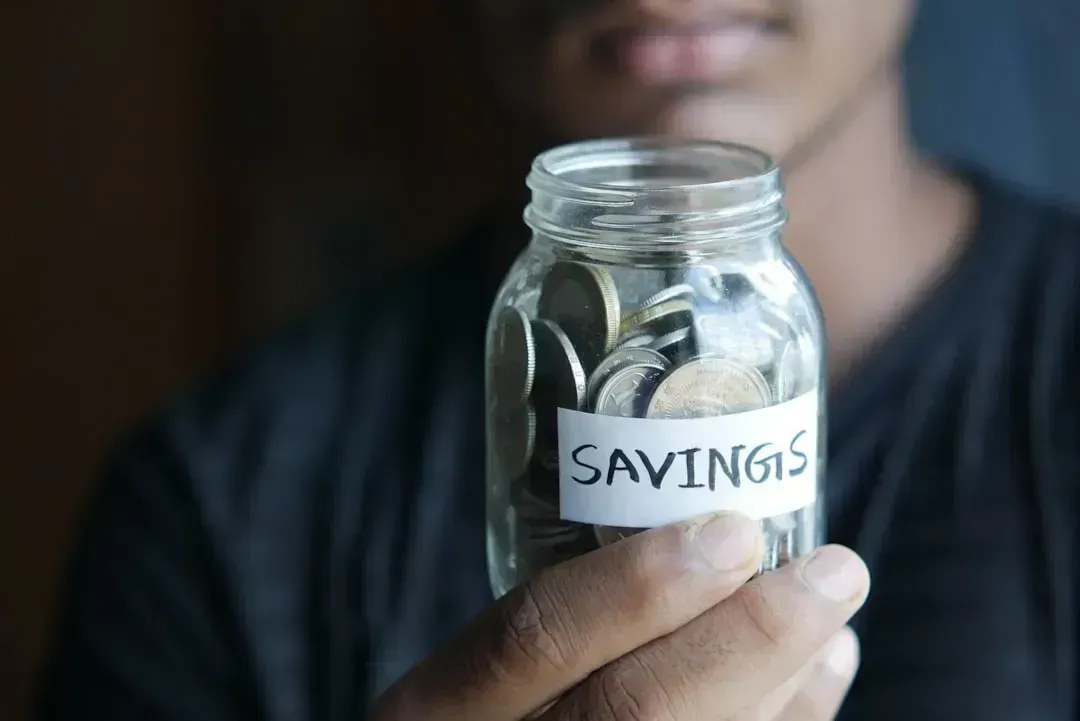
The World Bank’s Global Findex 2025 report shows that in 2024, only roughly two in five adults in developing economies saved in a financial account – meaning millions remain just one unexpected expense away from a money crisis. In the United States, the picture isn’t dramatically better. The average U.S. personal savings rate was just 4.6 percent as of early 2025, according to BEA.gov. That razor-thin margin means any unexpected expense – a medical bill, a car repair, a job disruption – lands directly on a credit card or goes unpaid.
Among credit card debtors, more than two in five say their debt came primarily from emergency or unexpected expenses, including medical bills, car repairs, and home repairs – and about one in three now cite day-to-day expenses like groceries, childcare, and utilities as the primary cause of their debt. Pandemic-era disruptions depleted savings that have been hard to replace, particularly for lower-income Americans, with Pew Research finding that nearly half of lower-income households exhausted their emergency funds. Without an emergency fund, every surprise becomes a new debt – and each debt makes recovery harder.
6. Ignoring the Psychology Behind Money Beliefs

The emotional brain is very powerful – stronger and faster than logical, analytical thinking – and in moments of stress or temptation, the emotional brain often wins, overriding even the most well-laid financial commitments. This is why simply knowing what to do with money is rarely enough to change how someone actually handles it. The poverty psychological theory argues that chronic poverty states may lead individuals to develop psychological characteristics such as negative affect and stress, resulting in poor groups exhibiting poverty dependence due to a lack of initiative and social responsibility – and this psychology leads to insufficient household participation in financial markets.
In one program working with financially struggling adults, only 38 percent of participants earned above the poverty line at the start – but by graduation, 82 percent did, and family savings rates rose from 17 percent to 77 percent. The key difference was addressing identity and beliefs, not just teaching budgeting skills. Like healthy eating, knowing what to do simply isn’t enough – lasting change requires a shift in self-identity. Until the internal narrative around money changes, the external habits rarely follow for long.
The habits on this list aren’t signs of failure. They’re patterns that develop under real pressure, reinforced by psychological responses that are well-documented and deeply human. What makes them worth examining is that each one is, to varying degrees, changeable – not overnight, and not without effort, but changeable. The first step is usually the hardest one: recognizing the pattern while you’re still inside it.