
Some beliefs are so deeply woven into everyday conversation that questioning them almost feels rude. They come from parents, teachers, movies, and old habits of thought, passed along so often that they start to feel like verified facts. The problem is, a surprising number of them aren’t facts at all.
Science has caught up with many of these widespread misconceptions, and the gap between what people believe and what research actually shows can be striking. Here are fifteen of the most persistent myths that experts have thoroughly and repeatedly debunked.
1. You Only Use 10 Percent of Your Brain
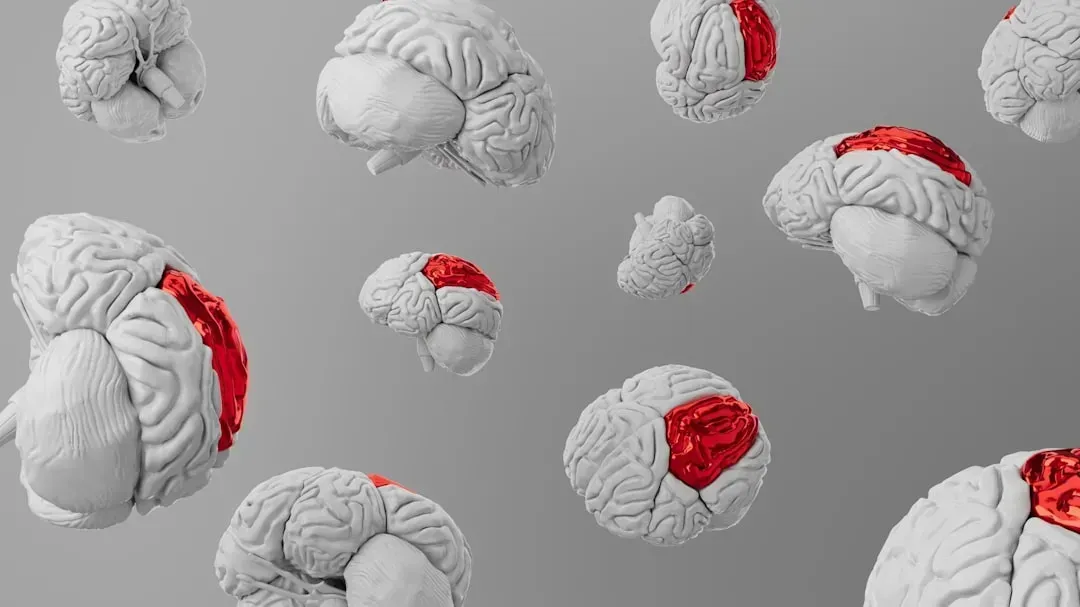
The idea that we only use 10 percent of our brain is completely a myth. Scientists believe that we use our entire brain every day. Neuroscientific research using methods such as functional magnetic resonance imaging has demonstrated that many areas of the brain remain active even during simple tasks.
Evolutionarily, it would make no sense for the human brain, which consumes roughly one fifth of the body’s energy despite accounting for only about two percent of its mass, to be largely unused. The entire brain is constantly active, even in periods of sleep: regulating, monitoring, sensing, interpreting, reasoning, planning, and acting. Despite this well-established science, around 65 percent of Americans, according to a 2013 survey, still believed we only use 10 percent of our brains.
2. Sugar Makes Kids Hyperactive

Rigorous research conducted by experts has consistently failed to find a connection between sugar and hyperactivity. Numerous placebo-controlled studies have demonstrated sugar does not significantly impact children’s behavior or attention span. One landmark meta-analysis compared the effects of sugar versus a placebo on children’s behavior across multiple studies. The results were clear: in the vast majority of studies, sugar consumption did not lead to increased hyperactivity or disruptive behavior. Subsequent research has reinforced these findings, providing further evidence that sugar does not cause hyperactivity in children, even in those diagnosed with ADHD.
Another factor is the setting in which a child might be given excess sugar. The classic scenario is a room full of children at a birthday party. In this environment, they are having fun and are likely to be excitable, regardless of the candy consumed. Similarly, if candy is a special treat, the simple fact of receiving a delicious reward might be enough to generate a boisterous outburst of high-octane activity. In other words, the excitement of the occasion is often doing the heavy lifting, not the candy bowl.
3. Lightning Never Strikes the Same Place Twice

The idea that lightning doesn’t strike the same place twice is a popular misconception. Lightning strikes are too frequent to not strike the same place on Earth multiple times. Studies show that around 500 to 1,000 lightning strikes happen globally every second. The Empire State Building was once used as a lightning laboratory because the building is struck with lightning around 100 times a year.
The reason tall structures attract repeated strikes isn’t mysterious at all. Lightning seeks the path of least electrical resistance, which is often the same elevated point again and again. Tall buildings, towers, and trees are reliable conductors, and nature tends to return to what works. The phrase has become a cultural shorthand for unlikely repetition, but physically, it’s simply wrong.
4. The Great Wall of China Is Visible from Space

The Great Wall of China has been called the only man-made object visible from space. In fact, the wall is mostly the same color and texture as the land around it, so it blends into its surroundings. Even Chinese astronaut Yang Liwei claimed he could not clearly see the wall from space in 2003.
The claim that the Great Wall of China can be seen from space has been disproven through astronomical observations and spaceflight records. The wall is remarkably long but narrow, typically no wider than a typical road. At orbital distances, a structure needs significant width to be detectable by the naked eye, and the wall simply doesn’t meet that threshold. It’s a genuinely impressive feat of construction, just not a visible one from low Earth orbit.
5. Napoleon Bonaparte Was Extremely Short

Napoleon Bonaparte was actually average height for his time, around 5 feet 7 inches. The myth of his short stature likely stemmed from British propaganda and the misinterpretation of French measurement units by the English. The French inch was longer than the English inch, so when Napoleon’s height was recorded in French units and then misread by British sources, he appeared much shorter on paper than he actually was.
British satirical cartoonists, particularly James Gillray, exaggerated his small stature repeatedly for political effect. Those caricatures proved enormously influential, embedding a false image into public consciousness that has lasted over two centuries. In reality, Napoleon was about the same height as the average Frenchman of his era, and taller than several contemporaries who never became the butt of similar jokes.
6. Cracking Your Knuckles Causes Arthritis

While cracking your knuckles may be annoying for those around you, it has no correlation to arthritis in those joints. Several studies that aimed to find a link between the two found no substantial evidence of any correlation. However, those who excessively cracked their knuckles did have slightly weaker grip strength later in life.
Knuckle cracking is a bubble being formed and popped by the liquid that surrounds your knuckle joints. It causes no trauma to these areas that would accelerate the onset of inflammation, which is what arthritis is. The myth likely persists because it sounds plausible. Joints, popping, damage. The logic feels intuitive, but biology doesn’t always follow intuition. Parents have been warning children about this for generations based on nothing more than a discomforting noise.
7. Putting Rice in a Wet Phone Will Dry It Out

Submerging a water-damaged cell phone in a bag of rice has been the quick go-to rescue remedy for years. Originally, it was thought that sticking a wet phone into uncooked rice would absorb all the phone’s moisture. It turns out the small particles of rice are incapable of sucking out the water and can introduce dust and other particles into the phone, causing internal damage. In addition, mushy and sticky pieces of rice can get stuck inside certain essential parts of the phone, such as its speaker cavities and ports.
Tech experts now recommend against the rice method entirely. The better approach is to gently remove excess liquid, leave the device in a dry, well-ventilated space, and avoid turning it on immediately. The rice trick endured partly because phones sometimes dry out on their own regardless, making it seem like the rice deserved the credit. It’s a classic case of correlation mistaken for causation.
8. We Lose Most Body Heat Through Our Heads

Nearly half of people believe that most human heat escapes through the head, but experts say only around 10 percent of body heat is lost this way, due to its relatively small surface area. This myth claims up to 40 percent of body heat escapes through the head. In reality, heat loss is proportional to surface area. The head represents about 10 percent of the body’s surface area and loses roughly 10 percent of heat when uncovered. The myth likely stems from military studies where subjects wore warm clothing but no hats.
Any exposed part of the body loses heat. If you were to expose only your hand in cold weather, your hand would lose the heat. The head isn’t special in this regard, it just happens to be the part people often leave uncovered while bundling up elsewhere. Wearing a hat in winter is still sensible, but not because the head is a mysterious heat-draining zone.
9. The Five-Second Rule Keeps Dropped Food Safe

The five-second rule contends that if food falls on the floor and you scoop it up within five seconds, it’s safe to eat because it’s not enough time for germs to transfer. This theory has been proven to be a complete falsehood. One Rutgers University study looked at how quickly bacteria stuck to different types of food on a variety of surfaces. What they found was that bacteria transferred to the food immediately, no matter how fast it was picked up.
The speed at which contamination occurs depends on the type of food, the surface, and the moisture content, not the clock on the wall. Watermelon, for example, picks up bacteria far more readily than dry crackers. The five-second rule does not have any actual basis in science. Five seconds is still plenty of time for food to pick up dangerous bacteria from the ground. The rule has always been more about convenience than food safety.
10. Storing Batteries in the Fridge Extends Their Life

Putting batteries in a refrigerator or freezer to prolong their life and keep them fresh is a widely shared myth that’s been debunked by scientists and battery makers alike. Keeping batteries in very cold temperatures actually reduces their performance. Storing them in the fridge or freezer exposes batteries to a lot of moisture in the form of condensation that can damage them after you take them out. Experts say the best environment for storing batteries is in a dry place at room temperature.
The myth may have origins in early battery chemistry, where some older nickel-cadmium batteries marginally benefited from cool storage. Modern alkaline and lithium batteries don’t share that property, and cold conditions actively hurt their performance. The idea simply migrated from an older truth about outdated technology into modern practice, where it no longer applies.
11. Left-Brained vs. Right-Brained People
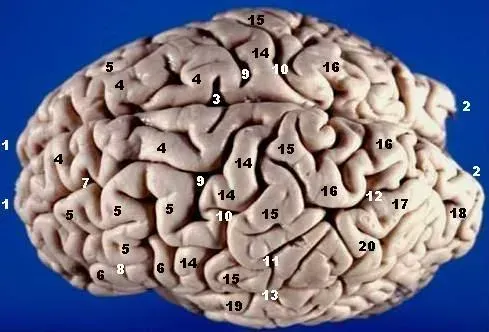
The idea that people are either left-brained (logical) or right-brained (creative) oversimplifies how we learn. Neuroscience shows that both sides of the brain work together, especially for tasks like problem-solving, which blend logic and creativity. Research suggests that a person will not be dominated by either the left hemisphere or right, but that both sides of the brain are used equally. Many believe that a person is either left-brained or right-brained, with right-brained people being more creative and left-brained people more logical. Research suggests this is a myth. A healthy person is constantly using both hemispheres.
The notion remains popular in personality quizzes, self-help books, and productivity frameworks. It offers a tidy explanation for individual differences, which is precisely why it sticks. The reality is considerably more complex: both hemispheres collaborate on virtually every meaningful cognitive task, and the division of labor is far more subtle than a simple creative versus logical split.
12. Bulls Are Enraged by the Color Red

If you’ve ever seen a bullfight, you know how angry a bull gets when he sees a matador waving a red cape. Contrary to common belief, a bull doesn’t go into attack mode because he hates the color red. Instead, he’s triggered by both the movement of the cape and the presence of the bullfighter invading his personal space.
Cattle are actually red-green colorblind, meaning red looks much the same to them as a dull yellow or brown. Multiple experiments have confirmed that bulls will charge capes of any color with equal aggression, as long as those capes are moving. The color red in traditional bullfighting has more to do with visual drama for the human audience, and perhaps with concealing bloodstains, than with any reaction from the bull itself.
13. Turkey Makes You Sleepy Because of Tryptophan

The misconception that turkey makes you sleepy originates from the fact that the meat contains tryptophan, an amino acid that increases levels of serotonin and melatonin. Turkey doesn’t have enough tryptophan to single-handedly bring on slumber and doesn’t contain significantly more of the component than chicken, beef, cheese, or nuts. If you feel especially drowsy after Thanksgiving dinner, it’s more likely because you ate a big meal with foods higher in carbohydrates and sugar, and may have consumed more alcohol.
The holiday setting itself contributes. Large meals slow digestion and redirect blood flow, warm homes after cold commutes encourage relaxation, and many families follow dinner with alcohol or dessert. All of those factors promote sleepiness far more directly than turkey’s tryptophan content. The bird just happens to be at the table when it all converges.
14. Goldfish Have a Three-Second Memory

Far from the notion that goldfish only remember things for a few seconds, they are in fact thought to have memories that last as long as three months. Goldfish are commonly assumed to be capable of only remembering their last trip around the bowl. Researchers at the Israeli Technion Institute of Technology put this to the test in 2009, when they demonstrated that the fish can actually retain memories for up to five months. They taught a group of young fish to come to eat when a certain sound was played, then released the fish into the wild; five months later, when the scientists played that same sound, the fish returned.
The three-second memory idea has been used as an offhand insult and a casual way to diminish the inner life of animals. Fish are genuinely less cognitively complex than mammals, but dismissing their memory entirely misrepresents what the research shows. Goldfish can learn, recognize patterns, and retain that knowledge over extended periods, which puts the old punchline firmly out to pasture.
15. You Need to Wait 24 Hours Before Reporting a Missing Person
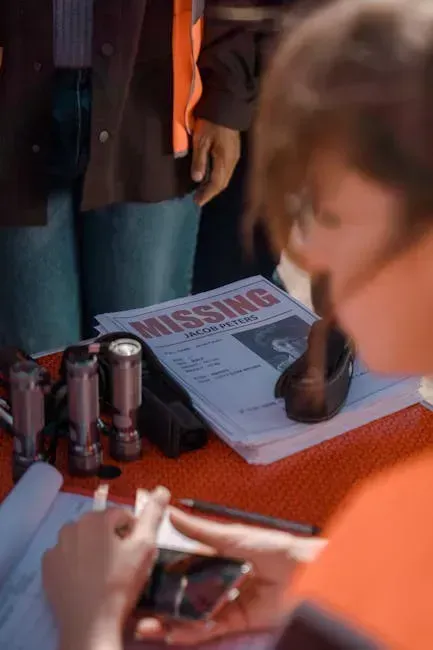
Police don’t require a 24-hour waiting period before accepting a missing persons report. This is a good example of why it’s so important to know facts that aren’t proven from ones that are. In reality, law enforcement agencies in most countries actively encourage people to report a missing person immediately, particularly when children, vulnerable adults, or unusual circumstances are involved. The first hours after a disappearance are often the most critical for investigators.
The 24-hour myth is genuinely dangerous. It can delay action at exactly the moment when quick reporting matters most. The source of the belief is unclear, though it may stem from older informal police practices or the influence of TV dramas, neither of which reflect actual protocol. If someone is missing and you’re concerned, there is no legal or procedural reason to wait.
What connects all fifteen of these myths is how they persist not because of any shortage of information, but because of how human psychology works. A list of common misconceptions compiles widely held beliefs contradicted by empirical evidence, scientific research, or historical facts. These beliefs commonly arise from intuitive reasoning, anecdotes, media influence, and incomplete information, sustaining persistent errors. Knowing a myth is false turns out to be only the first step. Truly unlearning it takes repeated exposure to the truth, and a willingness to sit with the mild discomfort of being wrong.