Retirement used to look like a fairly predictable milestone. Work for decades, build a nest egg, collect Social Security, and ease into a comfortable later life. For many baby boomers, that picture has gotten considerably more complicated. The financial pressures stacking up against this generation are real, measurable, and often underappreciated until it’s too late to course-correct.
An economic analysis finds that a majority of Americans turning 65 between 2024 and 2030 are not financially prepared for retirement and are at risk of outliving their savings. That’s not a fringe finding. It’s a sobering baseline from which the following fifteen threats are worth understanding carefully.
1. Outliving Their Savings Entirely

A concerning trend is emerging as a significant portion of the Peak 65 generation lacks sufficient protected income, putting them at risk of outliving their savings. Longer life expectancy has quietly moved the goalposts. Too many baby boomers do not plan to live past 90, even though nearly half of women now age 65 will live to their 90th birthday.
Based on their assets and their likelihood of living up to 20 or more years in retirement, two-thirds of Peak Boomers will be challenged to maintain their lifestyles, and more than half have assets of $250,000 or less. That amount sounds meaningful until you map it against two or three decades of living expenses, healthcare, and inflation.
2. Insufficient Retirement Savings Across the Board

Just 40% of workers who are age 61 to 65, the youngest members of the boomer cohort, are financially on track for retirement, according to research from Vanguard. The gap is not marginal. The typical median 61 to 65-year-old will have a $9,000 annual deficit in retirement, representing a 24% shortfall in their funding needs, Vanguard estimates.
A Credit Karma survey showed that more than one in four Americans age 59 or older have nothing saved for retirement, and a 2024 study by AARP found that one in five Americans age 50 and older have zero retirement savings. For those individuals, every other financial threat on this list is magnified significantly.
3. Social Security Benefit Cuts on the Horizon

According to the 2025 annual report from Social Security’s Board of Trustees, the program’s trust funds are projected to run short of money in 2034. Benefits would not end if that happens, but they would be reduced by an estimated 19 percent. That reduction would land at a particularly painful moment for late-stage boomers drawing on the program as a primary income source.
Baby boomers’ greatest retirement fears include outliving their savings and investments, as well as that Social Security will be reduced or cease to exist in the future, with 44% citing each concern in a Transamerica survey. According to The Senior Citizens League, Social Security benefits lost about 20% of their buying power between 2010 and 2024, meaning many retirees may see their checks covering less each year even when benefits technically increase.
4. Claiming Social Security Too Early

Data from Bankrate shows that close to a quarter of all retirees claim their Social Security benefit at age 62, making it the second most popular age to claim benefits, while only 9.1% claim between the ages of 70 and 75. That timing gap carries a steep long-term price. The National Bureau of Economic Research found that more than 90% of younger Americans are better off waiting until 70 to claim benefits, and by claiming earlier at a suboptimal age, retirees are leaving an estimated $182,370 on the table.
The Alliance’s PRIP study found 49% of baby boomers aged 61 to 65 have already started claiming Social Security benefits, and since full retirement benefits are not available until age 67, many people are tapping into their benefits at reduced levels that will stay at that level for the rest of their lives. It’s a decision that’s very difficult, and often impossible, to undo.
5. Surging Healthcare Costs

Healthcare is one of the largest and most unpredictable expenses many retirees face. While Medicare helps cover a variety of medical costs, it does not pay for everything. Retirees are responsible for premiums, deductibles, prescriptions, dental care, vision care, and many other expenses that can add up substantially.
A 65-year-old retiring in 2025 could expect to spend about $172,500 on healthcare alone, excluding long-term care, and a private nursing home room averaged $127,750 per year in 2024, while assisted living cost about $70,800. The price of medical care including services, insurance, drugs, and equipment has increased by over 120% since 2000, leaving many retirees at risk of draining their savings.
6. The Long-Term Care Blindspot

Only 27% of investors surveyed believe they will require long-term care, yet 70% of individuals turning 65 are likely to need this type of care, according to a Jackson Financial study conducted in partnership with the Center for Retirement Research at Boston College. That’s a massive mismatch between expectation and statistical reality.
Someone turning age 65 today has almost a 70% chance of needing some type of long-term care services and supports in their lifetime. Long-term care is expensive and not covered by Medicare. According to the Genworth Cost of Care Survey, the 2025 national median cost of an assisted living facility is around $6,077 per month, and the cost of a nursing home can soar to over $9,555 for a semi-private room.
7. Inflation Quietly Eroding Purchasing Power

Market volatility and inflation threaten purchasing power, as stock market swings and creeping inflation can quietly erode retirement income, particularly for fixed-income households. This is especially true for retirees whose income doesn’t automatically scale upward with rising prices.
Social Security cost-of-living adjustments are based on the Consumer Price Index for Urban Wage Earners and Clerical Workers, which reflects the spending patterns of workers, not retirees. The latter category often spends more on costs like healthcare. As a result, COLAs may not fully even out the inflation older Americans actually experience. Because inflation affects consumption differently across households depending on asset mix and income sources, retirees with lower wealth or fewer investments are hit hardest, forcing them to cut back on spending or deplete savings faster than planned.
8. Carrying Debt Into Retirement

According to Experian’s data, baby boomers ages 60 to 78 carry an average total debt of $94,880. While this generation has seen a slight decrease in their overall debt load, the sheer volume of these obligations remains a significant threat to their long-term financial stability.
Housing remains the primary burden, with boomers carrying an average mortgage balance of $191,539. This persistent mortgage debt is often compounded by Home Equity Lines of Credit, which average $41,941 for this age group. Mortgages, credit card debt, and even their children’s student loans are keeping some boomers in the workforce longer than they planned.
9. Being House-Rich but Cash-Poor
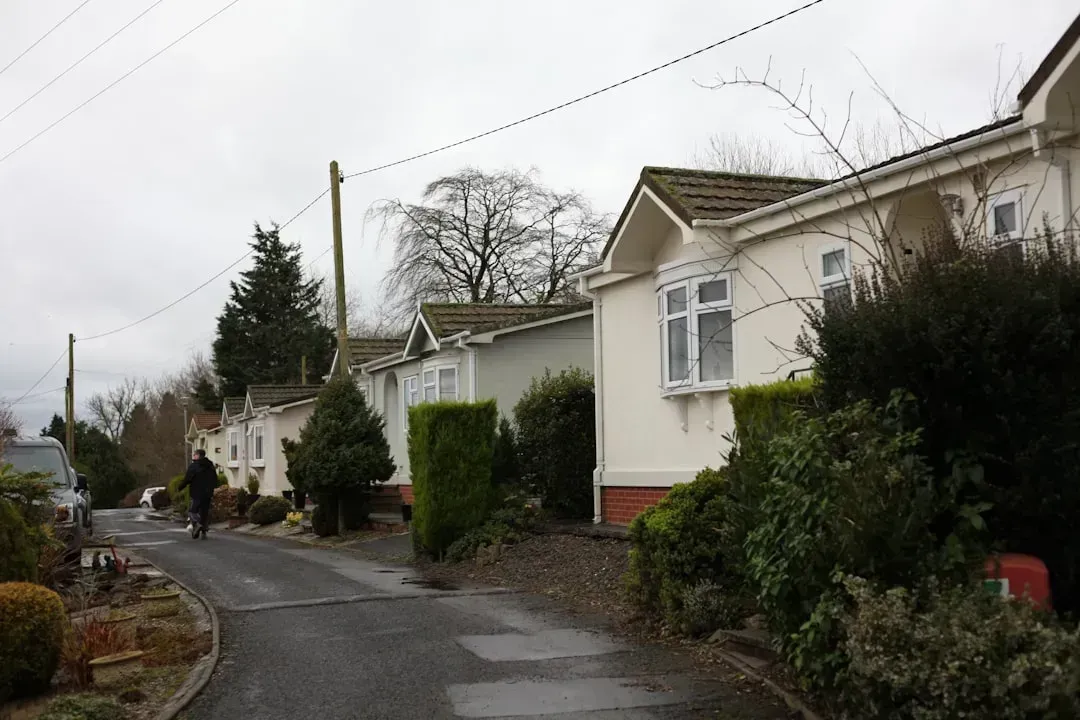
The vast majority, 86% of baby boomers, own homes, a much larger share than younger generations. The average boomer has $113,000 of home equity, according to Vanguard’s calculations. On paper, that looks reassuring. In practice, it can be a trap.
The family home was the ultimate wealth builder for this group, as rising property values turned spare bedrooms into massive paper gains. For many boomers, that success has created a house-rich, cash-poor trap. A home is a massive, immobile asset that is notoriously difficult to tap into without selling the property or taking on new debt. Rising property taxes, insurance premiums, and maintenance costs keep housing expenses high. Downsizing can help, but it often comes with its own costs. For those living on fixed incomes, housing continues to eat up a large share of retirement funds.
10. Market Volatility and Sequence-of-Returns Risk
Economic uncertainty makes many boomers hesitant to rely solely on their investments, as market volatility and recession fears are among the biggest financial stressors delaying retirement. The timing of market downturns matters enormously for people in the early years of drawing down a portfolio.
Many retirees follow the 4% rule, but recent research indicates some may need to start with a lower withdrawal rate to reduce the risk of running out of money. Morningstar estimated a 3.7% starting safe withdrawal rate for new retirees, assuming a 30-year time frame and a balanced portfolio. That 0.3% difference may sound tiny, but it matters in practice. A $1 million portfolio would produce $37,000 in first-year withdrawals at 3.7%, compared with $40,000 under a 4% rule. For retirees living on a fixed income, $3,000 is a decent chunk of money.
11. Financially Supporting Adult Children

About half of parents routinely provide financial support to adult children, averaging $1,474 a month. Most of that goes to essentials like groceries, healthcare, and housing, and many parents say they would deplete retirement savings, delay retirement, or even return to work to keep helping their kids.
These hidden financial dependencies can quietly drain savings, leaving boomers vulnerable to unexpected expenses like healthcare or long-term care, and many boomers feel obligated to help especially as younger generations face high living costs, student loans, and inflation. The emotional pull to help family is real, but it comes at a measurable financial cost that rarely appears in any retirement spreadsheet.
12. Delaying Retirement Without a Plan

Research from the 2025 Employee Financial Behavior Report found that 58.8% of baby boomers are delaying retirement due to financial stress. Staying in the workforce longer can help, but without an active plan, it simply defers the same underlying shortfalls.
Almost six in 10 baby boomer workers expect to retire at age 70 or older or do not plan to retire at all. Financial stress isn’t just about numbers. It takes an emotional and psychological toll, and many baby boomers who expected to retire by a certain age are now facing disappointment, frustration, and anxiety as they adjust to the reality of working longer than planned.
13. The Pension Gap

The workplace retirement system shifted from a pension-heavy system to a 401(k)-type system right as young boomers were in their peak earning years. They didn’t really benefit fully from the pensions their parents or grandparents may have had, nor from the newer 401(k)-type system of savings.
Only 24% of boomers entering retirement age have defined benefit pensions, which combined with savings and Social Security benefits will place them in a stronger position. Private sector pensions are now available to only about 4% of the workforce, so a large portion of boomers are entering retirement without a pension to provide protected income. That structural shift is one of the clearest reasons so many boomers are exposed to risks that previous generations weren’t.
14. Overestimating What Social Security Will Pay

Baby boomers overestimate Social Security benefits by about $500 per month, according to financial planning researchers. That may not sound catastrophic in isolation, but applied over a retirement of 20 or more years, a $500 monthly overestimate creates a substantial hole in any financial plan.
On average, Social Security is intended to replace about 40% of a person’s annual pre-retirement income. As of January 2025, the estimated average monthly Social Security retirement benefit was just $1,976, which is less than $24,000 per year. One-third of younger boomers will rely on Social Security benefits for at least 90% of their retirement income when they are 70. That’s a very thin margin to sustain a multi-decade retirement.
15. Failing to Plan for Gender and Wealth Gaps Within the Generation

Peak boomer men have a median retirement balance of $268,745, while women of the same age have savings of only $185,086. Peak boomers with only a high school degree have saved a median of $75,300 for retirement, compared with $591,158 for college graduates. These aren’t small variations. They represent entirely different retirement realities within the same generation.
While the median retirement savings for all Peak Boomers is $225,000, it is $299,000 for whites versus $123,000 for Hispanics and $49,000 for Black Americans, and $591,000 for college graduates versus $7,000 for those without high school diplomas. Retirement insecurity is distributed unevenly, and strategies that work for one segment of the boomer population may be entirely inaccessible to another. Acknowledging this gap is, at minimum, a starting point toward addressing it honestly.
The threats outlined here aren’t abstract scenarios reserved for the least prepared. Many of them apply to boomers across the wealth spectrum, and several compound each other in ways that make the combined risk significantly greater than any single item suggests. The financial decisions made in the years immediately before and after retirement have consequences that can span decades, which is why getting the details right, from Social Security timing to healthcare budgeting to debt management, matters more than most people realize until they’re living with the results.