
Most people assume panic attacks arrive out of nowhere, a mystery of misfiring biology that has little to do with the ordinary texture of a Tuesday. The reality is considerably more complicated. A growing body of psychological and neuroscientific research points to a quieter, more pervasive mechanism: the relentless accumulation of daily decisions, piling up like unpaid debt until the brain simply buckles under the weight.
We live in a world structured around choice. Every meal, every subscription, every career path, every social plan involves a negotiation with options. That sounds like freedom. Increasingly, research suggests it functions more like chronic stress, and for a meaningful number of people, that stress is crossing into something far more destabilizing.
What Decision Fatigue Actually Means

Decision fatigue is a distinct psychological phenomenon where the act of making numerous or difficult choices depletes an individual’s mental resources, leading to a measurable decline in the quality of subsequent decisions. It isn’t laziness or weakness. It’s a structural limitation of how the human brain processes choice.
Unlike general physical fatigue or emotional exhaustion, decision fatigue specifically targets the cognitive capacities required for deliberate, rational thought and self-control. That distinction matters, because people often dismiss their own mental exhaustion without recognizing the specific mechanism driving it.
The Staggering Volume of Modern Choices

An average American adult makes approximately 35,000 decisions per day, comprising both personal and organization-level decisions. Most of these happen below conscious awareness, but they still draw on the same finite cognitive reserves.
Each micro-decision draws from the same limited cognitive reserve. The brain treats willpower and decision-making as finite resources. When those resources run low, people don’t just make worse choices. They start avoiding decisions altogether, defaulting to whatever requires the least mental effort, or feeling inexplicably irritable and overwhelmed.
The Neuroscience Behind the Overload
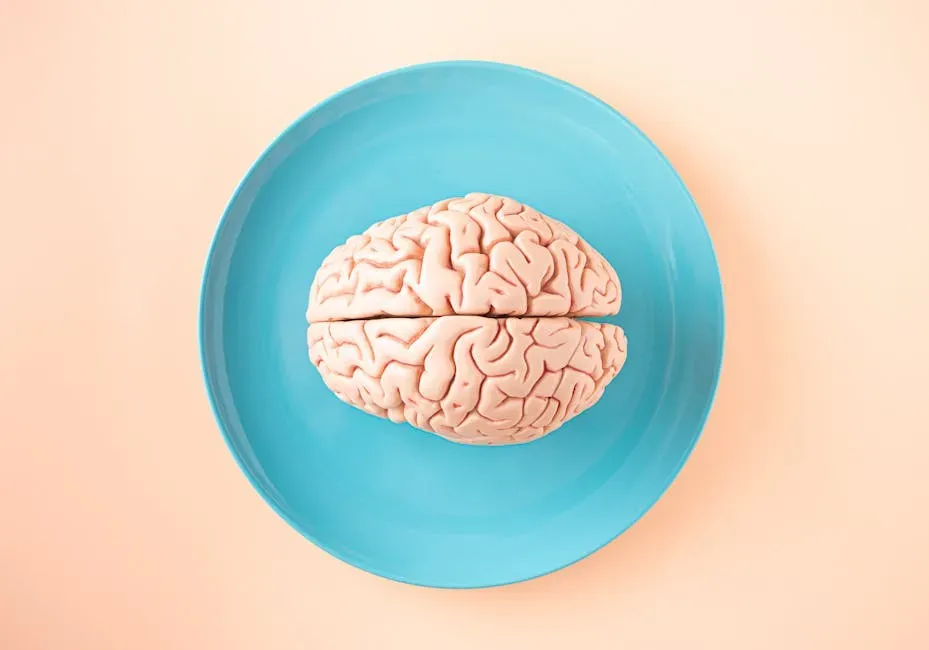
The prefrontal cortex, the region right behind the forehead, handles executive functions like planning, reasoning, and making decisions. Every choice, from what to eat for breakfast to how to respond to a difficult email, requires this region to activate and process information. The problem isn’t that this process fails. It’s that it was never designed to run continuously at modern volumes.
The prevailing model suggests that executive functions, including willpower, cognitive control, and deliberate choice, are metabolically costly processes reliant on a common pool of limited neural resources, primarily mediated by the prefrontal cortex. Neuroimaging studies indicate that effortful cognitive tasks increase glucose metabolism in the PFC. Over the course of a day, that metabolic cost accumulates in ways that leave the brain genuinely depleted.
The Paradox of Choice: When More Becomes Less

In “The Paradox of Choice,” Barry Schwartz argues that the abundance of choice, often seen as a symbol of freedom and self-determination, can lead to greater stress, anxiety, and dissatisfaction. His research, now two decades old and still widely cited, captured something that has only become more relevant as digital platforms have multiplied options exponentially.
While individuals consistently express a preference for more options, believing it enhances their autonomy and chances of finding an optimal fit, an overabundance of choice often leads to debilitating psychological consequences, including decision paralysis, heightened anxiety, and post-choice regret. The cognitive effort required to evaluate an ever-expanding set of alternatives becomes overwhelming, often resulting in the decision-maker avoiding the choice altogether.
How Choice Overload Escalates Into Anxiety

Decision fatigue describes how the quality of decision-making declines as additional choices are made, as cognitive abilities get worn out. It can occur when there are too many choices to make or too many options to choose from, a phenomenon known as choice overload. This, in turn, can make people feel overwhelmed and experience a decline in their ability to actually make a choice.
This matters for mental health in ways that extend far beyond occasional poor choices. Decision fatigue creates a pattern of accumulated psychological strain. When that strain becomes chronic, it does not stay neatly contained to decision-making. It bleeds into mood, sleep, and physiological stress responses, creating conditions under which anxiety disorders can take root and intensify.
The Panic Disorder Connection
Panic induces many physical symptoms, like shortness of breath, pounding heart rate, sweating, and nausea, but anxiety does not induce those symptoms. Panic attacks are uncontrollable and often spontaneous, while other anxiety disorders, like post-traumatic stress disorder, are more memory-based and have predictable triggers. This distinction is crucial when considering how cognitive depletion feeds into panic.
Research has shown high temporal correlations between anxiety and depression across time points, emphasizing their strong association. Panic and fatigue emerged as core symptoms across all periods. The overlap between fatigue states and panic vulnerability is not coincidental. A brain running near empty on cognitive resources is a brain more susceptible to misinterpreting physical sensations as threats.
Anxiety Rates Are Climbing, and the Numbers Are Stark

The 2024 results of the American Psychiatric Association’s annual mental health poll show that U.S. adults are feeling increasingly anxious. In 2024, 43% of adults say they feel more anxious than they did the previous year, up from 37% in 2023 and 32% in 2022. That trajectory is not random. It mirrors a period of accelerating information overload and digital choice proliferation.
An estimated roughly one in five U.S. adults had any anxiety disorder in the past year. Past year prevalence of any anxiety disorder was higher for females than for males. An estimated nearly one in three U.S. adults experience any anxiety disorder at some time in their lives. Anxiety disorders are the highest reported mental health issue in the U.S., with more than 42 million Americans suffering from this condition.
Digital Life as a Multiplier

Consumer capitalism is predicated on the proliferation of choice, and digital marketing strategies are often designed to leverage the cognitive overload of consumers, provoking impulsive actions by reducing decision friction. Some business models explicitly bet on the likelihood that a cognitively fatigued consumer will make a less rational, more profitable purchase. Thus, the tyranny of small decisions is a systemic feature of our environment, creating a fundamental tension: the systems we inhabit actively deplete the very cognitive resources required to navigate them wisely.
Social media, streaming services, e-commerce platforms, and notification-heavy apps have transformed the modern environment into a continuous choice machine. Each scroll presents a new decision: engage or pass, buy or browse, respond or ignore. Nearly half of American adults express anxiety about the impact of emerging technology on day-to-day life. That concern isn’t irrational. It reflects a lived experience of cognitive overreach that many people can feel but struggle to name.
Who Is Most Vulnerable

A maximizer is similar to a perfectionist, someone who needs to be assured that their every purchase or decision was the best that could be made. The way a maximizer knows for certain is to consider all the alternatives they can imagine. This creates a psychologically daunting task, which can become even more daunting as the number of options increases. People with perfectionistic tendencies or high anxiety sensitivity face a compounded burden in choice-dense environments.
Overall, nearly a third of adults are likely to experience an anxiety disorder at some point in their lives. Young people aren’t spared from mental health conditions, and nearly a third of adolescents between 13 and 18 years old struggle with anxiety disorders. Younger adults, who have grown up immersed in digital choice environments, may be particularly susceptible to the cumulative cognitive cost this places on their developing neural architecture.
The Treatment Gap That Matters

Cognitive Behavioral Therapy remains the gold standard for anxiety treatment, supported by decades of research demonstrating its effectiveness across anxiety disorders. Modern CBT implementation has evolved to include specialized protocols tailored to specific anxiety presentations. For panic disorder, panic-focused CBT incorporates interoceptive exposure exercises that help patients become comfortable with physical sensations previously interpreted as dangerous.
Despite the increasing anxiety, most adults have not sought professional mental health support. In 2024, just one in four adults say they talked with a mental health care professional in the past year. Only a fraction of those affected, approximately roughly a third, actively seek and receive anxiety treatment. This significant treatment gap highlights barriers to accessing care, such as societal stigma, lack of awareness about mental health issues and available treatments, and challenges related to healthcare coverage and affordability.
Practical Paths Out of the Overload
Decision fatigue, a state where the quality of decisions deteriorates after prolonged decision-making, can significantly impact both personal and professional life. Managing cognitive resources is crucial for maintaining effective decision-making. One evidence-based strategy involves reserving mental energy for critical decisions by prioritizing them over less significant choices. This involves identifying decisions that have substantial long-term consequences and tackling them when cognitive resources are at their peak.
Establishing routines and automating repetitive decisions reduces the cognitive load associated with everyday choices. This involves creating consistent patterns that minimize the need for active decision-making. Practical applications include developing daily routines for activities like meal planning or exercise, and automating tasks by setting up automatic payments for bills or creating a standard wardrobe to streamline morning preparations. These aren’t trivial lifestyle tweaks. They are genuinely protective strategies backed by cognitive research.
Reframing the Way We Think About Mental Load

In an increasingly complex and choice-laden world, the human experience is characterized by a relentless stream of decisions, ranging from mundane personal choices to high-stakes professional judgments. This constant engagement with choice, however, comes with a hidden cognitive cost: decision fatigue. That hidden cost deserves far more attention in conversations about anxiety and mental health than it currently receives.
In an age of accelerating complexity and information overload, the ability to make wise and timely decisions is more critical than ever. The science of decision fatigue teaches us that this ability is not an inexhaustible resource but a precious one that must be carefully managed and protected. Understanding that reality, truly internalizing it rather than dismissing exhaustion as a personal failing, may itself be a small but meaningful step toward better mental health.
The rising prevalence of panic and anxiety disorders reflects many things at once: a changing world, shifting social structures, and a mental health care system that still reaches too few people. Yet embedded within that complexity is a pattern that’s both well-documented and underappreciated. When the brain is given no rest from deciding, it eventually stops coping quietly. That is worth taking seriously, not as an excuse to disengage from life, but as a reason to design it more thoughtfully.