
Some facts travel through the world wearing a smile. They get shared at dinner tables, dropped into trivia nights, and passed around social media with a cheerful “Did you know?” attached. They sound harmless. Curious, even. That’s exactly what makes them so unsettling when you actually stop to think about them.
A lot of what we casually accept as interesting trivia carries a hidden weight. Scratch the surface, and the “fun” dissolves fast. What follows are ten of those facts – things people repeat with delight that probably deserve a great deal more pause.
1. You Swallow Spiders in Your Sleep – Except You Don’t, and Why That Matters

The claim that people swallow eight spiders in their sleep yearly is simply not true – not even close. The myth flies in the face of both spider and human biology, making it highly unlikely a spider would ever end up in your mouth. The fact circulated so widely that it became embedded in popular culture as settled science. Nobody questioned it because it sounded just plausible enough.
Spiders probably perceive a sleeping human as a predator to be avoided. Since they can sense vibrations, they are also likely to be scared off by the movements and noises people make while sleeping. Not to mention, no scientific record or medical evidence exists to suggest we really do swallow spiders in our sleep. The genuinely alarming part isn’t the myth itself – it’s how readily millions accepted it without a single shred of evidence.
2. Most of the Universe Is Invisible – and Completely Unknown
Scientists have found that roughly seventy percent of the universe is made up of dark energy, while about a quarter is dark matter. Just five percent of the universe is ordinary matter. That means everything you have ever seen, touched, or measured – every star, planet, ocean, and human being – represents only a tiny sliver of what actually exists out there.
The two largest pieces of the universe, dark matter and dark energy, are the two we know the least about, yet nothing less than the ultimate fate of the universe will be determined by them. People casually say “most of the universe is a mystery” as though it’s an exciting tidbit. In reality, it means humanity is navigating existence while almost entirely blind to its own cosmic context.
3. The “Fun” Fact About Lightning Not Striking Twice Is Dangerously Wrong
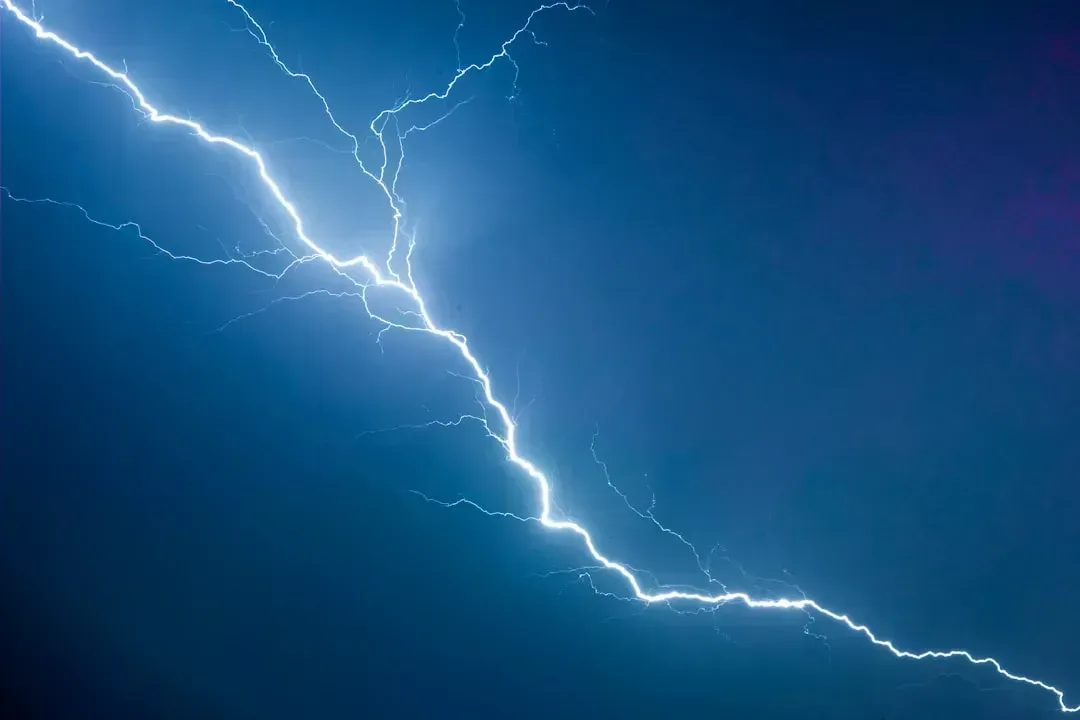
The idea that lightning doesn’t strike the same place twice is a popular misconception. We know this to be false because lightning strikes are too frequent globally – studies show somewhere between five hundred and a thousand lightning strikes happen around the world every second. Repeating this “fun fact” as folk wisdom has a real downside: it encourages people to take risks in storms they otherwise wouldn’t.
The Empire State Building was once used as a lightning laboratory because the building is struck with lightning around a hundred times a year. Scientists found that your chances of being hit by lightning are actually measurably higher than the number of flashes suggests, because a single strike can hit multiple points. The next time someone uses this “fact” to reassure you during a thunderstorm, know that they are confidently wrong.
4. Botox Is One of the Most Lethal Substances Known to Science

Millions of people receive Botox injections every year as a cosmetic treatment, discussing it casually over lunch like a routine appointment. Botox is made from botulinum toxin, a substance produced by the bacterium Clostridium botulinum, and is considered one of the most poisonous, lethal substances known to mankind. The toxin is a neurotoxin that blocks nerve signals to muscles, preventing muscles injected with Botox from contracting, which is how it improves the appearance of wrinkles.
Fortunately, Botox is only injected in small, targeted doses and is considered extremely safe when provided by a licensed professional. The safety record in clinical settings is genuinely reassuring. Still, it’s worth letting that word land: one of the most poisonous substances ever identified by science has become synonymous with affordable cosmetic maintenance. The gap between “fun fact” and “existential pause” here is quite narrow.
5. The Office Coffee Mug Situation Is Genuinely Horrifying

A study published in The Journal of Dairy, Food, and Environmental Sanitation assessed the cleanliness of coffee mugs in office kitchens. The findings revealed that a whopping ninety percent of mugs tested contained some type of bacteria, and twenty percent of them actually had fecal matter on them. The culprit, the study found, is the sponges used to clean the cups, which are often the germiest items in the entire kitchen.
While twenty percent may not seem like a lot, a little goes a long way when it comes to fecal bacteria. To stay safe, you’re best off bringing a mug from home and washing it in the dishwasher. This gets shared as an amusing gross-out fact. The more accurate framing is that shared office kitchens have been quietly failing basic sanitation standards for years, and most people have no idea.
6. A “Fun” Fungus That Turns Ants Into Zombies – and Could Evolve Further
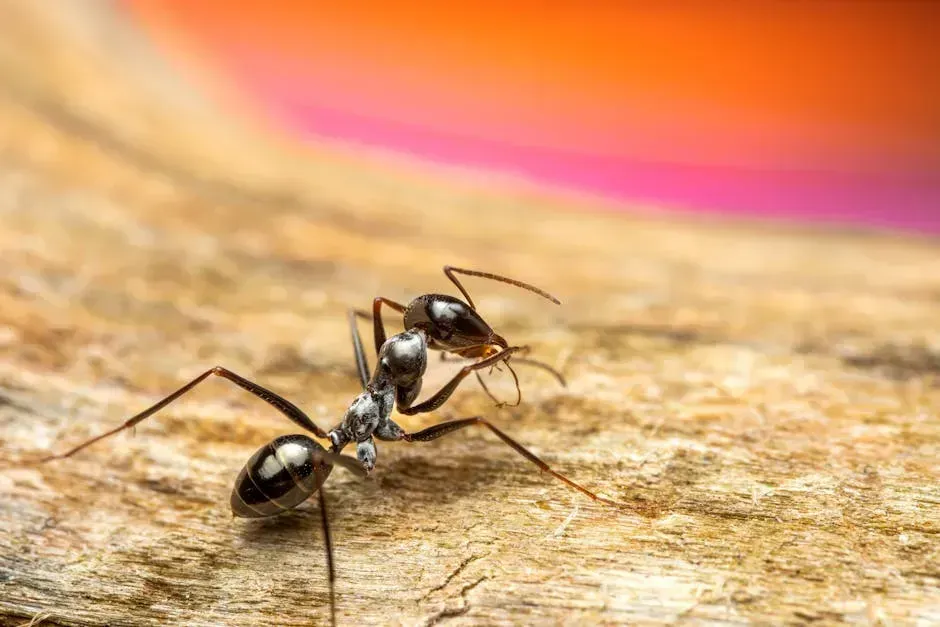
A parasitic fungus attaches to rainforest carpenter ants and makes them do unnatural things. First, it forces the ant to leave its colony and descend to the humid understory where the fungus can best reproduce. There, it makes the ant bite down on a leaf in a death grip. The fungus then grows and spreads, filling the ant’s head and body, killing it – before growing stalks from the ant’s head to shoot spores out each night, raining down to infect even more hosts.
This gets presented as a marvel of nature, and in a purely biological sense, it is. What makes it less fun is the broader principle it demonstrates: that parasites can entirely override the behavior and will of their host. Misfolded proteins called prions can trigger fatal chain reactions in the brain, causing diseases like Fatal Familial Insomnia, where victims experience total sleeplessness leading to death – another reminder that the line between “fascinating biology” and “terrifying vulnerability” is thinner than most people are comfortable acknowledging.
7. Ancient Viruses Frozen in Permafrost Can Wake Up
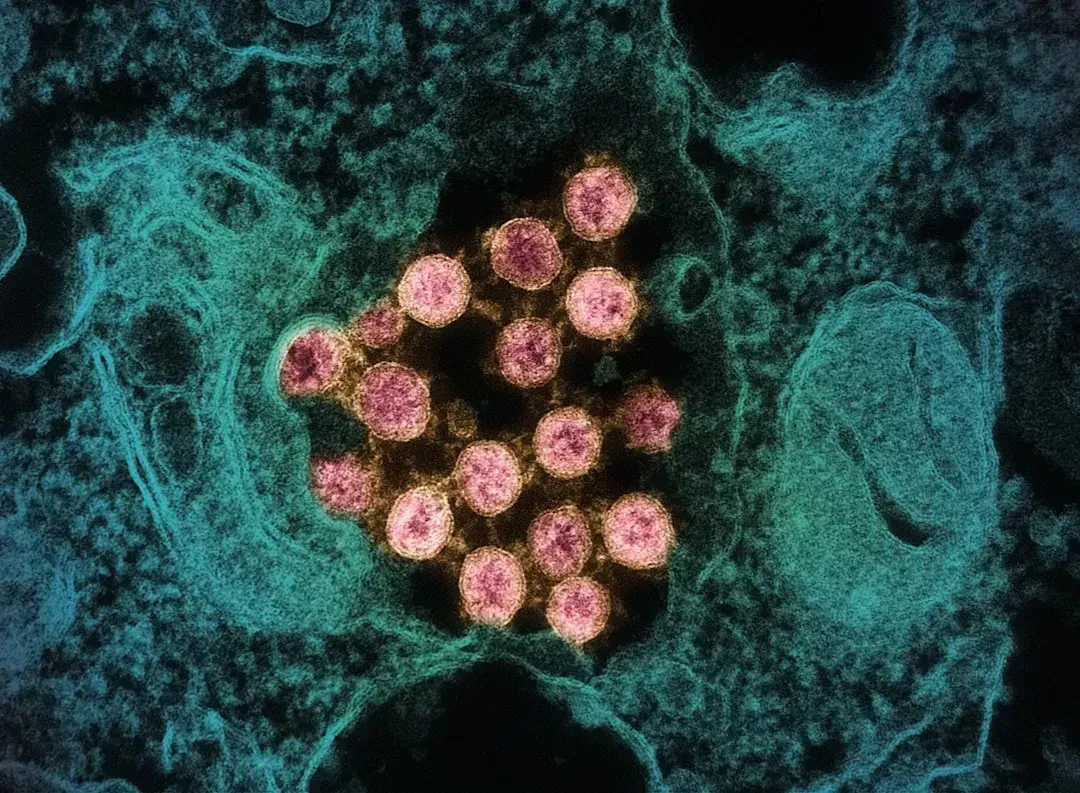
Some discoveries reveal deeply unsettling aspects of our biology and world. Ancient viruses, like Pithovirus trapped in Arctic permafrost for 30,000 years, can revive and infect hosts such as amoebas. As permafrost continues to thaw globally, this is no longer a theoretical concern – it is an active area of scientific monitoring. The precise risks to humans remain under study, but the principle is established.
People share this as a jaw-dropping curiosity, and few consider the implication: the Earth has been storing biological material from eras humans never encountered, and warming is gradually unlocking that archive. Researchers have also found plastic pollution in every crustacean sampled from the Mariana Trench, 36,000 feet deep, showing that even the most remote ecosystems are already contaminated. Ancient threats awakening while modern ones penetrate the deepest corners of the planet simultaneously is not a fun set of facts – it’s a sobering reality check.
8. AI Voice Cloning Can Steal Your Identity With Just a Few Seconds of Audio

AI systems can now replicate human voices with remarkable accuracy. Speech synthesis technology has evolved to the point where a machine can mimic a person’s voice, tone, and cadence after listening to just a few samples – meaning voiceovers, phone conversations, or entire speeches can be produced without the original speaker ever saying a word. People share this as a tech curiosity, marveling at the cleverness of the software.
Scammers can clone the voices of loved ones or business leaders and use these fake voices for fraud, impersonation, or defamation. The idea that someone could use your voice in ways you never intended is a chilling thought, as it erodes trust in digital communication. A U.K. energy firm lost nearly $250,000 after scammers cloned a CEO’s voice and convinced an employee to transfer funds. The “fun” demonstration of a technical capability and the crime wave it enables are inseparable.
9. The Universe’s Most Common Particles Pass Through Your Body Right Now
Neutrinos are called “ghost particles” because physicists once thought they had no mass, weight, or impact, even though they are the most common particle in the universe. Scientists built an icebound South Pole facility called the IceCube Neutrino Observatory to study them, and in 2015 it was proven that neutrinos do have a faint, spectral mass. Trillions of them pass through your body every second, from the sun and from cosmic events unimaginably far away.
This is presented as a wonder of physics, which it genuinely is. The unspoken dimension is what it reveals about perception and reality: the most abundant particles in existence are completely imperceptible to human senses and pass through solid matter as though it simply isn’t there. Scientists believe roughly ninety-six percent of the universe is made up of dark matter and dark energy, which are undetectable to humans, because the particles that make up these substances don’t interact with regular matter or light. What we can detect about our universe is, by an overwhelming margin, the exception rather than the rule.
10. The San Andreas Fault Is Overdue for a Catastrophic Earthquake

Scientists believe the San Andreas Fault below Southern California formed around 30 million years ago. It has been confirmed that major quakes happen in the area every 150 to 200 years. Since there hasn’t been a major quake in over three centuries, the next big one is believed to be long overdue. This gets mentioned frequently as a geological fun fact, a piece of trivia about California’s dramatic landscape.
The fault is the border between two massive tectonic plates stretching 800 miles through the state. Because they are mostly static, they can build up dangerously large pressures as time passes. Should these plates move abruptly, it will cause a devastating quake. Tens of millions of people live within the potential impact zone. The casual way this is shared at cocktail parties – usually followed by a shrug – says something about how poorly humans are built to process slow-moving, large-scale risk. The fact isn’t fun. It’s a countdown nobody wants to think about too hard.
The thread connecting all ten of these is not the facts themselves but the way they’re packaged. Framed as novelties, they slip past the instinct that should be triggered – the instinct that asks what something actually means for the world we live in. That instinct is worth keeping sharp.