“You Have It So Easy”

On the surface, this sounds like reassurance. In practice, it tends to do the opposite. Gen Z faces a world of always-on digital pressure, relentless comparison on social media, and skyrocketing costs of living, and studies consistently show that Gen Z reports higher levels of anxiety and depression than any previous generation. Hearing that their circumstances are somehow more comfortable than those of previous generations doesn’t comfort them. It invalidates them.
When Boomers say “you have it easy,” Gen Z hears dismissal. What they want is recognition that every era has its burdens, and theirs happen to be digital and economic rather than analog and mechanical. The phrase doesn’t start a conversation. It tends to close one.
“Just Walk It Off”

Growing up in homes with Boomers or alongside Boomer grandparents, young people have regularly heard phrases like “just walk it off.” While there’s a line between over-centering someone’s emotions and completely ignoring them, these kinds of phrases often trigger Gen Zers immediately. The problem isn’t resilience as a concept. It’s the implied message that feelings are inconveniences to be managed alone.
For Boomers, mental health was rarely discussed. Depression meant “toughen up.” Anxiety meant “work harder.” Therapy was something you whispered about. Millennials and Gen Z, on the other hand, grew up in an era of psychological literacy, talking openly about boundaries, burnout, trauma, and self-care. The cultural distance between those two realities is enormous, and a three-word phrase captures it perfectly.
“That’s Just How the World Works”
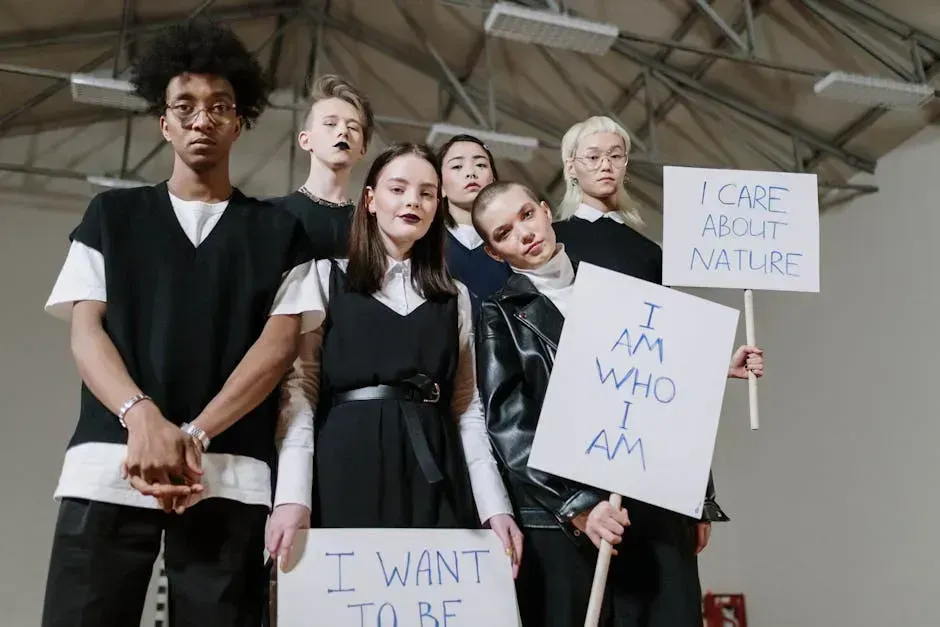
Gen Z is not interested in stagnancy or accepting the status quo, especially when it actively harms them. That’s why they’re so frustrated by complacency wrapped in phrases like “it is what it is” or “that’s just how the world works.” Whether it’s professional dress codes or gendered social norms, they push back. To them, passively accepting broken systems isn’t wisdom. It’s surrender.
Around 60 percent of Gen Z worldwide say that world events leave them feeling overwhelmed about where the future is headed. When a Boomer dismisses that anxiety with a shrug and a cliche, it deepens the sense that their concerns aren’t being heard. Telling someone the house is always going to be on fire doesn’t help them find a fire extinguisher.
“You’ll Understand When You’re Older”

A classic phrase that makes the hairs on a Gen Zer’s arm stand straight up, “you’ll understand when you’re older” might feel like solid advice from a Boomer who remembers what it was like to be young. For Gen Zers, however, it often comes across as unnecessarily dismissive and condescending. It puts a hard stop on the conversation without offering any actual insight in return.
The frustration is compounded by the fact that Gen Z does tend to arrive at serious topics early. A majority of Gen Z young adults ages 18 to 25 say financial worries are negatively influencing their mental health, and roughly half say achievement pressure is having the same impact, according to a Harvard University survey. Being told to wait a few more decades for permission to understand their own reality is a reliable way to make someone feel unseen.
“We Didn’t Have All These Options and We Were Fine”
This one often surfaces around conversations about therapy, career flexibility, or mental health resources. The implication is that fewer choices produced tougher, healthier people. Gen Z, dubbed “the anxious generation” by social psychologist Jonathan Haidt, who points to growing up online, is bringing something new to the conversation: a highly acute awareness of the importance, and the potential fragility, of mental health. For them, access to mental health care isn’t a luxury. It’s a necessity backed by data.
Only about 47 percent of Gen Z members consider themselves to be thriving, compared to 59 percent of Millennials, 57 percent of Gen X, and 52 percent of Baby Boomers. So the argument that reduced options produced better outcomes doesn’t quite hold up when you look at the numbers. Gen Z hears this phrase not as nostalgia, but as a quiet suggestion that asking for support is weakness.
“You’re Too Sensitive”
For many Gen Zers, forced positivity feels inauthentic, and the “Gen Z stare” can be read as a subtle protest: “I’m not going to perform emotional comfort for you when I’m exhausted or anxious.” A global study by McKinsey found that Gen Z consumers overwhelmingly value honesty, transparency, and mental health awareness over social conformity. Being told they’re too sensitive for reacting honestly to something stressful directly contradicts that core value.
In clinical settings, many Gen Z clients describe feeling “stuck between two worlds”: they crave meaningful connection but fear the vulnerability that real connection requires. Their nervous systems, conditioned by digital overstimulation and years of uncertainty, often default to withdrawal when stress peaks. Calling that response oversensitivity doesn’t fix anything. It usually just adds shame to the mix.
“Back in My Day, You Just Got On With It”

To younger people dealing with debt, climate anxiety, and job insecurity, Boomer nostalgia can feel tone-deaf. What Boomers often miss is that “the good old days” weren’t equally good for everyone. Life was simpler, yes, but also less inclusive, less connected, and less flexible. The phrase doesn’t just romanticize the past. It subtly argues that Gen Z’s present struggles are a matter of attitude rather than circumstance.
Economists have warned that new college graduates are facing the most challenging job market since the COVID-19 pandemic, and recent graduates are already experiencing longer hiring timelines, which may leave many burdened with debt for an extended period. Telling someone to simply push through in that environment carries a very different weight than it did when entry-level jobs were more abundant and housing costs were a fraction of what they are now.
“Why Are You Always So Stressed?”

There’s a version of this question that comes from genuine concern, and a version that’s delivered with thinly veiled judgment. Either way, it tends to land the same. Young adults in America are reporting higher stress levels than older generations, with 18- to 34-year-olds saying their average stress level is a 6 out of 10, compared with a 3.4 among people ages 65 and older, according to APA’s 2023 Stress in America survey. That’s not a personal failing. It’s a measurable, documented gap in lived experience.
Some 84 percent of Gen Zers believe mental health is a crisis in the United States, and they are over 80 percent more likely to report dealing with anxiety or depression compared to older generations. When someone responds to that reality with “why are you always so stressed?” it can feel less like concern and more like an accusation. The question implies the stress is optional, when for many in this generation, it’s simply the weather they live in every day.
Words carry the weight of the era that made them. Boomers developed their communication habits in a world where pushing forward quietly was survival. Gen Z developed theirs in a world where naming things, processing them, and talking about them openly is just as important. Neither approach is wrong. Each generation developed its communication norms in response to its environment. Boomers learned to maintain composure in face-to-face workplaces. Gen Z learned to navigate chaos, performance pressure, and 24/7 connectivity. Recognizing that distance is the first step toward closing it.