
There’s something almost quietly defiant about a house that refuses to become something else. In a neighborhood where so many original structures have been torn down and replaced with glassy contemporary builds, a single-level 1963 residence perched at the top of Trousdale Estates in Beverly Hills has held its ground. It still has the terrazzo floors. It still has the travertine. It still breathes the spatial philosophy that made California modernism one of the most psychologically grounded residential movements in architectural history.
What makes this particular property worth examining closely isn’t just its rarity as a preserved artifact. It’s the growing body of research suggesting that the design principles embedded in homes like this one – openness, natural light, connection to the outdoors, material warmth – are precisely what contemporary minds seem to crave most. The timing of this home’s recent sale feels less like a transaction and more like a signal.
A Rare Survivor in Trousdale Estates
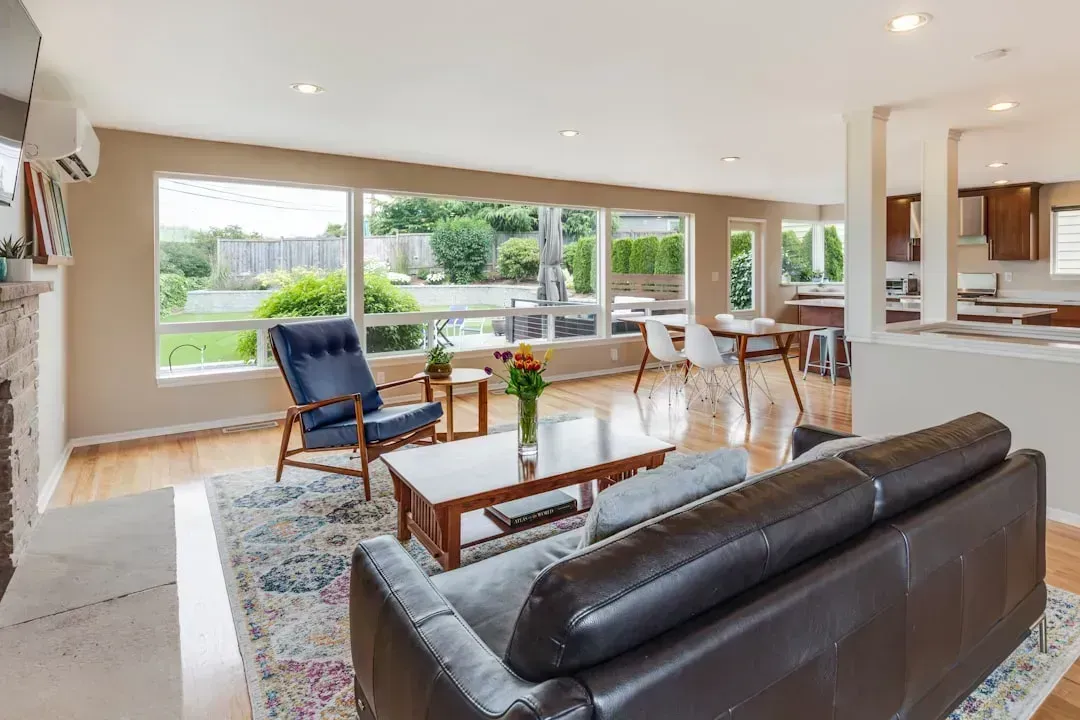
A striking architectural residence in Trousdale Estates was recently floated on the market for $13.8 million, offering something increasingly rare in the neighborhood: an authentic midcentury modern home that hasn’t been replaced by a contemporary rebuild. That rarity matters more than it might seem at first glance. That restraint – maintaining the proportions, materials, and spatial relationships of the 1963 design – is increasingly rare in Trousdale Estates, where many midcentury homes have been replaced with much larger contemporary builds.
Located at 340 Trousdale Place, the single-level residence dates to 1963 and retains the proportions, materials, and spatial philosophy that defined the era’s best modernist houses. The property spans roughly 4,717 square feet with four bedrooms and six bathrooms. The irreplaceable charm didn’t go unnoticed: the rare property was quickly swept off the market by a buyer, mere weeks after listing.
What Trousdale Estates Actually Is
Perched at the highest point of Beverly Hills, the 1950s–1970s Trousdale Estates development promised “Life Above It All” to the wealthy few, including many celebrities, who could afford to build custom homes there. Developer Paul Trousdale built thousands of buildings throughout the nation, but this exclusive subdivision was the only one to bear his name. The neighborhood was no casual subdivision. It contains Los Angeles’ largest and most complete grouping of custom midcentury modern architecture by master architects, including Richard Dorman, Wallace Neff, Paul R. Williams, Cliff May, A. Quincy Jones, Lloyd Wright, and many others.
Trousdale Estates is a community within the City of Beverly Hills, carved out of the hillside from what was once the Doheny Ranch. Most of the properties within the development were built during the 1960s and feature midcentury modern homes sited on terraced lots. Trousdale Estates real estate consists of a high concentration of homes designed by notable architects, and the neighborhood has a reputation as an enclave for midcentury modern chic. Demand remains strong for historically significant homes, particularly those with architectural provenance and unobstructed views.
The Entry Sequence: Arrival as Architecture
Behind gates, a large grass-block motor court leads to one of the home’s most striking architectural moments: a dramatic glass-wrapped entry framed by a rhythmic colonnade of original travertine pillars. This magnificent procession culminates in an oversized black lacquered door, an unmistakable hallmark of true Trousdale pedigree, and opens into sunlit interiors where floor-to-ceiling glass captures head-on views and daylong light.
Original finishes and materials make the home a rare surviving model of true midcentury design, including travertine elements, terrazzo flooring, and a recognizable structure. The proportions and layout are also consistent with the era. Floor-to-ceiling glass establishes direct visual continuity and prioritizes an indoor-outdoor lifestyle. The experience of moving through the entry isn’t decorative. It prepares you, almost physiologically, for what’s inside.
The Living Spaces: Light as the Primary Material
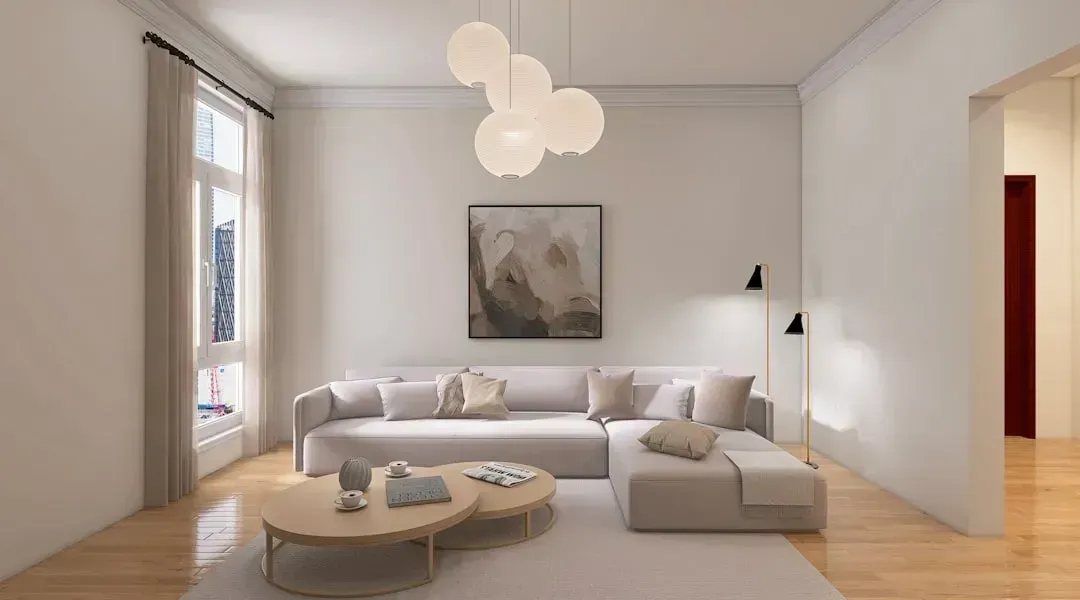
Inside, the living room is arranged beneath ceilings of about eleven feet, with floor-to-ceiling glass offering consistent natural light. This historic midcentury residence is perched at the very top of the Trousdale Estates. The four-bedroom, six-bathroom home spans approximately 4,717 square feet and exemplifies the defining era of single-story architecture. The ceiling height matters here in ways that go beyond aesthetics.
Architectural elements like ceiling height, the flow of space, and the choice of materials can evoke feelings of calm, anxiety, comfort, or discomfort. Open, airy spaces with high ceilings and natural light tend to create a sense of freedom and tranquility, while low ceilings can foster a feeling of warmth and enclosure. Adjacent to the main living areas is a den that introduces a slightly more relaxed setting. A skylight draws natural light into the space while a built-in bar supports informal entertaining, creating a comfortable retreat within the home’s broader open layout.
The Primary Suite: Privacy Without Isolation
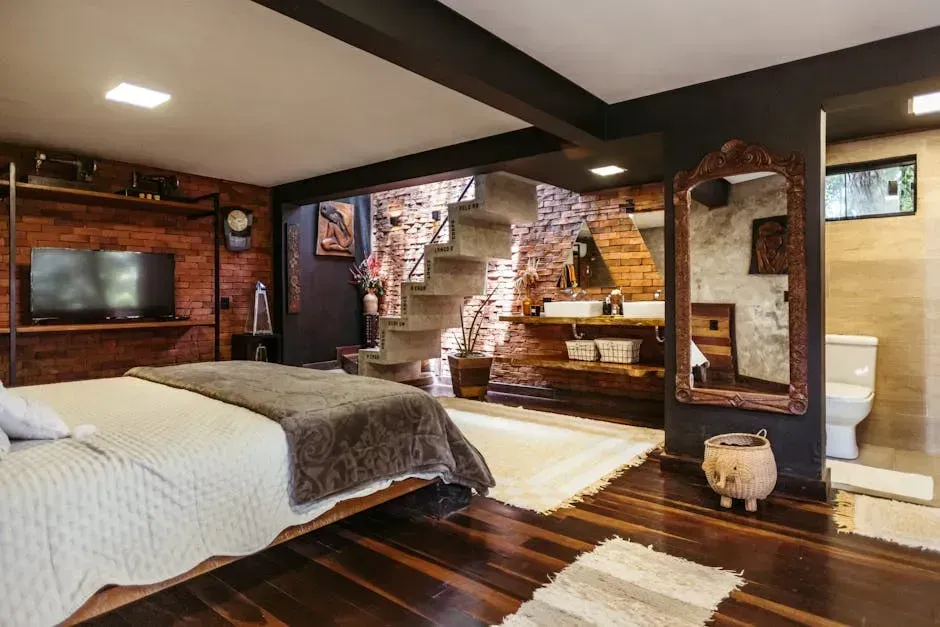
The primary suite has a tiled, wood-burning fireplace and glossy hardwood floors. It also includes dual bathrooms and a large dressing room. As with many rooms in the home, it opens directly to the pool terrace, maintaining the home’s emphasis on single-level spatial continuity. This quality – the ability to be private without feeling shut off – is one that modern architecture often struggles to replicate.
Located in the heart of the Trousdale Estates, the home occupies one of the enclave’s most established streets, where unaltered midcentury structures are increasingly limited. Its elevation results in stunning panoramic views of the canyons, the city skyline, and the ocean, while still feeling completely private. That balance between exposure and shelter is a hallmark of the era’s best residential design, and it still resonates deeply today.
The Kitchen and Outdoor Spaces: Function That Doesn’t Fight the Architecture
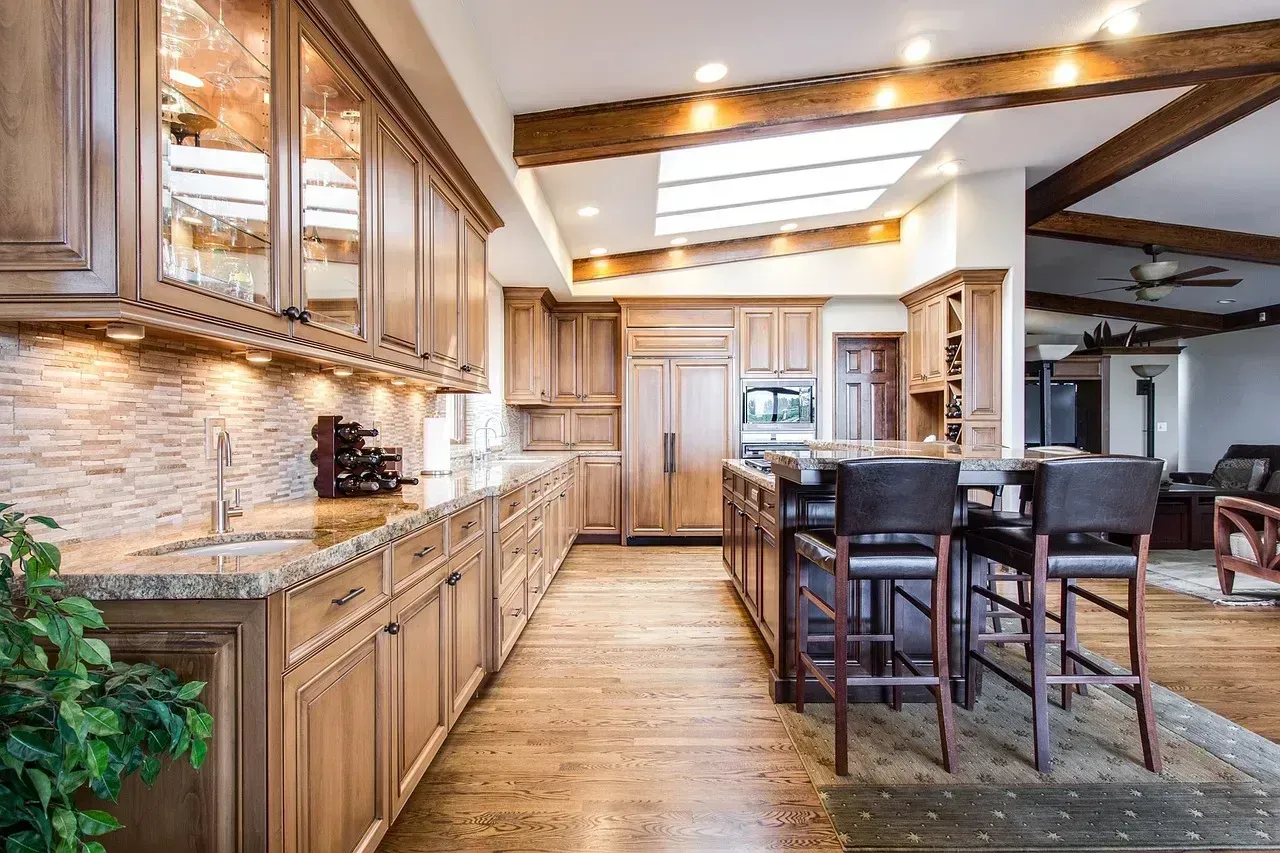
The kitchen balances modern functionality with the home’s midcentury character. Stone countertops pair with high-end appliances from Sub-Zero, Miele, and Gaggenau, while a nearby breakfast area provides a casual dining space with views toward the outdoor terraces. The updates here are careful rather than conspicuous. Nothing shouts for attention.
Outdoor areas consist of broad patios, landscaped sections, and the sculptural pool that acts as the centerpiece of the property. A two-car garage, security cameras, and Lutron lighting control support modern functionality. Rather than replacing original material during updates, the current owner preserved it as part of a respectful refinement of the property – maintaining the authenticity that architecture-focused buyers increasingly seek in Trousdale.
Why This Design Style Genuinely Reduces Anxiety
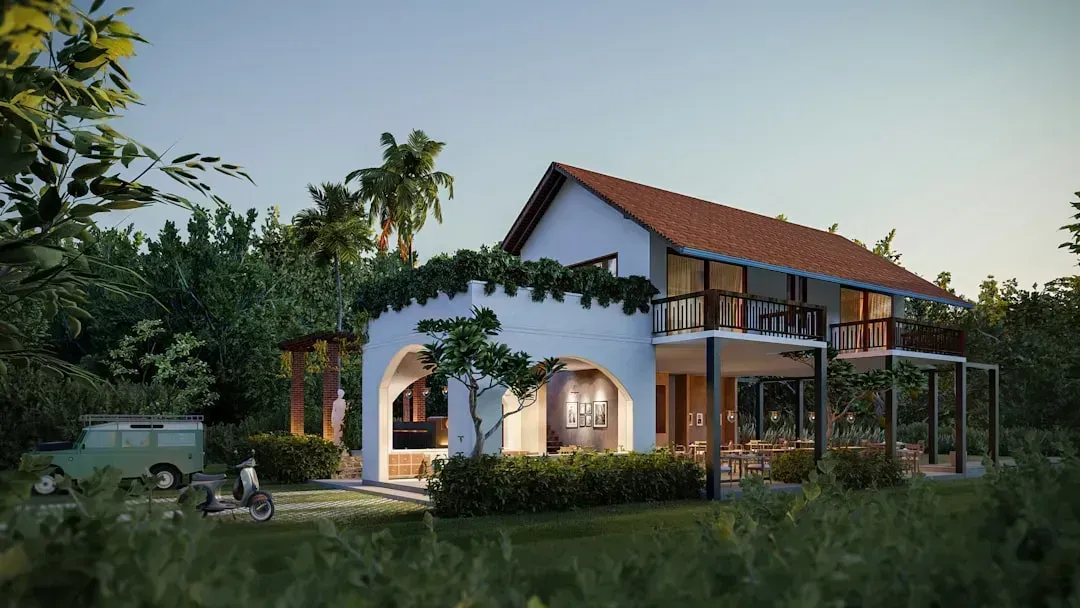
Architecture shapes our environment, influencing emotions, behavior, and overall mental health. Thoughtful design can promote calmness, focus, and happiness, while poorly conceived spaces can lead to stress, anxiety, and depression. The principles embedded in this 1963 home map almost precisely onto what researchers now identify as stress-reducing design. Features like indoor plants, green walls, and water elements decrease anxiety and improve focus. Natural materials, including wood and stone, evoke calmness and reduce sensory overstimulation. Views of greenery or other natural landscapes support emotional restoration and enhance overall well-being.
Access to natural light, achieved through large windows and skylights, enhances mood and productivity. Biophilic design, integrating nature into built environments, reduces stress and promotes healing. Cluttered environments are associated with higher levels of stress, anxiety, and cognitive overload. Architects and interior designers can mitigate this by designing spaces that naturally discourage cluttering. This can be achieved through built-in storage solutions, multi-functional furniture, and open layouts that encourage organization. A well-resolved 1963 floor plan, it turns out, anticipated most of that research by decades.
The Midcentury Modern Revival: More Than Nostalgia
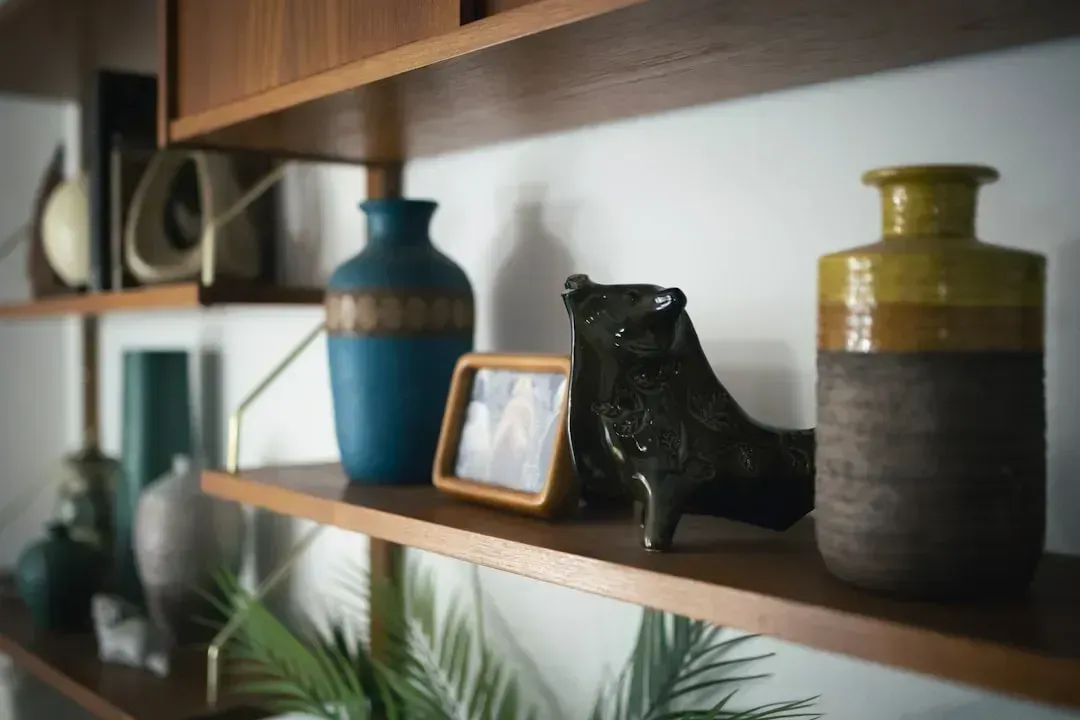
By the 1990s, it was midcentury modern’s turn to be revived. Seemingly, it managed to buck the trend of ever-changing fashionable retro styles as, in the mid-2020s, the power of that historical design movement remains as strong as ever. The optimism of its early protagonists still speaks to many people who seek to remain upbeat in the face of countless contemporary challenges – from the climate crisis to economic inequality, to migration, to the threat of global war.
Midcentury modern is not just a style. It is about intentional design, conscious space utilization, and relation to light and nature. These principles are lasting beyond trend cycles. In an era where sustainability is a top priority, midcentury modern design stands out for its emphasis on quality craftsmanship and durable materials. Many midcentury pieces were built to last, using solid woods and high-quality fabrics, which aligns with the current trend toward sustainable and eco-friendly living.
L.A.’s Modernist Legacy and What It Still Teaches
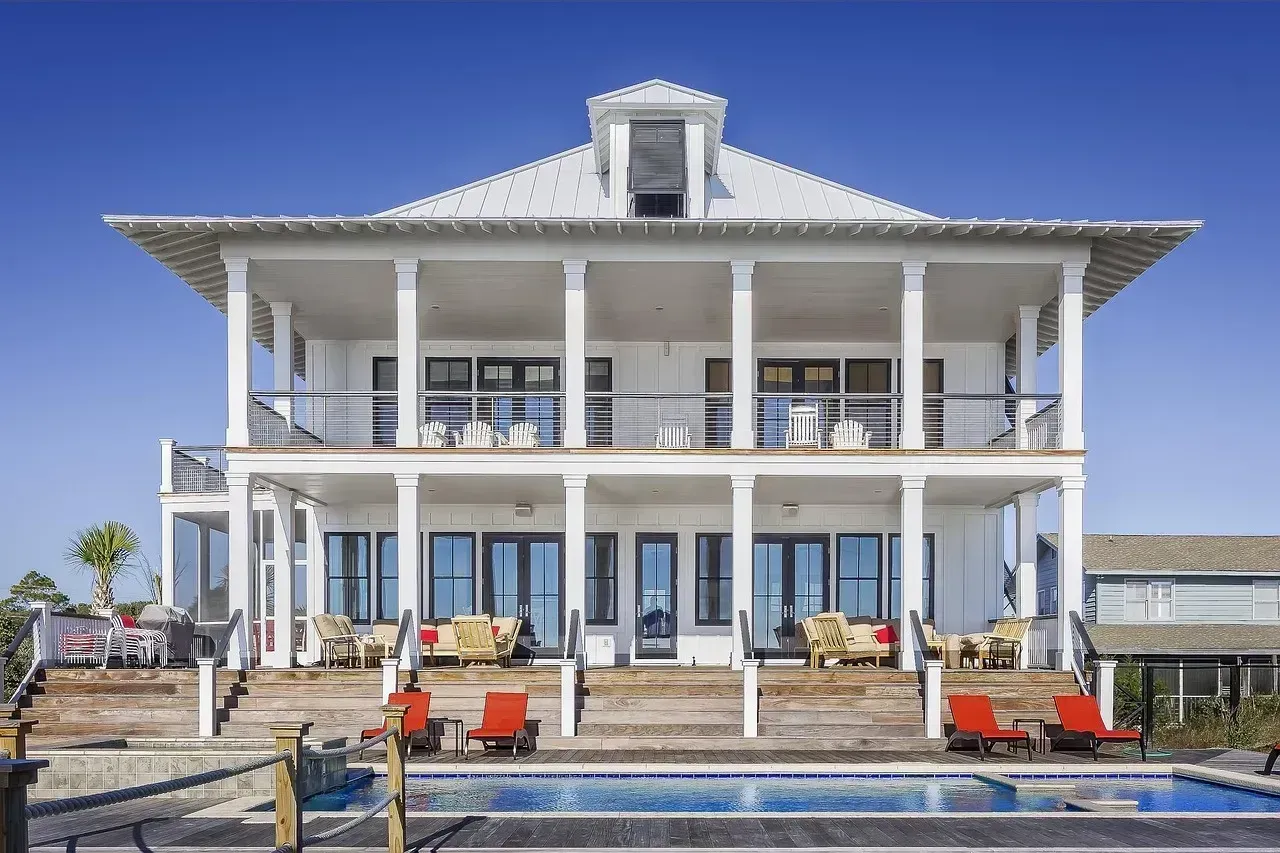
Much of California’s architectural legacy is rooted in the midcentury and, in particular, the city’s wealth of modernist houses. Southern California has always been among the most architecturally progressive parts of the USA, especially since the 1920s, when Los Angeles experienced a golden era with the birth of the movie and entertainment industry. Linked to this, modernist architecture and design became a catalyst for a new modern lifestyle.
It was in Los Angeles where, from the 1920s to the 1960s, designers and architects transformed the ideas of the European avant-garde to fit the climate and environment of the American West. From the modern bungalows of Greene and Greene and the very first modernist creations of Irving Gill at the beginning of the 20th century to the pioneering and now-iconic houses of Richard Neutra and Rudolph Schindler, Los Angeles became one of the most important places for architectural experimentation, even before the Second World War. A home like this one on Trousdale Place doesn’t just inherit that legacy. It embodies it, quietly, in terrazzo and travertine and eleven-foot ceilings that let the California light do most of the work.