
The patterns below aren’t about blame. They’re about the subtle, recurring behaviors in a partner that research and clinical observation have consistently linked to elevated anxiety in women. Some are obvious once you see them. Others hide behind perfectly ordinary moments.
1. A Partner Who Stonewalls During Conflict

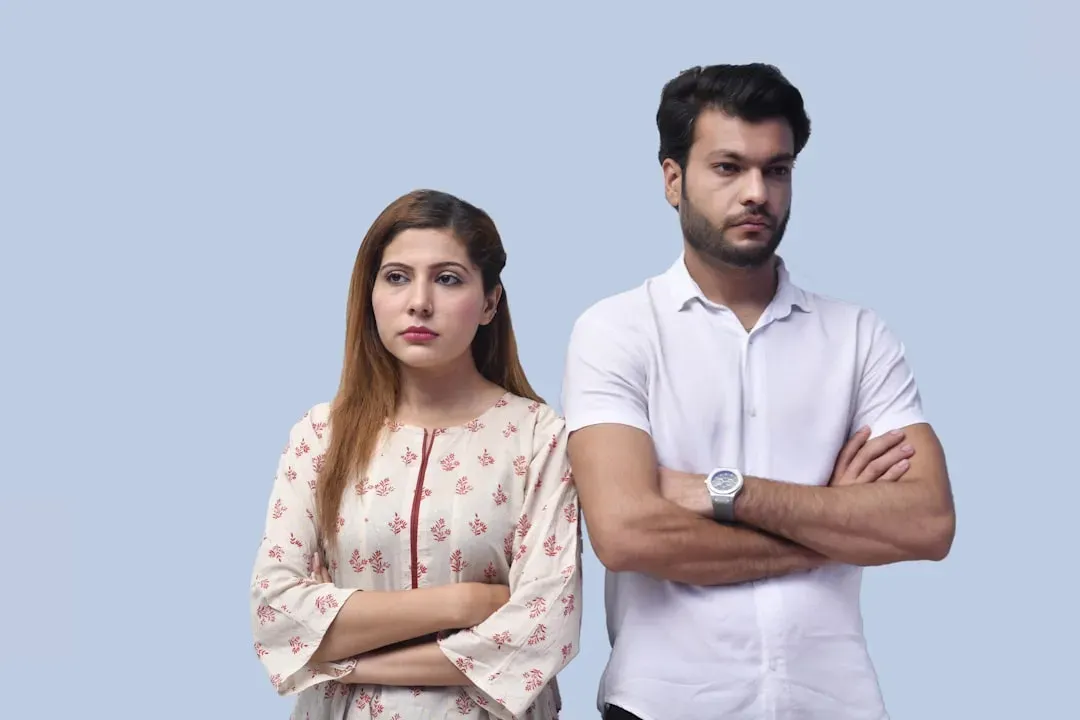
Stonewalling describes the specific pattern of behavior where one partner stops responding entirely to the other during conflict. For many women, this shutdown doesn’t read as neutrality. It reads as abandonment. Male stonewalling is very upsetting for women, increasing their physiological arousal and intensifying their pursuit of the issue.
Researcher John Gottman later included stonewalling as the final step in his Four Horsemen of the Apocalypse theory. The four behaviors measured during a couple’s conflict that predict a later breakup are criticism, contempt, defensiveness, and stonewalling. When one partner shuts down, the other often pursues harder, not out of control, but out of attachment panic, the biological drive to restore connection. Women frequently feel this panic intensely, yet rarely bring it up directly because they fear appearing too sensitive.
2. Inconsistent Emotional Availability

A partner who suddenly starts acting distracted or distant, or who isn’t consistent in the way they behave or relate to you, can quickly become one of the most destabilizing triggers in a relationship. Inconsistency is particularly corrosive because it keeps the nervous system in a low-grade state of alertness, always scanning for the next shift in mood or tone.
If you grew up with a caregiver who was emotionally unavailable, an avoidant partner’s pattern may have felt natural, even comfortable, in the early stages of the relationship. The anxiety often surfaces later, once a deeper need for closeness emerges. Women in this situation may quietly question whether their own needs are reasonable, rather than naming what’s actually missing.
3. Unpredictable Anger or Irritability

Individuals who become angry with their partner commonly react by behaving negatively toward the partner, which in turn angers the partner, which leads to increasing tension and unhappiness between them. When a partner’s anger feels unpredictable, the waiting becomes its own source of anxiety. Women often learn to read the room obsessively, adjusting their words and behavior to avoid triggering the next episode.
You may feel anxious about your partner’s feelings or how they’ll react to what you say, which can make you feel like you’re walking on eggshells. This kind of chronic anticipatory stress is well documented. Individuals in conflict-ridden relationships are at a higher risk of developing mental health disorders such as depression, anxiety, and PTSD. Still, many women stay silent about this, not wanting to be seen as provoking or accusatory.
4. Chronic Avoidance of Emotional Intimacy

Highly avoidant people are not always unsupportive, withdrawn, or uncooperative in their romantic relationships; instead, the defining attributes of avoidance are elicited by certain types of stressful situations, such as feeling pressure to give or receive support, to become more emotionally intimate, and/or to share deep personal emotions. For women who crave genuine closeness, this wall can feel quietly devastating, even when nothing overtly hostile is happening.
Some individuals withdraw from emotional intimacy to avoid conflict or perceived rejection. Both of these patterns can create distance in the relationship, making it difficult to build trust and emotional security. Women often internalize this distance as a personal failing, asking themselves what they did wrong rather than recognizing it as a consistent behavioral pattern in their partner.
5. Reassurance-Seeking That Shifts the Emotional Labor

People with anxiety may frequently ask questions like “Are you mad at me?” or “Do you still love me?” These questions, though rooted in fear, can create strain on the relationship. Anxiety often causes people to doubt their self-worth, leading them to feel unworthy of love. When a partner relies heavily on reassurance, the emotional weight of maintaining their sense of security gradually transfers to the other person.
The partner without social anxiety can feel strained by missed socialization opportunities when the partner avoids events, and become burned out by their partner’s reassurance-seeking behavior. Women are particularly vulnerable to this dynamic because societal expectations often push them toward the role of emotional caretaker. Over time, managing a partner’s constant need for validation becomes its own source of low-grade, rarely voiced anxiety.
6. Poor Communication During Stress

Perceived danger and associated anxiety commonly motivate partners to avoid communication. Awareness of one’s anxiety and factors eliciting it can lead to constructive changes in a relationship. The problem is that many partners skip that awareness entirely. When a man goes quiet during a difficult period, shuts down conversations, or deflects with humor, women often spend enormous mental energy trying to decode what’s actually wrong.
If intrusive thoughts often revolve around a partner, it might indicate that the partner is triggering anxiety. For example, replaying conversations repeatedly in an attempt to understand their meaning, or worrying about an upcoming conversation with them are both common but rarely admitted experiences. The chronic stress that builds up over time in a relationship affects each member of the couple differently; in heterosexual couples, the woman is more likely to display negative physiological markers than her spouse.
7. Attachment Inconsistency Rooted in Insecure Styles
Someone with an anxious attachment style, which can manifest as fear of abandonment, desire for closeness, or need for reassurance, might feel drawn to a partner who has a similar attachment style or exhibits the kind of behavior they desire. The problem is that these pairings can quietly amplify anxiety on both sides, even when both partners genuinely care for each other. Hypervigilance may show up as frequently asking for reassurance, needing constant contact, feeling jealous of a partner’s other relationships, and checking for signs of infidelity.
Women affected with anxiety disorders evaluated the quality of their relationships as significantly poorer compared to female respondents free from this type of illness, also in couples where their male counterparts were unaffected. Insecure attachment in a partner creates a relational environment that is fundamentally unpredictable, and unpredictability is one of the most reliable fuels for anxiety. Specifically, avoidant insecure and ambivalent insecure attachment styles are associated with lower marital satisfaction. Women in these dynamics often sense the problem long before they can name it, and even longer before they’re willing to say it out loud.
What makes these seven triggers particularly difficult is that none of them are dramatic enough to feel like clear justification for distress. There’s no single event to point to. The anxiety accumulates in the margins of ordinary days, in texts left on read, in shutdowns during arguments, in the steady erosion of feeling truly known. Naming what’s happening, even privately, is where clarity begins.