
Growing up in the 1970s meant eating foods that were backed by bold advertising claims and a kind of cheerful confidence that science had figured it all out. Labels said things like “heart-healthy” and “vitamin-enriched,” and parents trusted them. At the time, packaging and advertisements emphasized that these foods were nutritionally balanced, vitamin-enriched, and backed by modern science.
Looking back now, the picture is a lot more complicated. Many foods promoted as “healthy” in decades past rose to prominence during the post-World War II convenience boom, the rise of industrial food processing, and the low-fat movement of the 1970s and ’80s – and in each case, marketing often outpaced scientific understanding. Here are nine foods my mom remembers eating regularly back then, and what nutrition science has since learned about them.
1. Tang Powdered Drink Mix

Tang is an American drink mix brand that was formulated by General Foods Corporation food scientist William A. Mitchell in 1957 and first marketed in powdered form in 1959. It was promoted as an “instant breakfast” drink rather than a soft drink mix because it was fortified with vitamins C and A, and in print and television advertising it was referred to as the nutritious “space age” drink of the astronauts. For a generation of kids, Tang felt like the future in a glass.
The nutrition story is less inspiring. A typical serving contains approximately 34 grams of sugar, significantly exceeding the American Heart Association’s daily recommendations of 36 grams for men and 25 grams for women. Health experts emphasize that the combination of high-fructose corn syrup and artificial additives not only contributes to weight gain but also increases the risk of chronic diseases such as type 2 diabetes and heart disease. The vitamin C fortification is real, but it doesn’t neutralize what surrounds it.
2. Margarine

Packaging and print ads used phrases such as “heart-healthy,” “cholesterol-conscious,” and “made from pure vegetable oils,” presenting margarine not just as a butter substitute but as a proactive choice for protecting one’s heart. What consumers didn’t realize was that many early margarines were produced through partial hydrogenation, creating trans fats. For years, millions of families made the switch from butter thinking they were doing the right thing.
These trans fats were later found to raise LDL (“bad”) cholesterol and lower HDL (“good”) cholesterol – essentially the opposite of what the marketing promised. The ingredient was estimated in 2006 to cause up to one in five heart attacks per year in the United States. Eventually, the United States banned artificial trans fat and the World Health Organization called for eliminating it from the global food supply.
3. Cool Whip
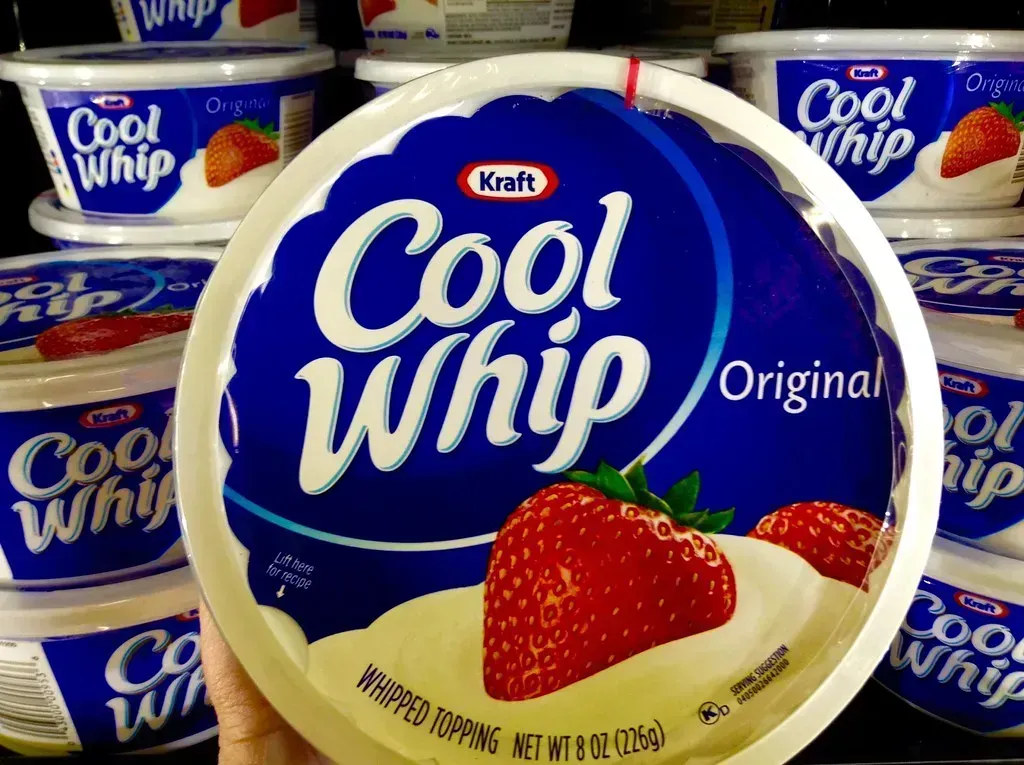
In the late 1960s, Cool Whip was invented to solve the issue of developing a whipped cream with a longer shelf life – a whipped-like product that could be transported frozen to the store and then refrigerated prior to serving, with the ultimate convenience factor of no more whipping and beating required. It landed on nearly every dessert table throughout the ’70s and became a fixture in Jell-O molds, pies, and fruit salads.
One of the primary concerns about Cool Whip is its ingredient list, which includes several chemicals not typically found in homemade whipped cream – among them high fructose corn syrup, corn syrup, hydrogenated vegetable oil, sodium caseinate, natural and artificial flavors, xanthan and guar gums, polysorbate 60, and synthetic additives. Trans fats found in partially hydrogenated oils raise LDL cholesterol, lower HDL cholesterol, and are a significant contributor to heart disease, high blood pressure, diabetes, and obesity, with some studies showing a link to cancer.
4. Wonder Bread

Wonder Bread was considered the ideal bread for growing children and health-conscious families in the ’70s, thanks to its powerful marketing messages. The bread came with iconic slogans like “Helps Build Strong Bodies 12 Ways,” which gave it a heroic image. In truth, it was a highly processed white bread with minimal nutrients and fiber. White bread was practically synonymous with childhood at the time.
The removal of bran and germ was seen not as a loss, but as an improvement – making bread more appealing and easier to digest. Only later did it become clear that this process also removed fiber and other beneficial nutrients. Starchy foods can contribute to weight loss and better health, but not all are created equal, and refined white bread sits firmly at the less beneficial end of that spectrum according to current nutrition guidance.
5. Jell-O Molds

Gelatin salads reached peak creativity in the 1970s. Home cooks suspended fruits, vegetables, and even meats inside colorful Jell-O molds, and cookbooks of the era featured elaborate recipes that doubled as centerpieces. The trend reflected both culinary experimentation and the desire for visually impressive dishes. A lime green Jell-O ring with canned fruit suspended in it was considered a perfectly respectable contribution to any family gathering.
Jell-O was once seen as a light and refreshing dessert, ideal for health-conscious families. The colored gelatin was marketed as “99% fat-free,” and this claim distracted people from the fact that it was almost pure sugar – each serving containing roughly 18 grams of sugar and zero amounts of fiber and protein. In 1976, studies linked Red Dye #2, commonly used in Jell-O products, to cancer in animal studies, leading to its ban.
6. Bologna

For a lot of ’70s kids, lunch was a bologna sandwich on white bread with mustard, and that was entirely unremarkable. Bologna typically includes beef, pork, chicken, or turkey mixed with various spices and flavorings. It often contains fillers like corn syrup or starch to keep costs low, and many brands add preservatives such as sodium nitrite to enhance color and shelf life.
Bologna has been classified as a Group 1 carcinogen by the World Health Organization, linking frequent consumption to health issues such as heart disease and cancer. A typical serving of bologna contains around 500 mg of sodium, which is nearly 22% of the recommended daily intake, and high sodium levels can contribute to hypertension and other cardiovascular problems. Fatty, processed luncheon meats like bologna have large amounts of saturated fat and sodium, both of which have been linked to cancer, obesity, and heart disease.
7. Swanson TV Dinners

There was something genuinely exciting about a Swanson TV dinner – the foil tray with its little compartments of Salisbury steak, mashed potatoes, and corn felt futuristic and fun. Swanson TV dinners were also considered healthy – not because they were, but because ads portrayed them as nourishing and family-approved options. They looked like “complete meals” placed in neat compartmentalized trays. The truth is they were loaded with preservatives, sodium, and artificial ingredients, with an overall nutritional value that was poor compared to home-cooked meals.
The consumption of ultra-processed foods has been linked to increased risk of mortality, cancer, and various mental health, respiratory, cardiovascular, gastrointestinal, and metabolic adverse health outcomes. A 2024 review of 45 meta-analyses, covering nearly 10 million study participants, found “convincing” evidence that a diet high in ultra-processed foods increases the risk of death from cardiovascular disease by 50% and the risk of anxiety by nearly half. TV dinners fit squarely into that ultra-processed category.
8. Kool-Aid

Kool-Aid remained a favorite in the 1970s, but the era’s version often came loaded with added sugar. Kids mixed it themselves, adjusting the sweetness to taste, and its affordability and vibrant flavors made it a go-to beverage for families. Marketing campaigns and the iconic Kool-Aid Man helped cement its place in pop culture. It was cheap, colorful, and seemingly harmless.
Studies have linked high intake of food containing refined, added sugar with a whole host of adverse health conditions, ranging from cardiovascular diseases to diabetes and obesity to cancer. High fructose corn syrup, a common sweetener in products like Kool-Aid, became widely used as manufacturers looked for cheaper ways to sweeten products. It provides similar sweetness to sugar while aiding texture, but research suggests it may increase risk of metabolic dysregulation and obesity. For parents giving kids a pitcher of it every afternoon, none of that was on the label.
9. Low-Fat Yogurt

Low-fat yogurt became a major “health food” during the 1970s and ’80s, when dietary fat was widely viewed as the primary cause of weight gain and heart disease. Yogurt was already associated with calcium and digestive health, but the low-fat versions were marketed as an ideal choice for dieting and heart-conscious consumers. Yogurt advertising emphasized weight management, often featuring slim figures and language like “guilt-free” or “light.”
The issue arose when fat was removed and replaced with added sugars to maintain flavor – many low-fat yogurts became highly sweetened and, with the addition of fruit and other flavorings, shifted closer to dessert than to a balanced health food. In the end, the emphasis on cutting fat overshadowed the importance of overall nutritional balance. It’s a reminder that “low-fat” never automatically meant low-concern, and that removing one ingredient from a food often means adding something else that turns out to be just as problematic.
What ties these nine foods together isn’t just nostalgia – it’s the gap between how they were marketed and what was actually known, or eventually discovered, about their effects. The last century has seen a massive shift in diets towards highly processed and ultra-processed foods, and the ’70s kitchen was very much part of that shift. Understanding what those foods actually contained is less about judging the past than it is about making clearer choices now.