
Most people go through their days without stopping to think too hard about the physics underpinning their existence. That’s probably a survival mechanism. Because the moment you do pause and actually follow some of these scientific ideas to their logical ends, a particular kind of unease tends to settle in – quiet, persistent, and oddly hard to shake.
Existential dread, also known as existential anxiety, encompasses the overwhelming anxiety and despair that surfaces when confronting life’s fundamental questions about purpose, mortality, and the human condition. This mental state often triggers a sense of meaninglessness and can lead to intense worry and other negative emotions. Science doesn’t cause this dread intentionally. It just keeps revealing things we weren’t quite prepared to know.
1. The Heat Death of the Universe

Perhaps the most quietly distressing scientific idea ever put forward is the “heat death hypothesis,” a theory about the future of the universe rooted in the second law of thermodynamics, which states that entropy tends to increase over time in a closed system. The implication is straightforward and brutal: everything is gradually winding down toward a state of total disorder from which there is no recovery.
Without temperature differences, no heat can flow. Without flowing heat, no engines can run, no stars can shine, no biological processes can occur. Everything reaches the same extremely cold temperature. Scientists estimate that this heat death will occur in roughly 10 to the power of 100 years from now. That’s an almost incomprehensibly distant future, yet the principle that it is physically inevitable is enough to unsettle even the most grounded thinker.
2. The Hard Problem of Consciousness

The problem of explaining the connection between the phenomena of subjective reality and brain processes is called the “Hard Problem of Consciousness.” In plain terms: why does anything feel like anything at all? Why do the electrochemical signals firing in your brain right now produce the sensation of reading, rather than just being processed in darkness with no inner experience whatsoever?
The facts about conscious states are inherently subjective – they can only be fully grasped from limited types of viewpoints. Yet scientific explanation demands an objective characterization of facts, one that moves away from any particular point of view. Thus, the facts about consciousness elude science and make “the mind-body problem really intractable.” We may never find a purely physical explanation for why there is a “you” experiencing the world from the inside. That particular uncertainty is a strange one to sit with.
3. The Fermi Paradox
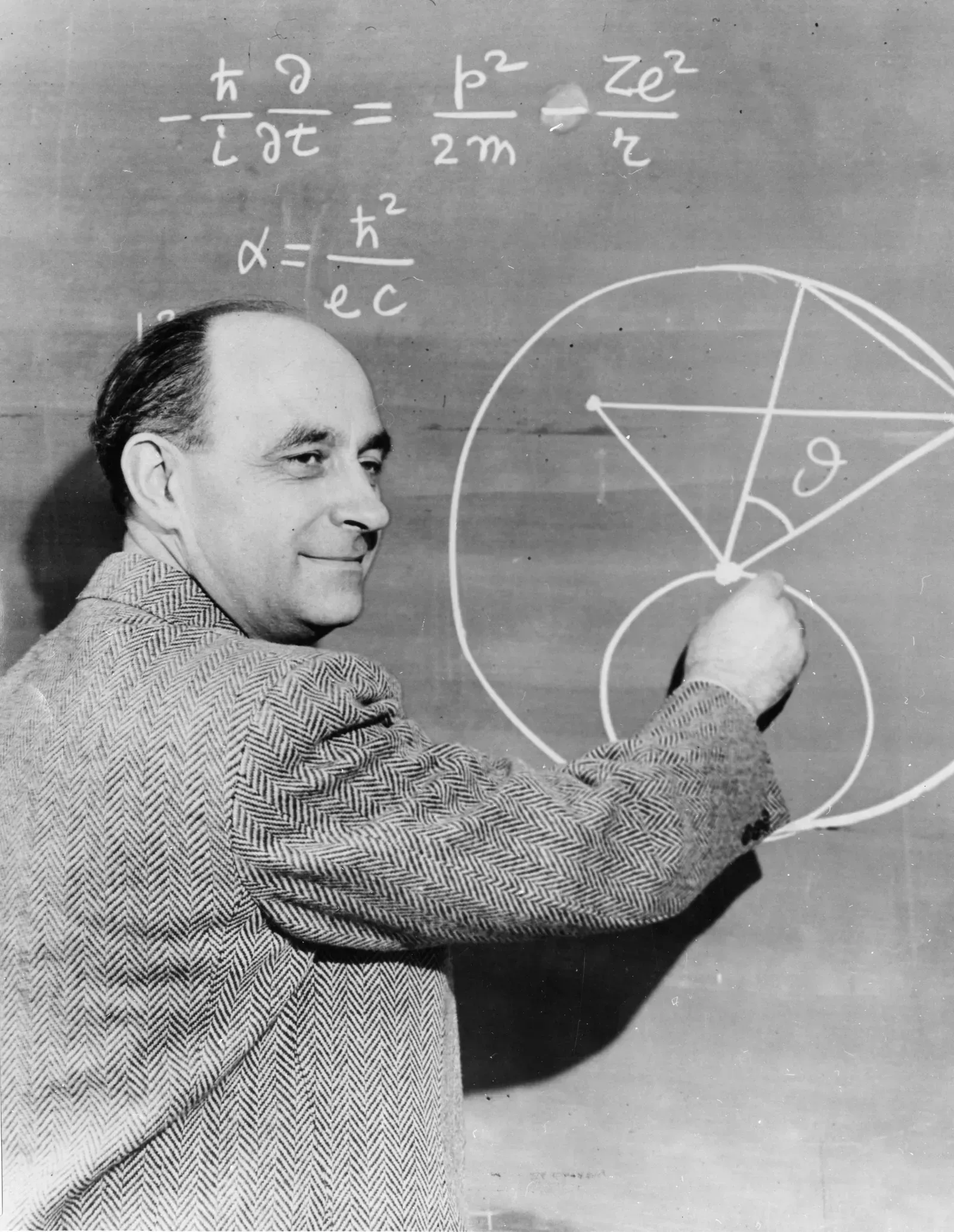
The paradox is named after physicist Enrico Fermi, who casually posed the question during a lunchtime conversation in 1950. The apparent contradiction between the high probability of extraterrestrial civilizations and the lack of any observed evidence is what defines the Fermi Paradox. Given the billions of galaxies and the trillions of potentially habitable planets, the silence is striking. It feels less like an absence of evidence and more like a deliberate void.
One proposed explanation is the “Great Filter,” a concept suggesting there is a barrier that prevents most life from reaching a stage where it becomes observable. This filter could lie in our past, meaning the emergence of life itself is far rarer than assumed. Alternatively, the filter could lie in our future, representing a catastrophic event that wipes out most civilizations before they can become interstellar. The unsettling implication is that if the filter lies ahead of us, humanity may be on a collision course with extinction.
4. Quantum Superposition and the Observer Effect
In the double-slit experiment, particles like electrons behave like spread-out waves when not being observed. The moment a detector is placed to see which path the particle takes, its behavior changes and it acts like a solid particle. This isn’t a quirk of imprecise measurement. It appears to reflect something genuinely strange about the nature of physical reality itself.
One of the strangest aspects of quantum mechanics is the observer effect: particles seem to change behavior, acting as waves or particles, depending on whether they’re being watched. This phenomenon, documented in experiments like the double-slit test, suggests reality might only fully “render” when observed. Whether observation actually causes reality to “collapse” into one definite state, or whether all outcomes somehow continue to exist, remains one of the most contested questions in modern physics. Neither answer is exactly comforting.
5. Free Will and the Neuroscience of Decision-Making

Benjamin Libet in the 1980s asked subjects to choose a random moment to flick their wrist while measuring brain activity. To determine when subjects felt the intention to move, he asked them to watch a clock and report its position when they felt the conscious will to act. Libet found that the unconscious brain activity leading up to the conscious decision began approximately half a second before the subject consciously felt that they had decided to move.
A later version of the experiment discovered a brain prediction capacity of up to four seconds before the conscious will to act. In other words, your brain may have already “decided” well before your conscious mind catches up. Determinism was first a philosophical position, but the birth of modern science increased its strength, giving rise to incompatibilism, the idea that free will and natural determinism cannot coexist. Only one of them can be true. Throughout the centuries, philosophy has not been able to solve this dilemma.
6. The Simulation Hypothesis

In 2003, philosopher Nick Bostrom proposed a philosophical argument that at least one of three statements must be true: civilizations don’t reach technological maturity, they lose interest in running simulations, or we are almost certainly living in one. The logic is cold and clean: if sufficiently advanced civilizations can run detailed simulations of consciousness, and if those civilizations exist, the vast majority of minds that have ever existed would be simulated ones, not original ones.
The physical constants of our universe – the strength of gravity, the charge of an electron – are exquisitely fine-tuned to allow for the existence of stars, planets, and life. A slight change in any of them would render the universe a sterile void. While some see this as evidence of a multiverse or divine providence, the simulation hypothesis offers another take: these aren’t happy accidents. They are variables in the code, deliberately set to the values needed for the simulation to function as intended.
7. The Arrow of Time

Physics treats time in a peculiar way. Most of the fundamental laws of physics work equally well whether time runs forward or backward – there’s nothing in the equations of classical mechanics, electromagnetism, or quantum theory that insists on a single direction. Yet we experience time as profoundly one-way. A related mental arrow arises because one has the sense that one’s perception is a continuous movement from the known past to the unknown future. This phenomenon has two aspects: memory, meaning we remember the past but not the future, and volition, meaning we feel we can influence the future but not the past.
The inevitable increase of entropy with time for isolated systems provides an “arrow of time” for those systems. Everyday life presents no difficulty in distinguishing the forward flow of time from its reverse. Yet the physics that underpins this is statistical in nature, not absolute. The apparent flow of time, so central to every human experience, may be an emergent property rather than a fundamental feature of the universe. That distinction – however subtle it sounds – sits quietly at the edge of what the mind is willing to accept.
8. The Vastness and Indifference of Scale

The observable universe is estimated to span roughly 93 billion light-years in diameter, containing somewhere in the neighborhood of two trillion galaxies, each holding hundreds of billions of stars. Our own sun is an unremarkable, middle-aged star sitting on a minor spiral arm of one of those galaxies. Earth is smaller relative to the observable universe than a single atom is to Earth itself.
One important aspect of many forms of existentialism is that the individual seeks to live in a meaningful way but finds themselves in a meaningless and indifferent world. Science does not tell us the universe is malevolent or that human suffering is purposefully designed. It suggests something arguably more unsettling: that the universe is simply not oriented toward us at all. Cosmic indifference at such a scale has a weight to it that purely personal anxieties rarely match.
9. Mortality, Terror Management, and the Biology of Denial

Human beings are unique among living creatures in that we are aware of our own existence. Kierkegaard postulated that as a result of this awareness we experience two emotions: awe and dread. It is awesome to be alive. Yet it is dreadful to recognize that we all die, and that death can come at any moment. Kierkegaard described this as a “struggle of being against non-being.”
Ernest Becker hypothesized that in order to manage death anxiety, human beings create “culture” – humanly constructed beliefs about reality that reduce existential terror. All cultures illuminate the origins of the universe, prescribe appropriate behaviors and values, and offer literal or symbolic paths to immortality. Terror Management Theory, which grew from Becker’s work, holds that a vast portion of human motivation – creativity, achievement, ideology, even conflict – is quietly driven by our biological awareness that we will die. The dread isn’t irrational. It’s built in.
10. The Multiverse and the Dissolution of Uniqueness
Several well-supported interpretations of quantum mechanics, as well as inflationary cosmology models, suggest our universe may be one of an enormous or even infinite number of parallel universes. In the many-worlds interpretation of quantum mechanics, every quantum event with multiple possible outcomes produces a branching of reality, meaning that all outcomes actually occur, just in separate branches. Every decision you make, and every one you don’t make, may be equally real somewhere else.
The persistence of ordered experience in a quantum-branching universe raises fundamental questions about how continuity is maintained across multiple possible outcomes. If infinite versions of you exist, making every possible choice, with every conceivable life playing out in parallel, then the concept of a singular self with a meaningful, directed life starts to feel philosophically precarious. The uniqueness that most people implicitly assume their life has – the sense that this particular story matters – quietly dissolves under the multiverse lens. Whether that’s liberating or deeply unsettling depends, perhaps, on which branch of your thinking you follow.