Most people understand that staring at a screen late at night is bad for sleep. What’s less obvious is that the fear of technology itself – the dread of being left behind, surveilled, automated away, or simply overwhelmed by the relentless pace of change – is quietly stealing hours from people’s nights. It’s a pattern researchers now loosely refer to as technostress, and its effects on sleep are increasingly hard to ignore.
The problem isn’t just about blue light or notification pings. It runs deeper, into the psychology of uncertainty, loss of control, and the feeling that the digital world is moving faster than any one person can manage. In 2026, with AI reshaping workplaces and social media algorithms designed to keep people anxious and engaged, this low-grade panic has become a fixture of modern adult life.
What “Techno-Panic” Actually Means

An increasingly common and studied phenomenon is technostress in relation to AI technology and the continuous adaptation to technological innovations. It’s not a clinical diagnosis you’ll find in any manual, but the experience is real: a creeping dread triggered by rapid technological change, constant connectivity, and the suspicion that you’re always one update behind.
Researchers have identified several distinct dimensions of technostress, including techno-overload, techno-invasion, techno-complexity, techno-insecurity, and techno-uncertainty. Each of these feeds the others. When your job requires mastering tools that change quarterly, and your private time is invaded by work notifications, the nervous system rarely gets a chance to fully stand down.
Anxiety Is Rising, and Technology Is Part of the Story

In 2024, roughly four in ten adults reported feeling more anxious than they did the year before, compared to around a third in 2023 and under a third in 2022, showing a steady upward trend across consecutive years. The causes are multiple, but technology-driven stress is consistently identified as a contributing factor.
Surveys show large numbers of workers are concerned about AI: one found that nearly three quarters of U.S. employees expressed worry about using AI tools, and close to a third of adults say AI gives them feelings of fear or dread. Common symptoms are similar to general anxiety: insomnia, constant worry about the future of one’s career or personal data, and feeling overwhelmed by too much AI news.
The Science Behind Technostress and the Sleeping Brain
The feelings of uncertainty, lack of control, and cognitive overload triggered by continuous AI integration may facilitate the development of anxiety or intensify pre-existing symptoms. This matters for sleep because anxiety is one of its most reliable destroyers. A mind rehearsing worst-case scenarios cannot easily let go into rest.
Sleep is a critical restorative process that supports emotional regulation and cognitive functioning. Inadequate or poor-quality sleep impairs the prefrontal cortex, which in turn increases susceptibility to anxiety and stress. The vicious cycle is almost mechanical: tech-driven anxiety degrades sleep, which then amplifies anxiety the following day.
Stress, Anxiety, and Sleep Loss: The Numbers Are Striking

A survey from the American Academy of Sleep Medicine reveals that nearly three-quarters of Americans report sometimes, always, or often experiencing disrupted sleep due to stress, and over two-thirds report losing sleep due to anxiety. Those figures were collected in 2024, making them among the most current available on the subject.
Sleep anxiety is emerging as a critical wellness challenge, fueled by increasing digital dependency, economic uncertainty, and the lingering effects of pandemic-era sleep disruptions. Defined as excessive worry about sleep quality or the inability to fall asleep, it affects millions worldwide, contributing to the broader sleep deprivation crisis.
Doomscrolling: Where Technology Meets Bedtime
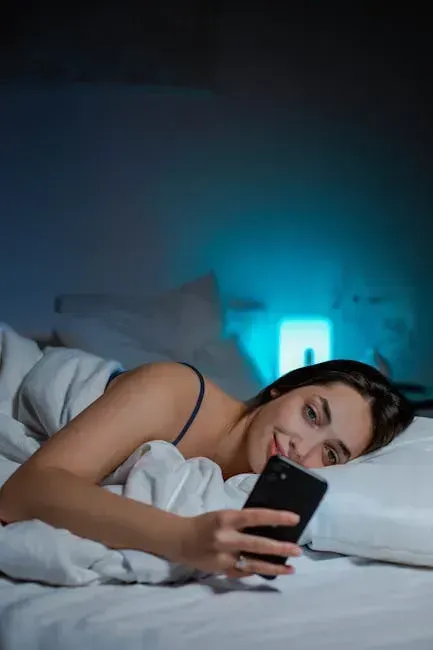
According to a survey from the American Academy of Sleep Medicine, over a third of adults say using their phone or tablet before bed to view news and current events, or doomscrolling, makes them sleep slightly or significantly worse, disproportionately affecting younger adults aged 18 to 24. The ritual of checking headlines right before sleep has become one of the clearest behavioral links between techno-panic and lost rest.
Doomscrolling, defined by repetitive, uncontrolled exposure to harmful online content, continuously activates negative mental schemas, reinforces attentional biases toward threat, and maintains a cycle of cognitive hyperarousal that interferes with the initiation and maintenance of sleep. The constant influx of traumatic news and fear-inducing information triggers psychological stress responses: cortisol and adrenaline flood the system, causing anxiety, insomnia, irritability, and emotional exhaustion in the short term.
AI Anxiety: A Specific and Growing Fear

Research in the field of digital stress suggests that anxiety may arise from individuals’ exposure to fast-evolving technology, with AI as a prominent case. The feelings of uncertainty, lack of control, and cognitive overload triggered by continuous AI integration may facilitate the development of anxiety or intensify pre-existing symptoms.
Several studies emphasize that long-term exposure to AI-driven work environments, job insecurity due to automation, and constant digital monitoring are significantly associated with emotional exhaustion, sadness, and depressive symptoms. Studies in 2024 and 2025 find that rapid AI implementation at work triggers stress similar to classic burnout, with people feeling cognitive overload, uncertainty, and lack of control as AI tools change job tasks.
When Sleep Trackers Make Sleep Worse
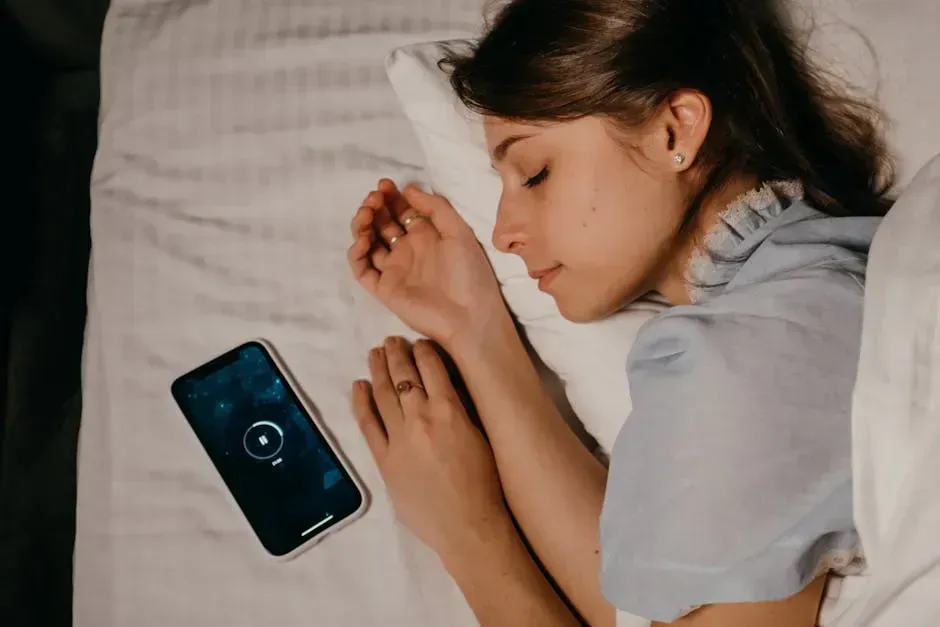
There’s a particular irony embedded in this story. Many people turn to technology to fix the sleep problems that technology helped create. Technological advancements in sleep tracking devices and apps, while designed to improve sleep hygiene, may paradoxically exacerbate sleep anxiety. A study published in the Journal of Clinical Sleep Medicine highlights the rise of “orthosomnia,” a phenomenon where individuals become obsessed with achieving perfect sleep, leading to heightened stress and poorer sleep outcomes.
According to the American Academy of Sleep Medicine, sleep anxiety has become more prevalent, particularly among younger generations, who experience heightened stress from social media, career instability, and constant connectivity. A recent study found that nearly four in ten Gen Z adults report sleep-related anxiety at least three times a week, a significant increase from previous years. Wearing a tracker to bed, it turns out, can make some people more anxious about their data than rested from their night.
Blue Light Is Real, but Cognitive Arousal May Be Worse
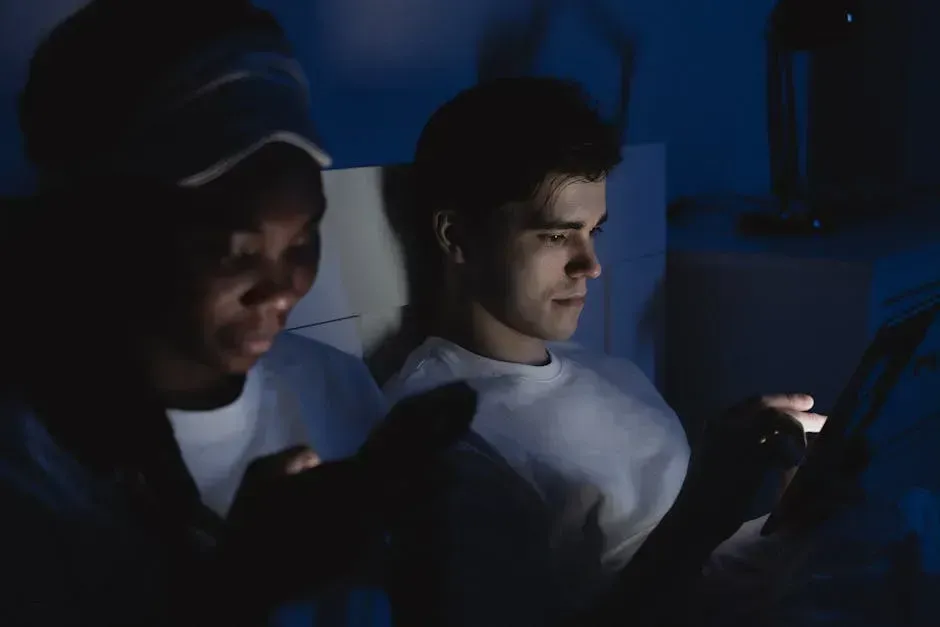
Excessive screen time, particularly in the evening, harms sleep quality by interfering with melatonin production due to blue light exposure. This physiological pathway has received most of the public attention, and it is genuinely important. Still, the psychological dimension may be just as disruptive.
Consuming emotionally charged content, such as news or engaging in online arguments, can increase emotional arousal, making it harder to relax and fall asleep. This emotional arousal can also lead to disrupted sleep and nightmares. The use of electronic devices before bedtime can lead to a delay in bedtime and shortened sleep duration, as individuals may lose track of time while engaging with their devices.
Who Is Most Vulnerable to Techno-Panic-Driven Sleep Loss
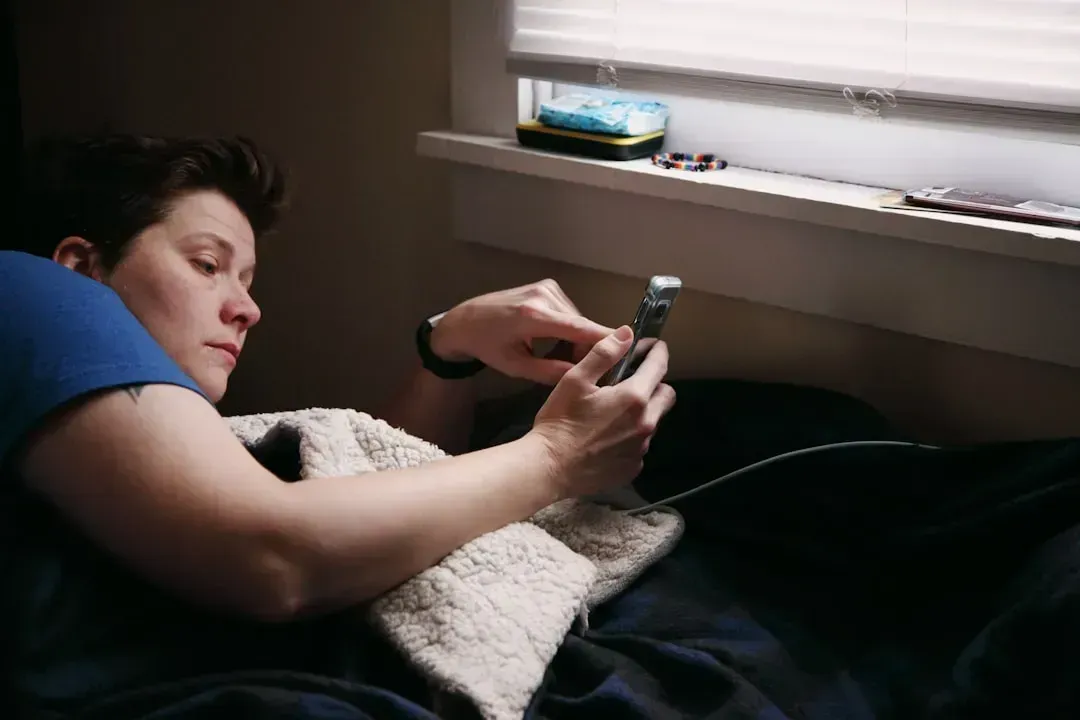
A 2024 survey found roughly three in ten U.S. adults doomscroll regularly, including nearly half of Millennials and just over half of Gen Z. Younger users and those who already feel anxious or socially isolated tend to doomscroll more. The overlap between the heaviest technology users and the most sleep-deprived is not a coincidence.
Adolescents and young adults are widely considered more vulnerable because of ongoing neurodevelopmental maturation and heightened reliance on peer evaluation during identity formation. Yet the problem is not exclusive to the young. One analysis showed that perceived AI techno-complexity and techno-insecurity significantly predicted higher anxiety and depression symptoms across working-age adults more broadly.
The Long-Term Health Cost of Chronic Digital Sleep Disruption
When discussing long-term effects, chronic and constant technological abuse during late evening hours has been linked to obesity, hypertension, and psychologic and neurocognitive delays, including social anxiety disorders, depression, and ADHD. These are not fringe outcomes. They represent the downstream cost of a behavioral pattern that has quietly normalized itself across millions of households.
Problematic use of technology was associated with poor sleep quality, and this association remained significant after controlling for loneliness, depression symptoms, anxiety symptoms, neighborhood disorder, sex, maternal insomnia, and socioeconomic status. In other words, it’s not simply that anxious people use more technology. The technology use itself contributes to the problem, independent of those other factors.
What Actually Helps: From Digital Detox to Digital Therapy
In response to rising sleep anxiety, wellness experts are advocating for mindful sleep practices, including cognitive behavioral therapy for insomnia, digital detox strategies, and sleep-focused solutions that prioritize relaxation over rigid sleep goals. The practical advice is less complicated than the research behind it: meaningful separation from screens before bed, consistent sleep schedules, and treating worry about sleep as something that can be worked with rather than pushed through.
Results from recent clinical trials demonstrate the effectiveness of digital cognitive behavioral therapy for insomnia, with gains sustained at six months, underscoring the potential of fully automated digital treatments to provide first-line, guideline-recommended therapy at scale. The National Sleep Foundation’s guidelines recommend avoiding screen exposure ideally for one hour before the target sleep schedule, allowing the brain’s aroused neurochemistry triggered by digital engagement to normalize before attempting sleep.
The uncomfortable truth is that the tools we increasingly rely on to manage anxiety – apps, newsfeeds, AI assistants, sleep trackers – can become part of the problem when used without intention. Techno-panic does not require a dramatic crisis to take hold. It accumulates quietly, headline by headline, notification by notification, until the bed becomes a place where the mind keeps working long after the lights go out. Recognizing that pattern is the first, genuinely useful step.