
There’s a particular kind of wisdom that only comes with age – not the wisdom found in books, but the kind built from quietly watching things disappear. Things we once assumed were simply part of life, available to anyone who wanted them, have slowly revealed themselves to be fragile, costly, or genuinely risky privileges. Most of us didn’t notice the shift while it was happening.
Some of these things were never obviously dangerous. They looked like ordinary choices or harmless habits. It’s only in retrospect, usually sometime in our thirties or forties, that the real picture emerges. Here are seven of them.
A Full Night of Sleep

When we were younger, pulling an all-nighter felt almost like a badge of honor. Burning through the night to finish an assignment, a project, or just a great conversation felt harmless enough. Sleep was something you caught up on when life slowed down. It rarely did, and the cumulative toll of that thinking is now well-documented.
Reviews encompassing data from over six million participants consistently show an inverse relationship between sleep duration and all-cause mortality, with shorter sleep durations under seven hours linked to higher mortality rates. Beyond that broader risk, sleep deprivation was identified as a significant risk factor for cardiovascular diseases such as hypertension, stroke, and coronary heart disease. The carefree attitude we had about skipping sleep wasn’t bravado. In hindsight, it was a slow-burning health gamble we didn’t know we were making.
Owning a Home

For earlier generations, buying a house was a reasonable milestone – something a working adult could expect to reach by their thirties with enough patience and saving. That expectation has since dissolved. Homeownership has quietly moved from a middle-class norm into something closer to a protected privilege.
Nearly one third of Americans spend thirty percent or more of their household incomes on housing costs, and among all renters, half spend more than thirty percent of their income on housing costs. The health consequences of this aren’t abstract. Housing affordability directly influences access to other goods including food and medical care, and research has connected housing insecurity to poorer self-reported health, delayed doctor visits, and higher distress. What once felt like a straightforward life goal now functions, for many, as a threshold they may never cross.
Living on a Single Income

There was a time, not so long ago, when one steady paycheck could cover a mortgage, a car, groceries, and maybe a modest family vacation each year. That version of economic life has largely faded, though many of us spent years assuming it was still within reach if we just worked hard enough.
Today, it often takes two working parents to afford a middle-class lifestyle, and even six-figure earners in the United States have said one income feels nearly impossible to live on, according to a recent Harris Poll survey. Inflation and surging costs for expenses including child care, college, auto loans, homes, and rent have created a mounting affordability challenge, and across the country, health insurance premiums for family coverage have jumped more than twenty-five percent since 2020, outpacing inflation. The single-income household isn’t just a lifestyle choice anymore. It’s become, for most, a financial risk few can absorb.
Boredom
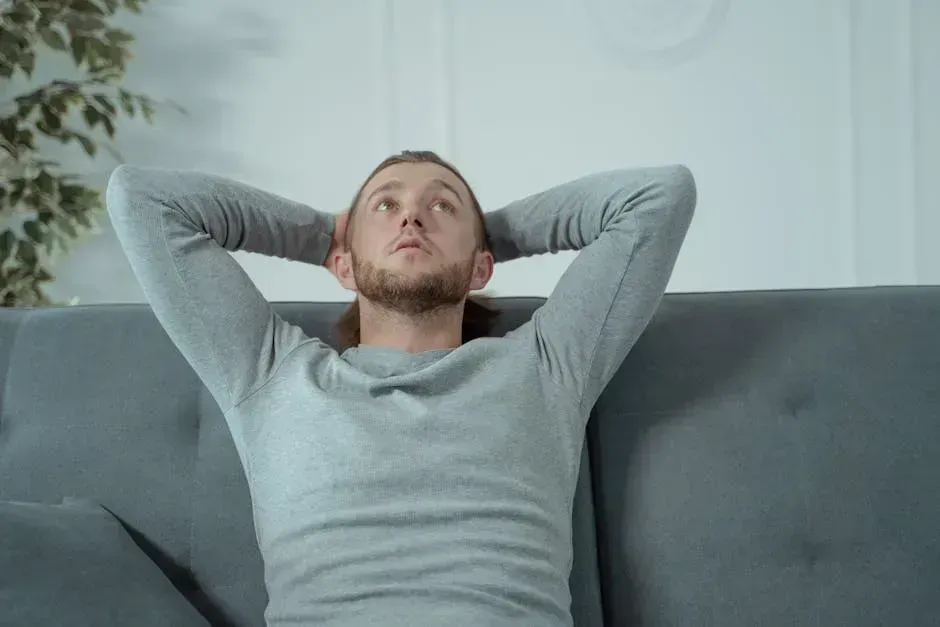
This one sounds counterintuitive. Boredom was always something to escape, not something to protect. Nobody sat around as a teenager thinking, “I should really guard this feeling of having nothing to do.” Yet that idle, unstimulated mental state turns out to be genuinely valuable – and increasingly hard to access.
In small doses, boredom is the necessary counterbalance to the overstimulated world we live in, and it can offer unique benefits for our nervous system and mental health. Benefits of allowing ourselves to be occasionally bored include improvements in creativity, independence in thinking, support for self-esteem and emotional regulation, and breaking the loop of instant gratification that contributes to compulsive device use. We filled every quiet moment with a screen and called it productivity. What we actually lost was the space where reflection, creativity, and emotional regulation quietly do their best work.
Stability and Job Security

The idea of a job for life, complete with a pension, predictable hours, and a sense of institutional belonging, sounds almost quaint now. But for a long stretch of the twentieth century, it was a realistic expectation for a significant portion of the workforce. Most people didn’t treat it as a luxury because it didn’t feel like one.
More workers are now part of the gig economy, which means they are less likely to have a sustained, predictable income or workplace benefits, eroding long-term job stability, and fewer workers have a traditional pension while being increasingly responsible for funding their own retirement plans. The psychological cost of chronic economic insecurity is well established. Constant financial uncertainty raises stress hormones, disrupts sleep, and contributes to anxiety and depression – all risks that the previous generation, with its steadier economic ground, largely didn’t have to absorb the same way.
Unstructured Free Time

As children, we had entire afternoons with no agenda. Adults around us probably wished they had more time. What none of us understood then is that unstructured time isn’t just pleasant – it’s genuinely necessary for mental and emotional health. It’s also become increasingly scarce and, for many adults, financially out of reach.
By filling every second, every space, every pause in life to avoid boredom, we may be missing out on opportunities for the brain to think more freely. The pressure to monetize free time, to fill it with side hustles, skill-building, or productivity, has turned rest into something people must justify rather than simply allow. Rest without output now carries a subtle social cost that previous generations didn’t navigate in quite the same way. That shift, quiet as it is, has real consequences for long-term cognitive and emotional resilience.
Affordable, Routine Healthcare

There’s a version of healthcare that many people once took for granted: a visit to the doctor when something felt off, a prescription filled without much deliberation, a dental checkup twice a year as a matter of course. For many adults today, that version of care has become a calculated expense rather than a routine habit.
Research has connected housing insecurity, which results from being cost-burdened, to delayed doctor visits and higher distress – and the same financial squeeze applies broadly to healthcare access when households are already stretched thin. Low-income families with difficulty paying rent or mortgage are less likely to have a usual source of medical care and more likely to postpone needed treatment than those who enjoy more affordable housing. The dangerous irony is that skipping routine care because it feels unaffordable tends to lead to far more expensive interventions down the line. Preventive healthcare, once considered a basic adult responsibility, has quietly become a privilege tied to income in a way that most of us didn’t fully grasp until we were old enough to feel the gap ourselves.
The common thread across all seven of these things is that none of them announced their transformation. Sleep, housing, stability, rest – they shifted slowly, almost imperceptibly, from ordinary features of adult life into markers of real advantage. Recognizing that shift is worth something, even if only to stop blaming ourselves for struggling to hold on to things that have genuinely become harder to keep.