
The fear is real, and the data is catching up to it. Across corporate boardrooms and kitchen tables alike, people are asking the same question: is my job next? The 2025 to 2030 period is proving highly disruptive in the job market, with the impact of AI currently beating all previous projections. That’s not a think-piece claim – it’s what employers are reporting right now, in surveys, earnings calls, and workforce restructuring announcements.
The International Monetary Fund’s 2024 assessment found that roughly two in five jobs globally face meaningful exposure to AI capabilities, a figure that rises significantly in advanced, digitized economies. What makes today’s moment different from previous waves of automation anxiety is the speed. The shift is not arriving in ten years. For several industries, it’s already underway. Here are ten sectors facing the sharpest pressure right now.
1. Customer Service and Call Centers

Of all the industries watching the clock, customer service may be feeling the most immediate heat. Customer service representatives face roughly 80% automation potential, with projections pointing to the displacement of over two million U.S. jobs. That’s not a speculative figure – it’s backed by the rapid deployment of AI-powered voice bots and chat systems that handle complaints, queries, and sales interactions around the clock.
Customer service roles have already been measurably affected. Customer service employment in the United States declined by approximately 80,000 positions between 2022 and 2024, with AI benchmarks showing rapid improvements in capability contributing to this shift. The economics are stark: AI systems don’t need breaks, don’t call in sick, and can handle thousands of simultaneous interactions. For companies running large contact centers, the cost case for automation is nearly irresistible.
2. Banking and Financial Services

Finance has long relied on armies of analysts, loan officers, and compliance staff performing structured, rules-based work. In the highly structured world of banking and finance, AI has made a formidable entrance – particularly in transaction processing, compliance checks, fraud detection, and customer personalization. Studies suggest that approximately one-third of transaction-handling roles in financial institutions have already been automated, with AI algorithms now powering everything from fraud alerts and credit risk scoring to personalized wealth management recommendations.
Automated reconciliation, expense categorization, and compliance monitoring are now largely AI-driven. Predictive modeling tools forecast outcomes faster and more precisely than manual analysis. AI underwriting tools evaluate credit risk in real time, eliminating human bias and error in lending decisions. The traditional analyst or loan officer role isn’t vanishing overnight, but the volume of people needed to do those jobs is shrinking noticeably.
3. Administrative and Data Entry Roles

The 2025 World Economic Forum report found that administrative jobs are easily the most at risk of automation in the next five years. This category spans an enormous range of workers: executive assistants, data entry clerks, records managers, office coordinators. What they share is a reliance on structured, predictable tasks – exactly the kind that AI handles most efficiently.
Data entry and administrative support roles carry an estimated 95% automation risk. Data entry clerks alone could see 7.5 million positions eliminated globally by 2027. The irony is that many of these jobs exist specifically because humans are needed to process information – and that’s the one thing generative AI does fastest. Businesses that once needed a full team to manage records and scheduling are discovering they can handle the same workload with a fraction of the staff.
4. Retail and Cashier Roles

Walk into a major grocery store or big-box retailer today and the evidence is already visible: rows of self-checkout kiosks, AI-driven inventory systems, and computer vision cameras watching shelves in real time. Automated checkout and computer vision systems are already widespread, and research projects that retail cashiers face a 65% risk of automation due to self-checkout expansion and AI-powered systems.
Walmart’s self-checkout rollout is projected to replace up to 8,000 positions, while Sam’s Club’s AI verification systems could eliminate 12,000 cashier roles. The shift toward e-commerce has accelerated further, with AI technologies assisting in personalizing the customer experience, automating customer service through chatbots, and automating routine manual tasks such as inventory management and checkout processes, leading to a decrease in traditional retail jobs. The pace is uneven across different retail formats, but the direction is consistent.
5. Legal Support and Paralegal Services

The legal industry has always been data-intensive, built on research, documentation review, and precedent analysis. Those happen to be exactly the tasks where AI is most capable right now. A 2024 legal tech report found that approximately 39% of document review processes in large firms are now AI-assisted. These tools can scan and extract relevant clauses, flag anomalies, and identify precedent cases far faster than junior associates or paralegals, and AI platforms also reduce the risk of human oversight errors in complex legal documentation.
This transformation has led to a decline in demand for legal support staff, especially those involved in manual document processing, data entry, or legal research. While experienced lawyers remain indispensable for courtroom advocacy, strategy, and client negotiation, the traditional path of working one’s way up from paralegal to associate is becoming less viable. The entry-level pipeline into law is quietly narrowing, even if senior roles remain relatively secure.
6. Manufacturing and Assembly
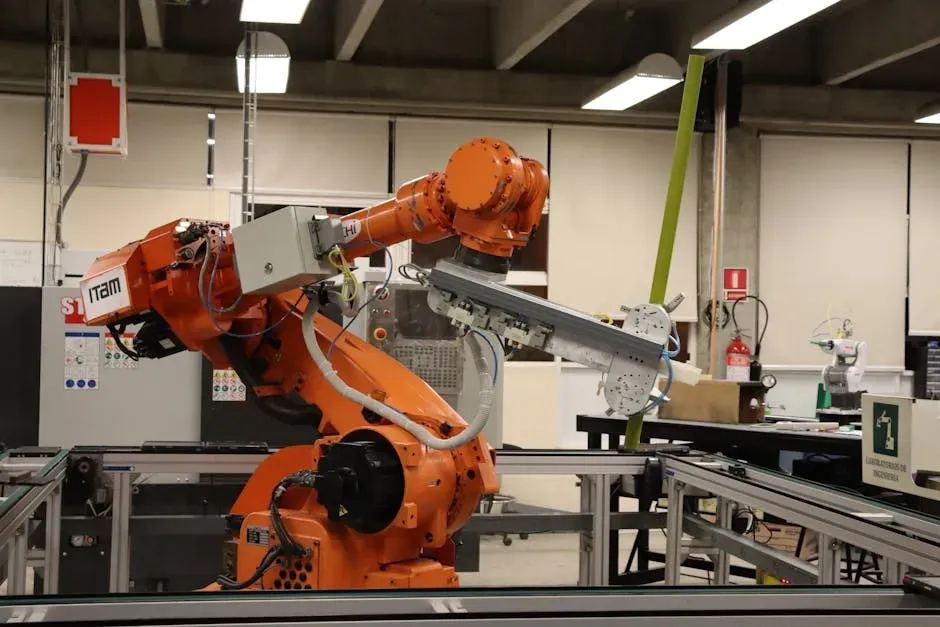
Manufacturing automation is not new, but the current wave is qualitatively different. Previous generations of factory robots were fixed, task-specific machines. Today’s systems combine AI, machine vision, and flexible robotics that can adapt to new products and environments. The number of industrial robots operating around the world increased by roughly 10% in 2024 alone.
Oxford Economics forecasts 20 million manufacturing jobs lost to automation by 2030. Overall manufacturing employment peaked decades ago and has been on a gradual decline since pre-pandemic levels, with factory automation playing a clear role – though experts note it is not the only factor. The pressure is especially intense in high-volume, repetitive assembly work, where the economic case for automation is strongest and the cost of robotic systems continues to fall year over year.
7. Transportation and Logistics Management

The picture inside transportation is more nuanced than many headlines suggest. Physical long-haul driving remains difficult to fully automate at scale. The real disruption is happening in the layers of management and administration surrounding the drivers. Among more than 200,000 logistics managers – including operations managers, warehouse managers, and transportation managers – more than 90% of their tasks are susceptible to AI-driven automation, with nearly all of those classified as core activities, underscoring a substantial displacement risk.
Artificial intelligence is revolutionizing the transportation industry by optimizing routes, streamlining supply chains, and enabling driverless trucking on long-haul routes, with new research showing that 1.1 million full-time transportation employees will be impacted by the technology. Highly automated warehouses can already operate with roughly a quarter fewer workers than manual ones. The disruption in this sector is less about dramatic robot takeovers and more about the quiet elimination of planning, scheduling, and coordination roles.
8. Media, Journalism, and Content Production

The media industry was already under pressure before AI arrived. Now the pressure has intensified sharply. Entertainment and media companies cut more than 17,000 jobs in 2025, an 18% increase from the year before. Bureau of Labor Statistics data from May 2025 showed the advertising, PR, and related services sector at around 488,600 total jobs, a nearly 10% drop from twelve months prior – roughly 54,000 positions gone in a single year.
In advertising and digital media, AI-powered tools now handle tasks once performed by copywriters, media planners, and campaign managers, leading to leaner teams and a shift toward more technical skill sets. In early 2026, the Washington Post announced that it would be reducing its workforce by roughly 30%, citing AI as part of the reason. Recent studies show that over 65% of newsrooms in the U.S. have integrated AI technologies to generate or assist in content creation, profoundly impacting entry-level roles. Investigative reporters and creative directors are likely to survive this wave; copy editors and content aggregators are far less certain.
9. Telemarketing and Sales Support

Few job categories have been as directly replaced as telemarketing. The combination of AI voice synthesis, natural language processing, and sentiment analysis has produced systems that can carry on remarkably convincing outbound calls without a human in the loop. The telemarketing landscape has been redefined by AI-enabled dialers and voice bots capable of initiating, managing, and adapting outbound sales conversations. Studies reveal that as of 2025, around 87% of routine outbound calls – such as appointment confirmations, surveys, and sales pitching – are managed by AI systems.
Bloomberg research reveals AI could replace over half of market research analyst tasks and roughly two-thirds of sales representative tasks, while managerial roles face a comparatively modest automation risk. Goldman Sachs research concludes that occupations at the highest risk of being displaced by AI include computer programmers, accountants and auditors, legal and administrative assistants, customer service representatives, telemarketers, proofreaders and copy editors, and credit analysts. The bottom rung of the sales ladder is disappearing fastest.
10. Travel and Tourism Booking

Travel agencies already survived one near-extinction event when online booking platforms emerged in the early 2000s. The AI era is mounting a second, arguably more thorough, challenge. The travel and tourism sector has seen a digital evolution, with AI-enabled booking platforms and itinerary generators rapidly replacing traditional travel agents. As of 2025, nearly three quarters of leisure and business travel bookings are made via AI-enhanced systems that provide personalized recommendations, dynamic pricing alerts, and multi-modal travel integration without human assistance.
Virtual travel advisors analyze user behavior, preferences, and past travel data to curate seamless experiences across flights, hotels, and excursions. This self-service model drastically reduces the demand for human booking agents and front-desk support roles in agencies and call centers. However, the sector has not become fully automated – luxury travel, multi-leg international trips, and cultural tourism still benefit from human insight. The middle ground is what’s vanishing: the general-purpose booking agent who handles standard itineraries.
What the Numbers Actually Tell Us
It’s worth pausing on what the data does and doesn’t say. There is a significant difference between what AI can theoretically automate and what it will automate on any given timeline. The pace of real-world displacement depends on factors that headline projections often obscure, and the figures for confirmed, attributable AI job displacement in recent years are smaller than the projections suggest. Regulatory hurdles, implementation costs, and the messiness of real-world workflows all slow the transition down.
The WEF Future of Jobs Report 2025, surveying over 1,000 employers representing 14 million workers across 55 economies, projected that 92 million jobs will be displaced by 2030 while 170 million new ones will be created – a net gain of 78 million jobs. Jobs that are routine and do not require much creativity or interpersonal interaction are most at risk. That distinction matters enormously. The same technology that threatens some roles is already creating demand for new ones in AI oversight, systems management, and human-AI collaboration.
The Skills Gap Problem

Even if the net job numbers work out positively, the transition won’t be smooth for everyone. Research finds that 77% of new AI-related jobs require master’s degrees, creating substantial skills gaps. That means displaced workers in retail, data entry, or call centers don’t automatically slide into the roles AI is creating. The new jobs often require different credentials, different cities, and different educational backgrounds.
A TalentLMS survey from 2026 revealed that 42% of companies report workforce skills gaps. At the same time, the latest data shows that some 77% of employers also plan to train their employees to work alongside AI, which suggests the situation isn’t entirely one of passive displacement. Some employers are actively investing in the transition – though the scale and reach of those programs varies enormously.
Who Is Most Exposed?
Automation risk doesn’t fall evenly across the population. Gender, age, and education level all shape how exposed a worker is. In the U.S., roughly 79% of employed women work in jobs at high risk of automation, compared to 58% of men. Entry-level jobs, disproportionately filled by young workers, are especially at risk, with nearly 50 million U.S. jobs in that category facing meaningful exposure.
Positions that don’t require a bachelor’s degree are at almost double the automation risk of occupations that do. A realistic projection from expert analyses suggests 15 to 25% of jobs will experience significant disruption by 2025 to 2027, with entry-level positions facing the highest immediate risk, particularly in white-collar sectors. The shape of this disruption is not random – it follows predictable contours based on task structure, education level, and industry exposure.
Conclusion: Disruption With Uneven Impact

Automation rarely arrives all at once. What’s happening across these ten industries is less of a sudden wave and more of a steady, accelerating erosion – noticeable at the edges first, then moving inward. More than a third of all business tasks are already performed by machines in 2025. The trajectory is clear even if the precise timelines remain uncertain.
The workers who fare best in this environment tend to share one quality: they don’t compete with AI directly but instead find ways to make AI-assisted work better than what either could do alone. That’s a genuinely useful frame – not as reassurance, but as strategy. The industries listed here aren’t all doomed, and the jobs within them aren’t uniformly at risk. What’s changing is which parts of each job still require a human to show up.