
Numbers on a page rarely capture the texture of real life, but sometimes they come close. In 2026, baby boomers hold more than half of all household wealth in the United States while representing roughly one fifth of its population. Millennials, a generation of roughly equal size, hold a small fraction of that. The math alone is striking. What makes it consequential is that the gap sits underneath almost every major financial decision younger adults face, from whether to buy a home to whether to start a family to whether to feel optimistic about retirement at all.
This isn’t a complaint about generational character. It’s a structural story about timing, asset prices, debt burdens, and how compounding works in your favor when you enter the housing and stock markets at the right moment in history. The wealth gap by age is real, it’s measurable, and its psychological weight is showing up clearly in the data on financial anxiety.
The Raw Numbers Are Hard to Ignore

In the fourth quarter of 2025, baby boomers owned more than half of all total wealth in the United States. In comparison, millennials owned around a tenth of total U.S. wealth, despite there being nearly an equal share of millennials and baby boomers in the population. That imbalance tells a story that income statistics alone never fully reveal.
As recently as 2019, individuals under 40 years old held just under five percent of total U.S. wealth despite comprising more than a third of the adult population. Conversely, individuals over age 54 made up a similar share of the population and held more than seventy percent of total wealth. Since then, there has been a slight narrowing of these wealth disparities across age groups, likely driven by expanded ownership of financial assets among younger Americans.
What the Median Net Worth Numbers Actually Show
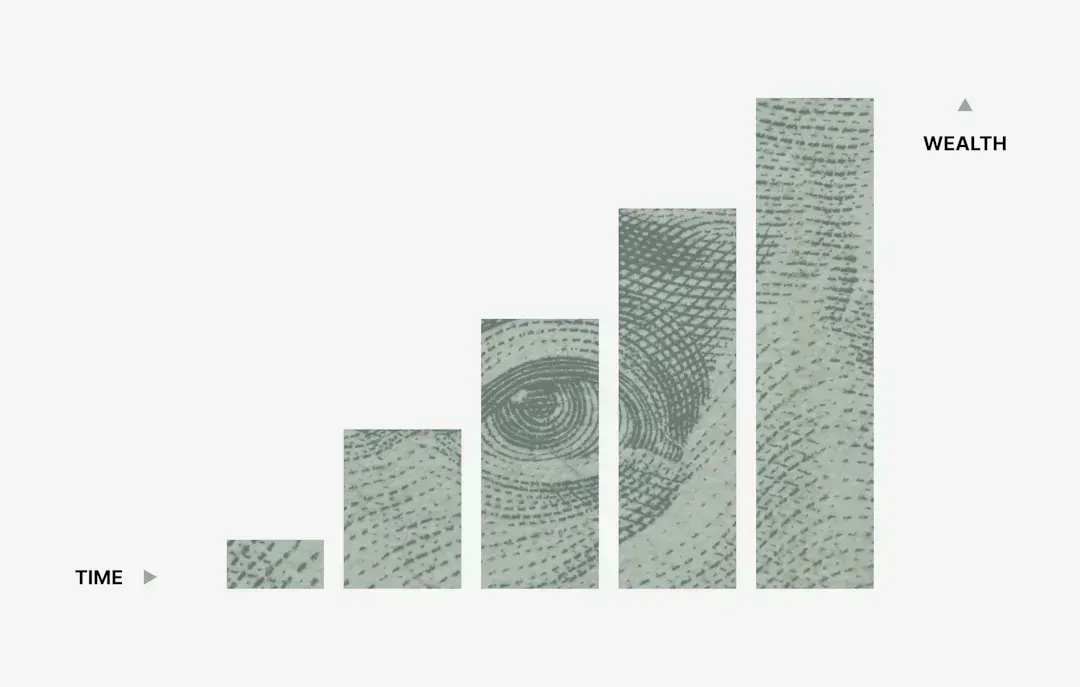
Median net worth by age group paints a sharp picture: under 35 it sits at roughly $39,000, rising to around $135,000 for households aged 35 to 44, $247,000 for those aged 45 to 54, $364,000 for 55 to 64, and reaching its peak near $410,000 for households aged 65 to 74. That’s a tenfold difference between the youngest and the oldest working cohort.
Mean values are two to three times higher than medians because a small number of ultra-wealthy households pull the average upward. This is an important distinction. When people hear that millennials are “catching up,” those averages often reflect a narrow slice of very wealthy young households, not the typical experience of someone in their early thirties paying rent and carrying student debt.
How Baby Boomers Got So Wealthy

Older generations benefited from a long period of strong market returns. Households that invested in 401(k)s, IRAs, and taxable brokerage accounts during the 1980s and 1990s saw tremendous gains through both the dot-com boom and the post-2008 recovery. Over time, compounding returns on these investments substantially increased total household wealth, particularly for baby boomers nearing or in retirement.
Boomers came of age during one of the greatest economic expansionary periods in history in the decades following World War II. This post-war generation drove the population growth that birthed modern-day suburbs, where government-subsidized homes were often cheaper to buy than rent in the 1950s. A roaring post-war economy, as well as the G.I. Bill and employer-funded pensions, allowed boomers to accumulate significant wealth over their lifetimes.
The Housing Wall That Younger Generations Keep Running Into

Between 1990 and 2024, median home prices increased by more than 400 percent. Meanwhile, median household income rose by less than 200 percent. This has made it far more difficult for younger Americans to enter the housing market. As a result, much of the wealth generated by real estate appreciation has accrued to those who purchased decades ago.
Gen Z is coming of age during an affordability crisis unlike anything faced by earlier generations. Home prices have surged more than fifty percent since 2020 and elevated interest rates are further compounding the costs of owning a home. Rents have grown comparatively slower than home prices, but are also up roughly a fifth. As a result, young adults are not just renting longer but even waiting longer to move out on their own, with nearly three in ten Gen Zers still living with their parents at age 25.
Homeownership Rates Reveal the Depth of the Divide

In 2025, baby boomers owned homes at the highest rates, nearly 80 percent, while adult Gen Zers owned at the lowest, just over a quarter. According to an analysis from Redfin, roughly 57 percent of people in their mid-30s now own their residences, while 64 percent of their parents owned homes at the same age. That gap sounds modest in percentage terms. In wealth terms, it represents years of missed equity accumulation.
Redfin’s analysis of census data shows that about 38 percent of 28-year-olds belonging to Generation Z were homeowners in 2025. Looking back at historical data, roughly 42 percent of Gen X members and more than 44 percent of baby boomers were homeowners when they were 28 years old. The median age for first-time homebuyers hit a historic high of 40 in 2025. That single statistic captures something important about how the timeline of wealth-building has shifted.
Student Debt as a Structural Drag

Another defining factor in the modern wealth divide is student debt. College tuition costs have increased more than 300 percent since the 1980s, and student loans now total more than $1.83 trillion nationwide. Younger generations carry the bulk of this burden, which reduces their ability to save, invest, or qualify for mortgages.
At the same time, wage growth for entry- and mid-level positions has not kept pace with inflation or asset prices. As a result, millennials and Gen Z are often paying more for education, housing, and everyday expenses, with slower income growth to offset it. These combined forces have made wealth accumulation harder and slower compared to previous generations. The burden isn’t imagined. It’s arithmetic.
Financial Anxiety Is Spiking, and the Data Shows It

According to Deloitte’s survey, financial insecurity among Gen Z jumped from 30 percent in 2024 to 48 percent in 2025, an 18 percentage point increase representing a roughly 60 percent spike in just one year. Deloitte’s 2025 Gen Z and Millennial Survey polled over 23,000 respondents across 44 countries, pointing to a generation facing serious financial strain.
Building an emergency fund remains difficult for Gen Z, with more than half not having enough emergency savings to cover three months of expenses. Millennials struggle with building emergency savings too. More than four in ten young people say they are struggling or getting by with only limited financial security, echoing similar findings from Harvard’s survey research on young adults.
The Wealth Shift From Earnings to Ownership

Current wealth distribution now peaks during the years near or in retirement. Instead of the 1990s middle-heavy distribution, when working-age households held almost 70 percent of all wealth, today’s distribution places about 65 percent of all wealth in households over the age of 60. Among other factors, this suggests that wealth has shifted from an earnings-based model toward an investment-based model.
Wealth and assets were once concentrated among households with the highest income and, as a result, the highest ability to save money and buy new assets. Today, wealth is concentrated among households with the most time for asset growth and returns. This shift suggests that the greatest value currently comes from owning previously purchased assets. For those who couldn’t buy in early, the distance keeps growing.
The Great Wealth Transfer: Promise With Caveats

Cerulli projects that wealth transferred through 2048 will total approximately $124 trillion. Nearly $100 trillion is expected to flow from baby boomers and older generations, representing more than 80 percent of all transfers. Millennials will be inheriting the most of any generation over the next 25 years, around $46 trillion, while Gen X stands to inherit the greatest portion in the next 10 years.
The headline sounds reassuring, but the details complicate the picture considerably. More than half of the overall total volume of transfers is expected to come from those who are currently high-net-worth and ultra-high-net-worth households, which together make up only 2 percent of all households. A study found that wealthier boomers are more than twice as likely to leave inheritances to their children than poorer Americans, meaning cross-generational wealth inequalities could become further ingrained in American society.
The Quiet Psychology Behind the Numbers

A median of 57 percent of adults across nations surveyed expect children in their country to be worse off financially than their parents when they grow up. This view is particularly widespread in several high-income nations, including Australia, Canada, France, Italy, Japan, Spain, the United Kingdom, and the U.S. Pessimism about the next generation’s financial future has become a near-universal mood in wealthy countries.
For many younger Americans today, the ladder of opportunity feels increasingly difficult to climb as housing costs, asset inflation, and wage stagnation push the traditional milestones of middle-class life further away. Housing is only the most visible example. Surveys consistently show that the cost of living, including rent, healthcare, education, and childcare, is what keeps many young adults up at night. The wealth gap by age group doesn’t just show up in balance sheets. It shows up in how people feel about the future every single day.